

By Lisa Tan, Marketing Lead and functional knit fabric specialist at Mibein. Last reviewed November 2026.
When brands source polar fleece fabric for apparel, most briefs we receive say one thing: “200 g polar fleece”. Weight is a useful starting point, but it is rarely what makes a fleece garment succeed or fail. Two fleeces of the same weight can differ a lot in breathability, softness, pilling and fit, because those come from the surface structure, the yarn and the stretch, not from the grams.
Our view: choose the weight class first, then specify the surface, the pilling grade and the stretch. Those three decisions are where most fleece problems start, and they are easy to put on a tech pack.
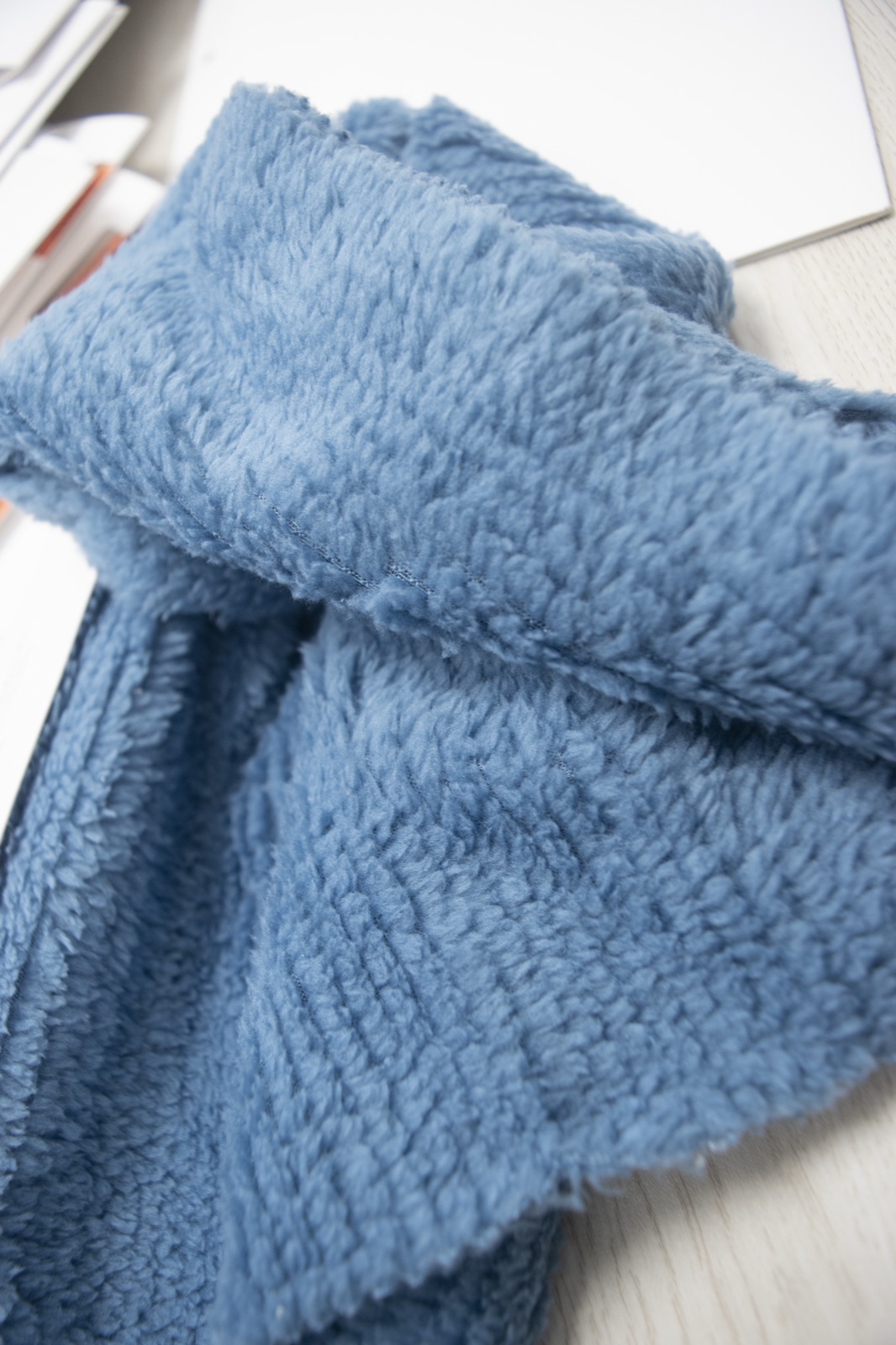
In short
- Weight sets the warmth range. Lightweight fleece suits active layers, mid-weight is the all-rounder for hoodies and jackets, heavyweight is for cold, low-activity wear.
- Surface sets how it breathes and looks. Grid, textured, high-pile, two-tone and smooth polar fleece behave differently at the same weight.
- Pilling is the most common complaint on fleece. Put a pilling grade on the spec, and ask for it after washing, not only on the original fabric.
- Stretch decides fit. Fleece with spandex suits fitted base layers and joggers; non-stretch fleece suits relaxed hoodies and jackets.
- If the wearer will sweat, look at moisture transfer as well as warmth. A damp fleece feels cold.
What polar fleece is
Polar fleece was developed in 1979 by Malden Mills, the US mill now known as Polartec, as a light, warm alternative to wool pile. It is a knitted fabric, usually polyester, whose surface is brushed to raise the fibres into a soft, lofty pile. The pile traps air, which is where the warmth comes from, and polyester dries quickly because it absorbs very little water. “Polar fleece” usually means fleece brushed on both sides; single-face fleece is brushed on one side and smooth on the other.
Within that definition there is a wide range: from 95 GSM mesh fleece for running layers to 340 GSM chunky fleece for winter jackets. That range is why weight alone is not enough.
Step 1: choose the weight class (fleece fabric weight and GSM)
The outdoor industry commonly describes fleece as 100, 200 or 300 weight, a scale popularised by Polartec. The numbers are a warmth class, not an exact GSM, so use the table as a rough guide and confirm the actual weight on the swatch.
| Class | Approx. weight | Best for | Trade-off |
|---|---|---|---|
| Micro / lightweight | under ~150 GSM | Active mid-layers, running and training tops, layering pieces | Less warmth when standing still |
| Mid-weight | ~150–250 GSM | Hoodies, zip jackets, joggers, everyday fleece | The versatile middle; check breathability for active use |
| Heavyweight | over ~250 GSM | Winter jackets, outer fleece, cold and low-activity wear | Bulkier, dries more slowly, warm when active |
Step 2: choose the surface
This is the decision buyers skip most often. At the same weight, surface structure changes breathability, look and how quickly the fabric pills.
| Surface | What it does well | Watch out for | Examples in our range |
|---|---|---|---|
| Grid fleece | Channels let air and moisture through; warm for its weight | Less windproof; grid shows through thin outer layers | XWY35769ES |
| Smooth polar fleece | Classic soft hand, even warmth | Pilling on lower-quality yarns | Y35748, Q36590 |
| Textured / jacquard fleece | Visible design (check, corn kernel, cloud) without printing | Raised textures can snag | Y35751, XWT2601, XWY35767 |
| Two-tone (cationic) fleece | Heathered, natural-looking colour depth | Approve colour on the actual base | XWY1605, XWY1608-310, XWY1606 |
| High-pile fleece | Maximum loft and a plush, outdoor look | Bulk; pile can flatten over time | XWY1609 |
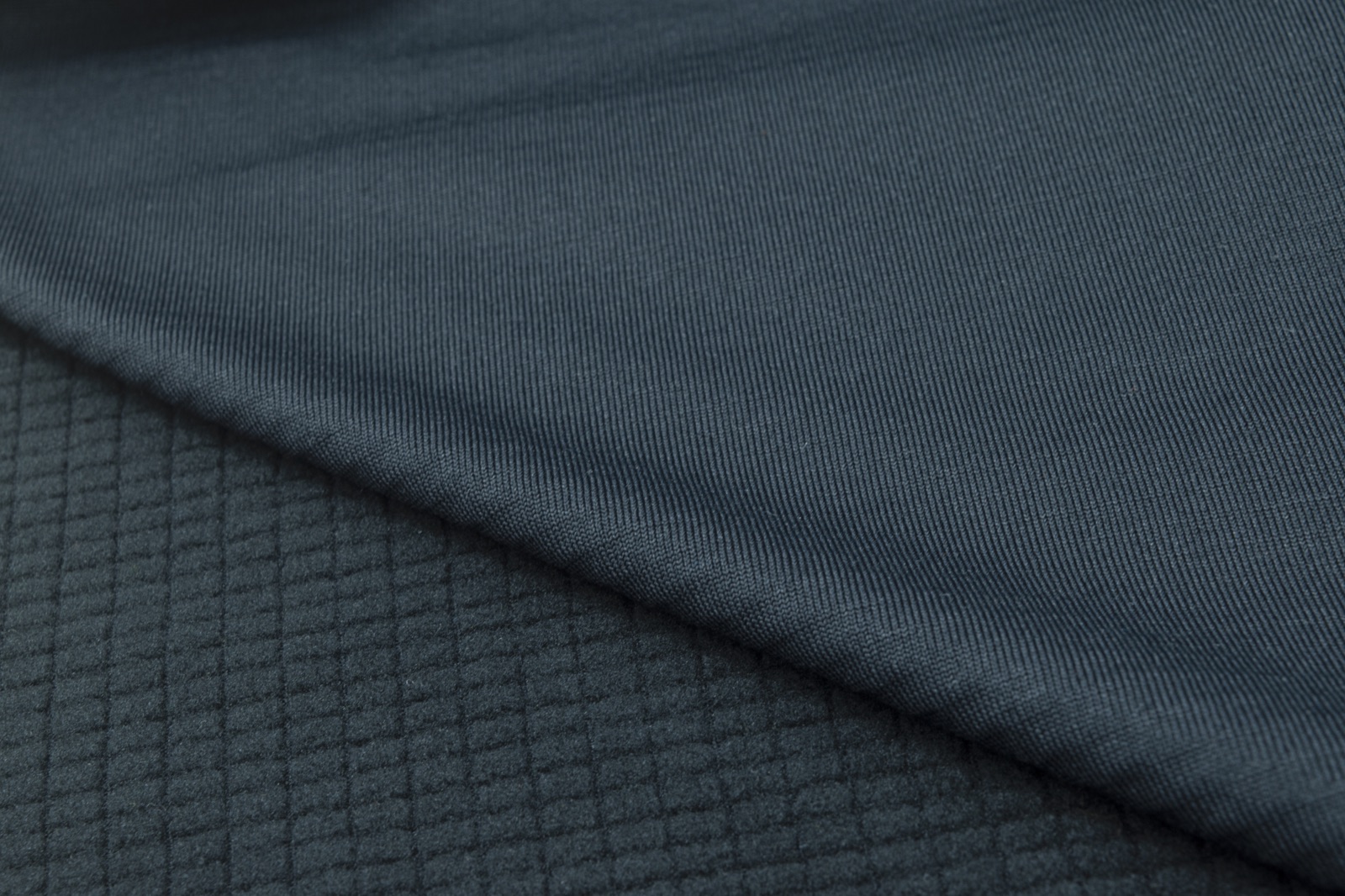
| Brushed-back stretch knit | Fitted warmth for base layers and leggings | Needs moisture data for active use | Y35707, Q35557, Q35526 |
| Mesh fleece | Very light, breathable warmth for high-output sports | Low wind protection; needs a shell | Q35551-1 |
Step 3: put pilling, stretch and static on the spec
Pilling
Brushed surfaces pill more readily than smooth knits, so pilling is the most common fleece complaint. Results are graded from 1 (severe) to 5 (none), but the method matters: the pilling box (ISO 12945-1 / GB/T 4802.3), the modified Martindale (ISO 12945-2 / GB/T 4802.2) and the circular locus method widely used in China (GB/T 4802.1) stress fabric differently, so a grade only means something next to its method. Three points make the requirement useful:
- Set targets by surface type. A raised fleece face and a smooth jersey face should not share one number.
- Ask for the result after washing, because that is what the customer sees.
- Name the method on the spec, so the supplier tests the way you will.
An example from our range: Y35707 brushed fleece rated Grade 4 for pilling at SGS (GB/T 4802.1-2008, 600 cycles, original fabric, black, March 2025), against a requirement of Grade 3-4. In the same report, dimensional change after three washes was −3.7% lengthwise and +1.3% widthwise, within the −5.0% to +2.0% requirement. We are adding pilling tests for more of our fleece qualities and publish them on each product page as they arrive.
Our guide to pilling grades explains how to set a realistic requirement.
Stretch
Fleece with 5–20% spandex holds its shape in fitted base layers, leggings and joggers. Relaxed hoodies and jackets rarely need it, and non-stretch fleece is easier to sew and keeps its loft. Decide by fit, not by habit.
Static
Polyester fleece builds static in dry winter air, which customers notice as cling and small shocks. If that matters for your market, choose an anti-static fleece, such as Y35748, Y35749 or XWY1609 with conductive yarn. See how anti-static fabric is tested.
If the wearer will sweat, check moisture transfer too
Warmth only works while the fabric stays dry. For a training mid-layer or an active base layer, a lighter brushed knit that moves sweat away usually performs better than a heavier fleece. That is why we test our brushed fleeces for moisture transport, not only warmth.
Y35707, a 240 GSM nylon brushed fleece, recorded a one-way transport index of 470.9 (Grade 5) on the original fabric and 234.1 (Grade 4) after five washes at Bureau Veritas, with far-infrared emissivity of 0.97. Results apply to the sample tested; the colour, lot and method are listed on the product page.
Three mistakes buyers make with fleece
- Specifying weight only. The swatch arrives at the right GSM but feels stuffy or looks wrong. Add the surface type and a reference swatch to the brief.
- Approving the original fabric only. Fleece that looks perfect on the swatch can pill after a few washes. Ask for washed results or wash a swatch yourself before bulk.
- Using heavy fleece for active garments. Heavier is not warmer once the wearer sweats. For active use, pick a lighter grid or brushed knit with moisture data.
How to choose by garment
| Garment | Weight | Surface | Stretch | Start with |
|---|---|---|---|---|
| Hoodie / pullover | Mid to heavy | Smooth, two-tone or textured | Optional | XWY1605, XWY1608-310, Y35751 |
| Active mid-layer | Light to mid | Grid or mesh | Optional | XWY35769ES, Q35551-1 |
| Thermal base layer | Mid | Brushed-back stretch | Yes | Y35707, Q35557, Q35526 |
| Joggers | Mid | Smooth or textured stretch fleece | Yes | Q36590, XWT2601, Y35705 |
| Winter fleece jacket | Heavy | High-pile or chunky | No | XWY1609, XWY1606 |
Not sure? Our fabric selection tool matches fleece to your garment and lists the test data we hold.
Our fleece range
Mibein develops polyester and nylon fleece from 95 to 340 GSM: smooth polar fleece, grid, textured jacquard, two-tone cationic, high-pile, mesh and brushed stretch knits, plus anti-static and recycled options such as XWY1607-185 (63% recycled polyester). Browse the thermal fabric collection or see fleece by garment on our hoodie fabric page.
Copy this fleece spec into your inquiry
Fill in the blanks and send it to us. A complete spec gets you the right swatches on the first round.
Fleece fabric request
- Garment: ______ (hoodie / mid-layer / base layer / joggers / jacket)
- Weight class: light / mid / heavy, target ______ GSM ± ___%
- Surface: smooth / grid / textured / two-tone / high-pile / brushed-back / mesh
- Fibre: polyester / nylon blend / recycled content ___%
- Stretch: none / spandex ___% / stretch without spandex
- Pilling: Grade ___ by method ______, original and after ___ washes
- Other needs: anti-static / moisture transfer / opacity / UPF
- Colours and quantity: ______ colours, about ______ m (or kg) per colour
- Target market and season: ______
Email this spec to Lisa (Lisa@mibeintex.com) or paste it into WhatsApp (+86 13826187886). Buying stock fleece fabric wholesale? Mention the colours you need and we will check ready stock first.
Questions buyers ask
What GSM fleece is best for a hoodie?
Most hoodies sit in the mid-weight range, roughly 200–300 GSM. Go lighter for layering or warm climates and heavier for winter outerwear, and choose the surface for the look you want.
Is polar fleece breathable?
Fleece is more breathable than most insulating fabrics, but it varies by structure. Grid and mesh fleeces breathe best; dense, heavy fleece breathes least.
Does polar fleece pill?
Any brushed surface can pill. Yarn quality, surface structure and finishing make the difference, so set a pilling grade with its test method and check it after washing.
Can you make recycled fleece?
Yes. XWY1607-185 uses 63% recycled polyester, and we can develop recycled versions of other fleece qualities on request. Ask for the recycled content and documentation for the exact fabric.
What is the minimum order?
Our standard minimum is 150–400 kg per colour, depending on the fabric. When a colour is in stock, smaller quantities can be arranged. See ready colours and quick sampling.
Get fleece swatches
Send Lisa the garment, the weight class and look you want, whether it needs stretch, and a rough quantity. You will get fleece swatches and the test reports we hold for them.
Lisa Tan · Lisa@mibeintex.com · WhatsApp +86 13826187886
Related: Thermal fabric explained · Fabric weight guide · How to read fabric test reports