Stretch Knit Fabric · Development & Bulk Supply

Stretch Fabric: Spandex-Free and Elastane Knits, Matched to the Garment

Mibein knits stretch fabric in two systems. One gets its stretch from inherent-stretch polyester with no spandex at all. The other uses elastane blends for higher stretch and compression. We help you choose between them before you choose a color.

  • Spandex-free FLEXERA™ high stretch
  • Poly/elastane knits up to 40% spandex
  • Stretch & recovery rack in our lab
  • 4-point inspection on every dye lot
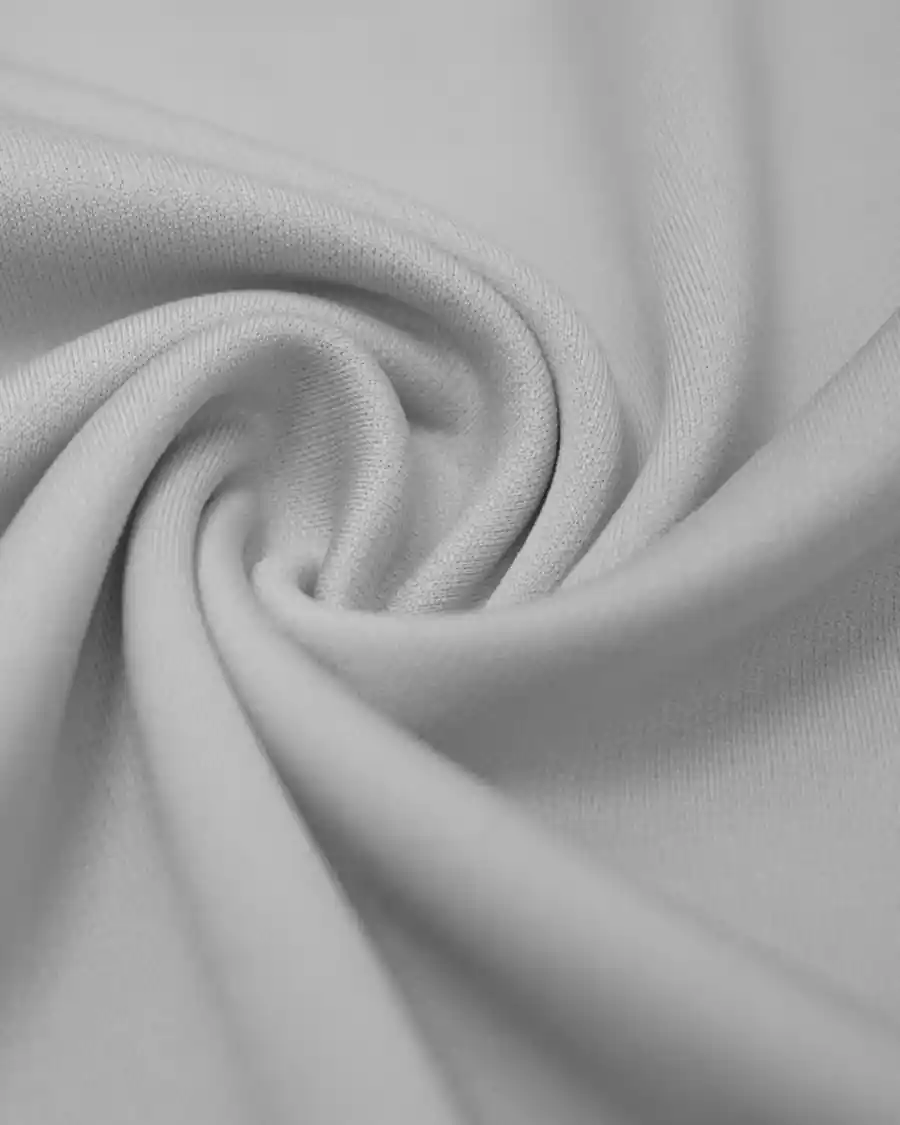
Soft grey spandex-free stretch knit fabric draped in a swirl
95%+fiber recovery after 500 cycles up to 24%spandex in our blends 2 systemsspandex-free & elastane

Two systems

Why We Run Two Stretch Systems

"Stretch fabric" covers everything from a tee that gives a little at the shoulder to a legging that holds its compression through a 90-minute class. One fiber cannot do both jobs well.

A

Spandex-free stretch (our FLEXERA™ series and other inherent-stretch polyester knits) suits light, breathable tops and structured double-knits. These pieces need comfort stretch, a dry hand and a single-fiber composition. They do not need squeeze. Many of these qualities are also light: XWP1018-1 is 135 g/m².

B

Elastane blends are the right choice when the garment depends on high elongation and grip, as yoga pants, shorts and close-fitting loungewear do. Our blends range from 8% spandex in a brushed dobby to 40% in a super-soft double-knit.

Most buyers come to us with the garment already in mind. This page works from the garment back to the fiber.

Brief stage

Spandex-Free vs Elastane Stretch: A Decision Table

Use this table at the brief stage. If most of your answers fall in one column, start sampling from that group of fabrics below.

Stretch level

Spandex-free

Comfort to high stretch, coming from the fiber and the knit structure.

Elastane

The highest stretch and power. It rises with elastane content: 8% (XWT2601) to 40% in our range

Recovery over time

Spandex-free

Fiber reference: 95%+ elongation recovery after 500 cycles

Elastane

Fiber reference: "significant decline" after 500 cycles. Good initial recovery, but the elastane ages

Chlorine & heat

Spandex-free

Fiber reference: ≥90% strength retained (50 ppm / 50 h); long-term heat resistance 130–150 °C

Elastane

Fiber reference: <50% strength retained; long-term heat resistance <100 °C

Dyeing

Spandex-free

95–105 °C at normal pressure (fiber reference)

Elastane

115–130 °C (fiber reference). Recipe and heat-setting need care so the elastane keeps its power

Recyclability

Spandex-free

All-polyester system, which is simpler to design for recycling*

Elastane

Blends are harder to separate and recycle*

Handfeel

Spandex-free

Lighter and drier. It can be matte, textured or cotton-like (e.g. C25330 waffle)

Elastane

Soft, smooth and body-hugging, with a "second skin" feel (e.g. XWP2011, Y35721)

Typical garments

Spandex-free

Performance tees, training tops, polos, structured commute and travel pieces

Elastane

Yoga pants and leggings, sports shorts, loungewear, fitted women's styles

Most answers in one column?See the fabrics in each group

The "fiber reference" rows compare fibers, not finished fabrics. They come from the FLEXERA™ material comparison quoted in full below. *Actual recyclability depends on the finished garment's composition and the recycling facilities available locally.

Spec sheet data

The FLEXERA™ Reference Table, as Published on Our Spec Sheet

FLEXERA™ vs. Spandex | Reference Performance (XWP1018-1 spec sheet)

Tensile strength cN/dtex · higher is stronger

3.0–3.8
0.4–1.0

Chlorine resistance strength retained, 50 ppm / 50 h

≥90%
<50%

Long-term heat resistance °C · higher tolerates more heat

130–150 °C
<100 °C

Dyeing temperature °C at normal pressure · lower is gentler

95–105 °C
115–130 °C

Elongation recovery after 500 cycles

95%+Significant decline

Recyclability

100% recyclable*Difficult to recycle*

Stretch direction

2-Way, 4-Way and Mechanical Stretch in Plain Terms

2-way stretch

Stretches in one main direction, usually across the width. This is common in wovens with stretch weft yarn and in some warp-knits. It is enough for shirts and trousers where the fabric only needs to move around the body.

4-way stretch

Stretches and recovers both lengthwise and crosswise. Knits already give in every direction, so the useful question is how well they come back in each direction, not just whether they stretch. For squats, lunges and overhead movement, ask for recovery figures in both directions.

Mechanical stretch

Stretch that comes from the knit loops, a textured or crimped yarn, or the construction itself, with no elastic fiber. Spandex-free double-knits such as S35808 combine this with inherent-stretch polyester.

The range

Stretch Knit Fabrics, Grouped by System

Below are six starting points, three from each system. Specifications come from our hang tags and spec sheets.

Spandex-free stretch
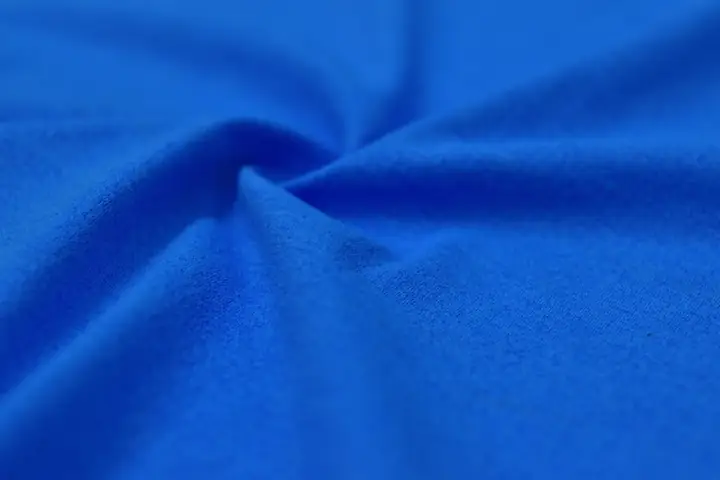
XWP1018-1Spandex-freeFLEXERA XWP1018-1 spandex-free high-stretch polyester knit fabric in blue

FLEXERA™ Spandex-Free High-Stretch Fabric — XWP1018-1

100% Polyester · 135 g/m² · 140 cm

This is the clearest example of the spandex-free idea. All the stretch comes from inherent-stretch polyester fiber, so the fabric stays mono-material and avoids the chlorine and heat sensitivity of elastane. The light weight and fine surface texture keep it in T-shirt territory rather than compression.

  • High stretch
  • Lasting recovery
  • Durability
  • Easy care

Best for: Performance T-shirts, training tops, everyday casual tops
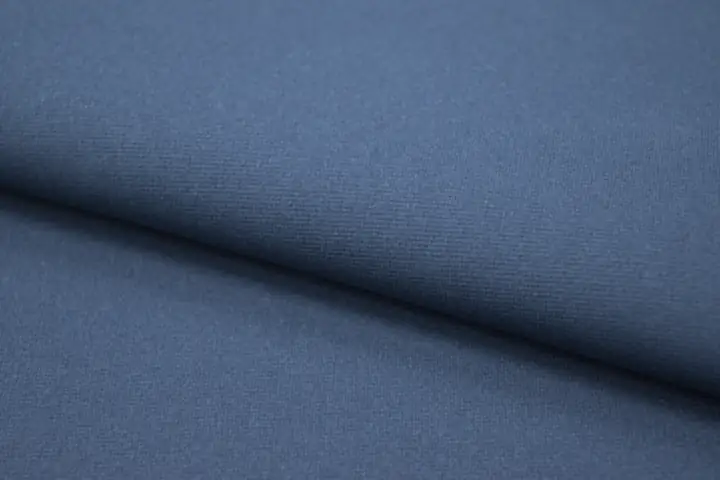
S35808Spandex-freeS35808 spandex-free double-face Roman knit with refined texture and structured drape

Spandex-Free Double-Face Roman Knit — S35808

100% Polyester · 180 g/m² · 152 cm

A double-face Roman (ponte-type) knit that uses high-elastic fibers instead of spandex to give two-way stretch. The double-face build gives it body and a structured drape. That makes it a candidate for pieces that need to move but should not cling, such as commute trousers or knit jackets.

  • Lightweight stretch
  • Moisture-wicking & quick-dry
  • Breathable & abrasion resistant
  • Structured drape

Best for: Urban commute, luxury sports and business-casual styles
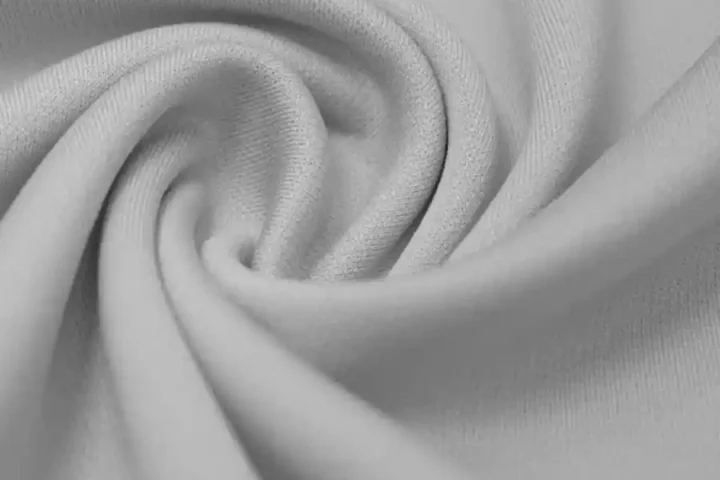
C25330Spandex-freeC25330 cationic polyester waffle knit, spandex-free with cotton-like jacquard surface

Spandex-Free Cationic Waffle — C25330

100% Polyester (cationic) · 140 g/m² · 140 cm

Proof that spandex-free stretch can be combined with other functions. Our brochure describes this textured, cotton-like waffle as having excellent elasticity and recovery without spandex. It also has one-way moisture conduction and a wrinkle-resistant, iron-free finish.

  • Spandex-free elasticity
  • One-way moisture conduction
  • Wrinkle resistant
  • Cotton-like texture

Best for: Outdoor and training T-shirts, textured everyday tops

Elastane stretch

XWP201112% elastane

Soft Stretch Knit — XWP2011

88% Polyester / 12% Elastane · 190 g/m² · 152 cm

A mid-weight stretch knit with a soft, skin-friendly hand. The 12% elastane gives easy movement and reliable recovery without the heavy compression of a legging fabric. Wear resistance helps on shorts and other high-friction areas.

  • Soft hand feel
  • Comfortable stretch
  • Stretch recovery
  • Wear resistance

Best for: Sports shorts, yoga wear, loungewear, women's and urban casual apparel
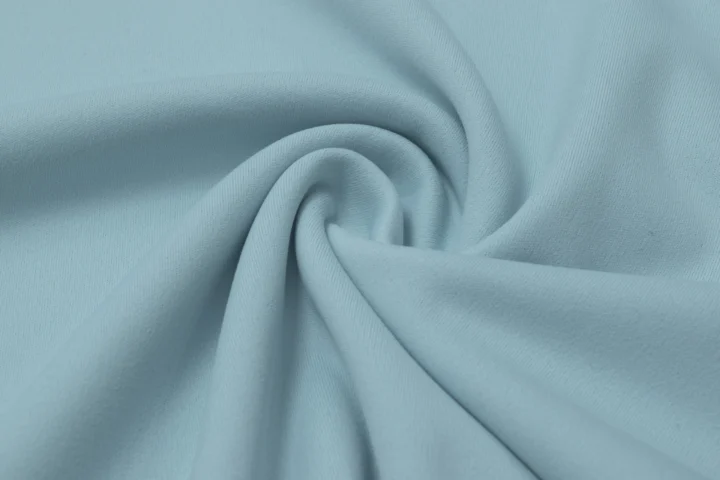
Y3572124% spandexY35721 super-soft high-stretch polyester spandex double-knit in light blue

Super-Soft High-Stretch Double-Knit — Y35721

76% Polyester / 24% Spandex · 240 g/m² · 155 cm

The highest elastane content in this selection. A 240 g/m² double-knit with 24% spandex has the elongation and hold that yoga pants and leggings need, and the double-face build adds coverage. Where compression and grip matter more than mono-material composition, this is the system to choose.

  • High stretch
  • Super-soft handfeel
  • Double-knit body

Best for: Yoga pants and leggings, luxury sports styles
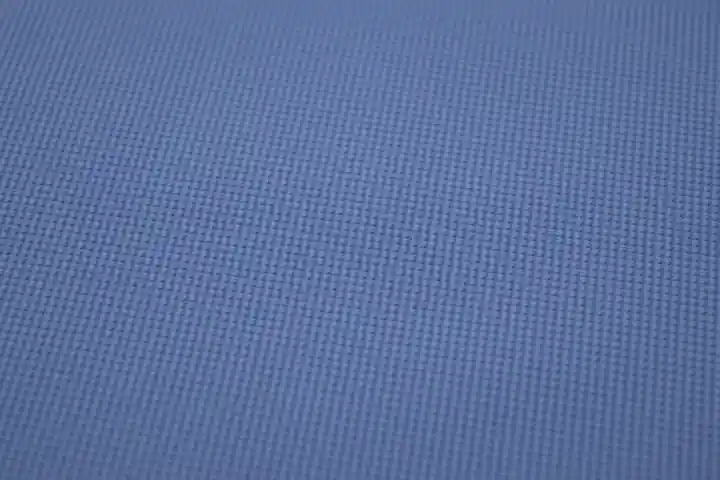
C2514510% spandexC25145 warp-knitted stretch jacquard check fabric for polo dresses

Warp-Knit Stretch Jacquard Check — C25145

90% Polyester / 10% Spandex · 240 g/m² · 155 cm

A textured jacquard with good elasticity and resilience. Being warp-knitted gives it dimensional stability, so the check pattern does not distort when the fabric stretches. This is the elastane option for styled pieces rather than plain activewear.

  • Good elasticity & resilience
  • Moisture-wicking & quick-dry
  • Abrasion & wrinkle resistant
  • No shedding

Best for: Polo dresses, tennis and golf-inspired styles

Functions are as stated in Mibein spec sheets (XWP1018-1, XWP2011) or function brochures (S35808, C25330, C25145).

The products shown on this website represent only part of our fabric portfolio. Contact us for more fabric options, technical data, color cards, and sample support.

Experience

Recovery Is the Real Spec

Almost any knit stretches on the sampling table. Returns come from what happens later: knees that bag after a day's wear, elbows that stay rounded, waistbands that grow half a size by the tenth wash. That is a recovery problem. Stretch percentage alone will not predict it.

Where stretch fabrics usually fail

  1. The fabric holds its shape when new, then keeps some of each stretch. Low-power constructions and tired elastane both show this, and it is most visible at knees, seat and elbows.

  2. Chlorine, sunscreen and body oils, and high heat all shorten spandex life. Heat matters in the mill as well as at home. Our dye house disperse-dyes polyester at around 130 °C, while the fiber reference above puts spandex's long-term heat resistance below 100 °C. Poly/spandex recipes and heat-setting therefore have to be managed so the elastane keeps its power.

  3. If tension or temperature varies across the stenter, the fabric can stretch differently at the selvedge and the centre. Pattern pieces cut from different zones then fit differently.

  4. A spandex-free tee fabric used for a compression legging will feel loose. A 24% elastane knit used for a relaxed polo will feel clingy and hot. Most "recovery" complaints we see in briefs start here.

How we evaluate stretch and recovery at sampling

  1. 1Agree the target first.

    We ask for the garment, the fit (relaxed, fitted or compression) and any reference fabric. Then we pick the system before we pick the quality.

  2. 2Test both directions.

    Our physical lab has a stretch and recovery rack with hanging weighted frames. We record elongation and residual growth lengthwise and crosswise.

  3. 3Wash, then retest.

    Our washing room has home-laundry washers and a standard reference washing machine.

Pick a garment

Which Stretch System for Which Garment

Yoga pants & leggings

Start with

Elastane: Y35721, XWP2011

Why

These need high elongation, hold and opacity under deep flexion. Recovery in both directions matters most.

Joggers

Start with

Either. Elastane (XWP2011) for a soft, athletic fit; spandex-free double-knit (S35808) for a cleaner, structured leg

Why

Joggers range from loungewear to commute wear, so the fit and look decide the system

Travel pants

Start with

Spandex-free double-knit: S35808

Why

Structured drape and movement without cling. A single-fiber composition is also easier to care for on the road.

Polos

Start with

Spandex-free (C25330) or, for a styled look, warp-knit jacquard (C25145)

Why

Polos need comfort stretch at the shoulder and a collar that keeps its shape, not compression

Performance tees

Start with

Spandex-free: XWP1018-1, C25330

Why

Light, breathable and quick to dry. The stretch comes without the elastane weight or heat sensitivity.

Bulk consistency

Keeping Stretch Consistent From Lot to Lot

A stretch program fails in bulk when width and elongation drift between dye lots. Our own mill knits, dyes and finishes in-house without subcontracting, so heat-setting stays under our own control. Heat-setting is the stage that fixes shrinkage, width, weight and handfeel, and on our stenter lines it runs with automated monitoring.

4-Point Inspection

Every dye lot is graded to the US 100-yard 4-Point System, from the first lot through bulk.

In-house, no subcontracting

Knitting, dyeing and finishing at our own mill, so heat-setting stays under our own control.

Monitored heat-setting

Stenter lines run with automated monitoring at the stage that fixes shrinkage, width, weight and handfeel.

Replenishment

Selected core programs can be supported by greige-stock planning. Availability depends on the program.

Stock & sourcing

A Ready Fabric Library Behind Every Order

Beyond custom development, we keep 50+ greige fabric qualities in stock, so sampling and bulk orders start faster. Our team follows the market every season and recommends the colors and functional fabrics buyers are asking for.

50+ Greige qualities in stock

Ready base fabrics across UV protection, cool touch, quick-dry and stretch, so most programs start from stock rather than from scratch.

Built around your order

Quantities, dye lots and delivery are planned around your program, from first sample yardage to repeat bulk.

Following market trends

We track what sells each season in outdoor, golf and summer active wear, and update the range to match.

Popular colors & functional picks

Tell us your market and price point. Our team recommends the colorways and functional fabrics currently in demand.

Sourcing for a distribution or wholesale program?

FAQ

Stretch Fabric FAQ

What is stretch fabric?

Stretch fabric is any fabric that extends under load and returns close to its original size when the load is removed. The stretch comes from an elastic fiber such as spandex (elastane), from an inherently elastic polyester fiber, from the knit or weave structure, or from a combination of these. Mibein's stretch range is knitted and covers both spandex-free and elastane-blend constructions.

What is the difference between 2-way and 4-way stretch fabric?

2-way stretch fabric stretches mainly in one direction, usually across the width. 4-way stretch fabric stretches and recovers both lengthwise and crosswise. For activewear that bends at the knee and hip, recovery in both directions matters more than the label. Full comparison.

Can stretch fabric be made without spandex?

Yes. Spandex-free stretch fabric gets its elasticity from inherent-stretch polyester fibers and the knit structure. Mibein's FLEXERA™ series (for example XWP1018-1, 100% polyester) and qualities such as S35808 and C25330 stretch and recover without any elastane.

Does spandex-free stretch recover as well as spandex?

At fiber level the reference data favours it: the FLEXERA™ comparison lists 95%+ elongation recovery after 500 cycles, against a significant decline for spandex. These are fiber reference values, not finished-fabric results. Spandex-free knits also stretch less than high-elastane knits, so they suit comfort-stretch garments rather than compression leggings.

How much spandex do leggings need?

Performance leggings commonly use roughly 15–25% spandex in a polyester or nylon knit, depending on the compression level and fabric weight. Our Y35721 double-knit for yoga uses 24% spandex at 240 g/m². Lower-elastane knits such as XWP2011 (12%) suit shorts and relaxed yoga wear better than compressive leggings.

Is stretch fabric recyclable?

It depends on the composition. Polyester/spandex blends are harder to recycle because the two fibers are difficult to separate. An all-polyester spandex-free fabric is a single-fiber system, which is easier to design for recycling. Actual recycling still depends on the whole garment, including trims and threads, and on the facilities available.

How do you test stretch and recovery?

Fabric is extended under a set load, held, released and then measured for residual growth, in both length and width. Our lab uses a weighted stretch and recovery rack for this.

Which should I choose for a polo or tee: spandex-free or elastane?

For most polos and performance tees, spandex-free stretch is the better starting point. It gives comfort stretch at the shoulder and back while staying light, quick-drying and mono-material. Choose an elastane blend only when the fit is meant to be close and body-hugging.

Start sampling

Send Us the Garment, We'll Suggest the Stretch System

Tell us the garment, the fit and any fabric you are replacing. We'll recommend a spandex-free or elastane starting point and send swatches from both groups, so you can compare stretch and recovery yourself. Product development teams can read more about how we work with development teams.

  • ASpandex-free swatch set
  • BElastane swatch set

Before you source: Stretch fabric buyer's guide

滚动至顶部