Anti-Sheer Performance Knits · Development & Bulk Supply

Opaque Fabric for White and Light-Color Activewear

Non see-through knit fabrics for leggings, tees, polos and skirts in white and pastel shades. The coverage comes from anti-sheer functional yarn, so the fabric can stay at 120–160 g/m² instead of getting heavier to hide the skin.

  • Yarn-level anti-sheer function
  • "Thin but non-transparent"
  • Stretch and non-stretch constructions
  • Custom development & bulk wholesale
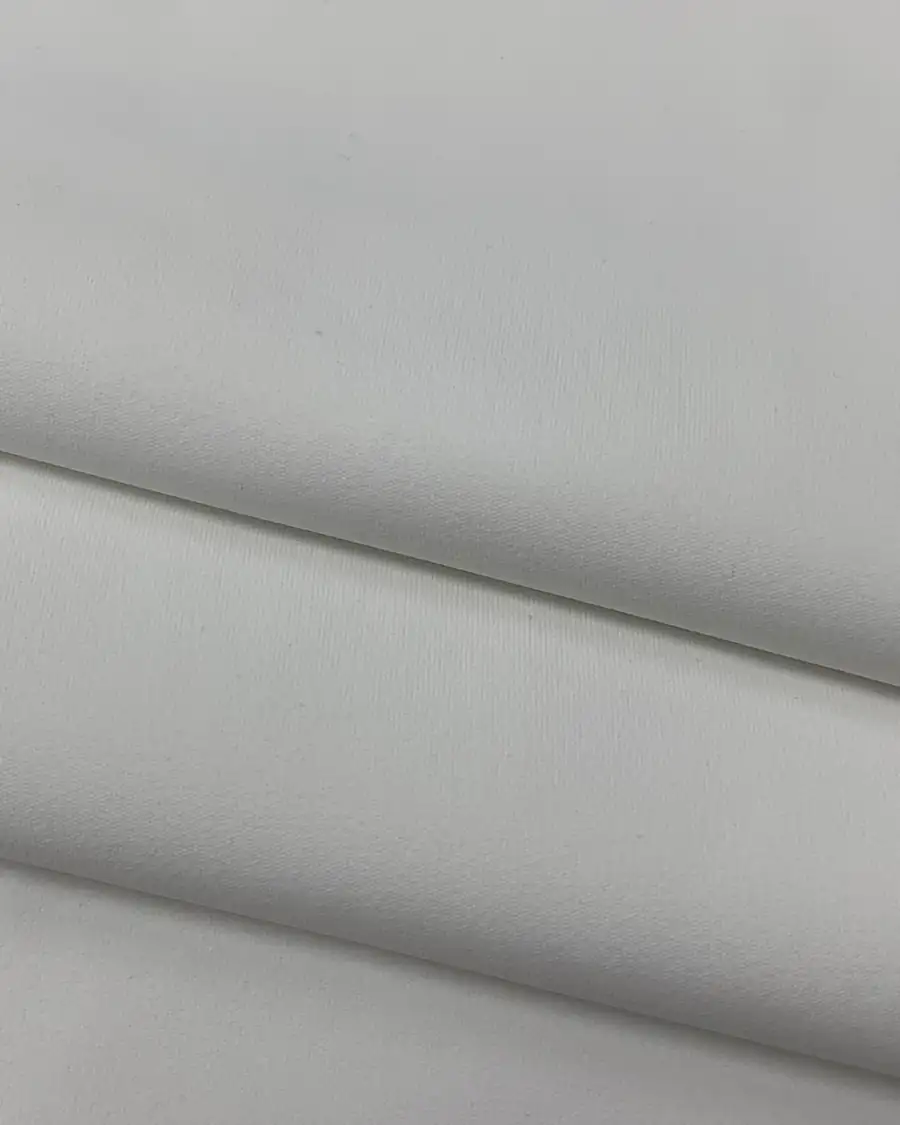
White anti-sheer opaque knit fabric folded to show its smooth non see-through surface
94.5%opacity, series reference from 120 g/m²thin but non-transparent 5 qualitiesfor white & pastel shades

The light-color problem

The Light-Color Problem, in One Paragraph

A black legging and a white legging can be knitted on the same machine from the same yarn, and only one of them will pass a squat test. Dark dyes absorb the light that gets through a knit; white and pastel shades let it pass, so skin, seams and underwear show. The problem gets worse when the fabric is stretched over the body or soaked with sweat.

The traditional fix is weight: a denser knit, a heavier double-knit or a second layer. That works, but it costs breathability and comfort in exactly the garments that need them most. Mibein, the global brand of Xianwei Textile, takes the other route. Our anti-sheer fabrics use functional yarn that scatters light inside the fibre, so a light-color fabric can be thin but non-transparent. If you are new to the topic, our guide What is opaque fabric and why it matters for light-color apparel covers the basics.

See-through simulatorStandard knit vs anti-sheer yarn
Illustration, not a test result
RelaxedKnee & seat in a squat
Standard knitCovers
Anti-sheer yarnCovers

A visual model of the four causes below, built for explanation only. It does not show measured values for any Mibein quality; we test the actual fabric and shade you order.

Four causes, four checks

Why Light Colors Go See-Through

"See-through" is rarely one problem. In development we separate it into four causes, because each one needs a different check.

Cause 01

Light transmission

Light passes through the gaps between yarns and through the fibres themselves. Dark dyestuff absorbs most of it before it reaches the eye. White and pastel shades absorb very little, so the same construction looks far more transparent.

Choosing a base

Three Ways to Make Light Colors Opaque

Every opaque fabric uses one of these routes, or a mix. The columns show the trade-offs we discuss with product teams before choosing a base.

Route A

Heavier or denser fabric

Tighter gauge, heavier double-knit

Weight
Goes up. Coverage is bought with grams.
Breathability
Lower: fewer and smaller gaps for air and vapour.
Cost
More fabric per garment; standard yarn.
Color options
Works in mid and dark shades; pure white may still need extra weight.
Route B

Dark lining or double layer

Gusset lining, bonded or sewn second layer

Weight
Goes up in the lined areas.
Breathability
Lowest in the lined areas; adds heat in summer.
Cost
Extra fabric plus extra cutting and sewing.
Color options
Outer shell is free, but a dark lining can shadow through pale shells.
Mibein's main route
Route C

Anti-sheer functional yarn

Opacity built into the fibre

Weight
Stays light: our featured qualities run 120–160 g/m².
Breathability
Kept: the knit stays open enough to breathe.
Cost
A yarn premium, but no lining or extra layer.
Color options
Designed for white and light shades; each shade is still checked (see below).

Dots are an editorial summary of the trade-offs above (more dots = better for light-color garments), not measured values. The routes can be combined. A 220 g/m² double-knit is often opaque on weight alone, which is why this page focuses on lighter qualities where the yarn does the work.

Inside the fibre

How Anti-Sheer Yarn Keeps Thin Fabric Opaque

For the bigger picture, see how performance fabric is made, from yarn to finished textile.

Our anti-sheer qualities start with the yarn, not a coating. The functional yarn is engineered to reflect and scatter light inside the fibre. Light that would pass straight through a standard bright polyester filament is bounced around and sent back out, so less of it reaches the skin and less of the skin's outline reaches the viewer.

Combined with a knit process customised for these yarns, this gives what our product data calls "thin but non-transparent" fabric that holds its coverage "even in white and light colours". Because the function sits in the fibre, it does not wash off the way a surface finish can.

94.5%opacity rate

Series reference

Opacity rate 94.5%. This figure is printed on a hang tag for our functional-yarn anti-sheer series. Treat it as a series reference: opacity depends on the quality, the shade and how far the fabric is stretched, so we test the actual fabric and color you order.

  • Quality
  • Shade
  • Stretch level

The range

Anti-Sheer Fabrics in Our Range

Five qualities from our anti-sheer and functional-yarn group, from a 120 g/m² double-knit to a nylon/spandex warp knit. Ask for each one in your white or pastel shade, not only in the stock color on the card.
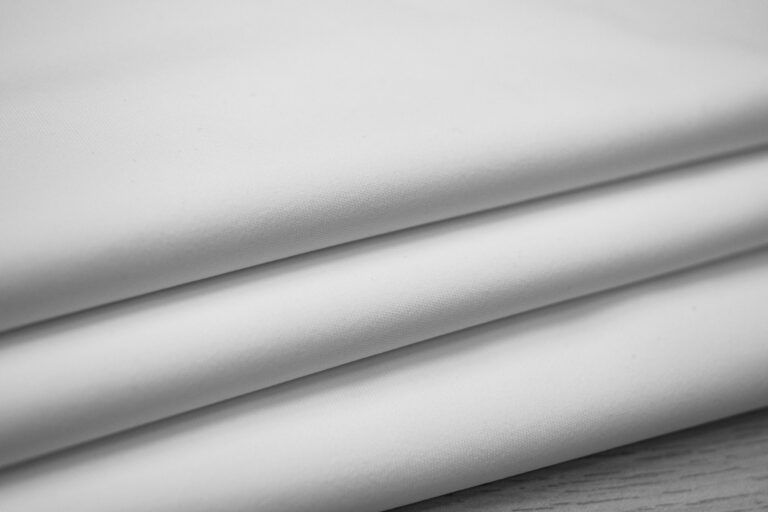
S35802160 g/m²S35802 anti-see-through stretch double-knit fabric for fitted light-color tops and pants

Anti-See-Through Stretch Double-Knit — S35802

88% Polyester / 12% Spandex · 160 g/m² · 160 cm

Our lead stretch quality for fitted light-color garments. Anti-see-through functional yarn is knitted into a double-face construction with spandex, so the fabric covers while it moves, then recovers. The brochure also lists an instant cool touch, which helps in white summer tops.

  • Anti-see-through yarn
  • Stretch & recovery
  • Instant cool touch
  • Snag & pilling resistant
  • Breathable
  • UV-resistant

Best for: Fitted T-shirts and pants; active outdoor tops
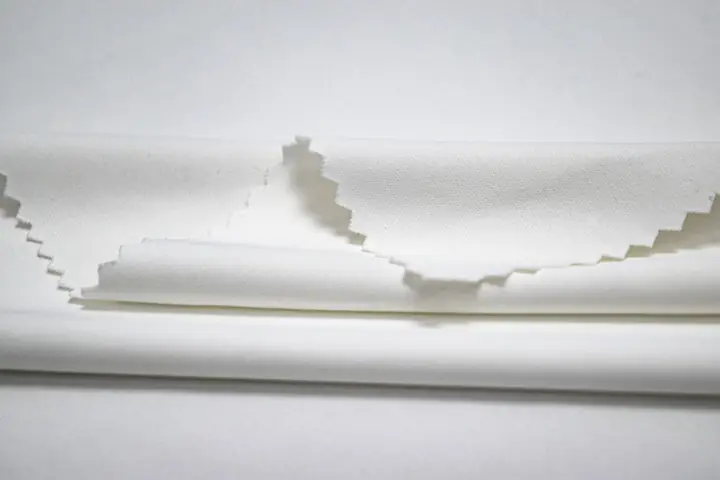
TS25142120 g/m²TS25142 lightweight anti-see-through double-knit fabric in white for tees and casual wear

Anti-See-Through Double-Knit — TS25142

100% Polyester · 120 g/m² · 165 cm

The lightest quality in our Inherently Anti-sheer collection. At 120 g/m² it shows the point of yarn-level opacity: a double-knit this light would normally show through in white. Smooth, soft and breathable, with snag and pilling resistance for everyday wear.

  • Inherently anti-sheer
  • Lightweight
  • Breathable
  • Wrinkle resistant
  • Snag & pilling resistant

Best for: Light-color tees, active outdoor and premium sport ranges
TT2568145 g/m²TT2568 light mint golf pique fabric with anti-sheer coverage for polo shirts

Golf Piqué, Honeycomb Texture — TT2568

100% Polyester · 145 g/m² · 175 cm

Described in our collection as "anti-sheer in lightweight". The honeycomb piqué gives the dry, structured look golf and tennis polos need, while the functional yarn stops a white polo from showing what is underneath. It also wicks moisture, which reduces visible sweat patches.

  • Anti-sheer in lightweight
  • Moisture-wicking
  • Breathable
  • Anti-UV

Best for: White and pastel polo shirts

Z35308145 g/m²
Z35308Swatch photo on request

Anti-See-Through Jacquard — Z35308

81.5% Polyester / 18.5% Spandex · 145 g/m² · 135 cm

A stretch jacquard classified in our anti-see-through group. Jacquard structures add surface interest, but their open areas are where light gets through, so this is the quality to look at when you want pattern and coverage in a pale shade. Its hang tag also lists UV protection and good stretch recovery.

  • Anti-see-through
  • Stretch (spandex blend)
  • Jacquard texture
  • Anti-UV

Best for: Daily commuting and outdoor activities. Related reading: jacquard knit fabric explained.

C23182170 g/m²C23182 single-face warp knit nylon spandex fabric in grey

Single-Face Warp-Knit Jersey — C23182

75% Nylon / 25% Spandex · 170 g/m² · 152 cm

A warp knit grouped with our functional-yarn UV and anti-sheer fabrics. Warp-knit nylon/spandex is a construction buyers often consider for close-fitting stretch garments; confirm opacity at your target stretch before choosing it for leggings. Its hang tag lists a tight, crisp face with good dimensional stability, abrasion and wrinkle resistance, and a cool feel from the nylon.

  • Functional-yarn group
  • Warp knit
  • High spandex content (25%)
  • Cool feel

Best for: Active outdoor and urban commute ranges

Your lightest shade

Swatches in white and pastel, checked at garment stretch

Looking for weight first? Compare these with our lightweight fabrics, or with our stretch fabrics if recovery matters most.

1 / 6

The products shown on this website represent only part of our fabric portfolio. Contact us for more fabric options, technical data, color cards, and sample support.

Before you approve

How We Test Coverage Before You Approve a Lab Dip

Opacity is easy to approve by mistake: a swatch looks fine in the hand, under office light, in the stock color. These are the checkpoints we put between your color request and your approval.

  1. 01

    Stretched opacity check

    The fabric is held at the extension it reaches in the garment, not just flat. For leggings that means the stretch over knee and seat. A printed contrast card or skin-tone panel behind it shows whether lines or color come through.

  2. 02

    Light-box / transmittance check

    Flat and stretched samples are viewed against a backlight, so two shades can be compared under the same conditions.

  3. 03

    Squat test on a fitted garment

    For leggings and yoga pants, a sewn sample is worn in a deep squat under bright light and photographed.

  4. 04

    Lot-by-lot checks on white and pastel shades

    Opacity is rechecked on each dye lot of a light shade, alongside color, weight and width, because a lighter shade or a slightly lighter weight can change the result.

Approved onBlack / navyPasses
Re-ordered inWhite / ivory / baby pinkFails

The failure we see most: it passes in black, fails in white

A brand approves a quality on a black or navy sample, then orders the same article in white, ivory or baby pink for the next drop. The construction did not change, but the coverage did, and the problem only shows up at the fitting or, worse, from customer returns. Our rule is simple: opacity is approved per shade, not per article. If your color card includes a white or pastel, we test that shade at garment stretch before you sign the lab dip, and we tell you early if a lighter quality needs to move up in weight or switch to the anti-sheer yarn.

Garments

Where Opaque Fabric Matters Most

Leggings & yoga pants

The squat test is the purchase decision. Combine anti-sheer yarn with spandex for coverage at full stretch and good recovery. See yoga pants fabric solutions.

White tees & polos

Light-weight white tops that do not show a bra line or chest hair. Start with TS25142 for tees and TT2568 for polos. See performance T-shirt fabrics and structured polo fabrics.

Tennis & golf skirts

Pale skirts and skorts are seen in bright sun and bent over at the waist. Coverage at the seat and hem matters as much as on leggings. See golf shorts & skirts fabric.

Light-color uniforms

White and light-blue team, club and service uniforms need coverage without a lining. Factories producing these programs can source by the roll; see our page for garment manufacturers & OEM factories.

Bulk orders

Shade-by-Shade Consistency in Bulk

For opaque fabric, a bulk order is only as good as its lightest dye lot. Every lot is inspected to the US 4-Point System, from the first dye lot through bulk, and colors are matched in our color room with a light booth and spectrophotometer. For white and pastel orders, the opacity check from the approval stage is repeated on each lot, and the approved sample is kept as the reference.

We work with apparel brands and supply fabric distributors and wholesalers.

  • US 4-Point Systemevery lot
  • Light boothcolor room
  • Spectrophotometercolor match
  • Opacity re-checkwhite & pastel lots

Stock & sourcing

A Ready Fabric Library Behind Every Order

Beyond custom development, we keep 50+ greige fabric qualities in stock, so sampling and bulk orders start faster. Our team follows the market every season and recommends the colors and functional fabrics buyers are asking for.

50+ Greige qualities in stock

Ready base fabrics across UV protection, cool touch, quick-dry and stretch, so most programs start from stock rather than from scratch.

Built around your order

Quantities, dye lots and delivery are planned around your program, from first sample yardage to repeat bulk.

Following market trends

We track what sells each season in outdoor, golf and summer active wear, and update the range to match.

Popular colors & functional picks

Tell us your market and price point. Our team recommends the colorways and functional fabrics currently in demand.

Sourcing for a distribution or wholesale program?

FAQ

Opaque Fabric FAQ

What is opaque fabric?

Opaque fabric blocks enough light that skin, underwear and seams do not show through it. In apparel the term usually refers to light colors and fitted garments, where coverage is hardest. Opacity can come from weight and density, from a lining, or from anti-sheer functional yarn that scatters light inside the fibre.

How do you make leggings squat proof?

Choose a fabric that stays opaque at the extension the legging reaches in a deep squat, not just when flat. That usually means a stretch knit with enough spandex for recovery, plus either more weight or anti-sheer yarn in light shades. Then test a sewn sample in the actual color: a quality that passes in black can fail in white.

Does opaque fabric have to be thick?

No. Thickness is one way to block light, but anti-sheer functional yarn scatters light inside the fibre, so a fabric can be thin but non-transparent. Mibein's anti-sheer qualities on this page run from 120 to 160 g/m².

Are white opaque fabrics breathable?

They can be. When opacity comes from the yarn rather than extra density or a lining, the knit can stay open enough for air and moisture to pass. Breathability still depends on the construction, so compare qualities on our breathable fabric page as well.

How is fabric opacity measured?

Common approaches compare how much light passes through the fabric, or how much a dark versus a light backing changes the fabric's measured reflectance, and express the result as a percentage. Visual checks against a backlight or contrast card, and wear tests such as the squat test, are used alongside the numbers. Always ask which method, shade and stretch level a supplier's figure refers to.

Does stretching reduce opacity?

Yes. Stretching opens the knit loops and thins the fabric, so more light passes through. That is why opacity for leggings and fitted tops should be checked at garment-wear extension, not only on a relaxed swatch.

Opaque fabric vs. lined garment: which is better?

A lining adds coverage but also weight, heat, cost and extra sewing, and a dark lining can shadow through a pale shell. An opaque single-layer fabric keeps the garment lighter and simpler. Linings still make sense for very sheer fashion fabrics or where a second layer adds support.

Does the anti-sheer effect wash out?

The function is built into the yarn, not applied as a surface finish, so it is not designed to wash off.

Start with the palest color

Send Us Your Lightest Shade

Tell us the garment, target weight and the palest color on your card. We will suggest an anti-sheer base, check it at garment stretch in that shade and send swatches with the results.

滚动至顶部