
Golf shirt fabric
Golf Shirt Fabric: Pique and Stretch Knits for Golf Polos, Tops and Skirts
A golf shirt gets pulled across the shoulders on every swing, sits in the sun for four hours and goes through the wash weekly. Six of our fabrics name golf on their product pages, 135 to 240 g/m²: four pique and jacquard knits for polos and tops, two warp and jacquard knits for skirts and pleated pieces. Three contain 10–16% spandex. Product-page data checked on 6 November 2026.
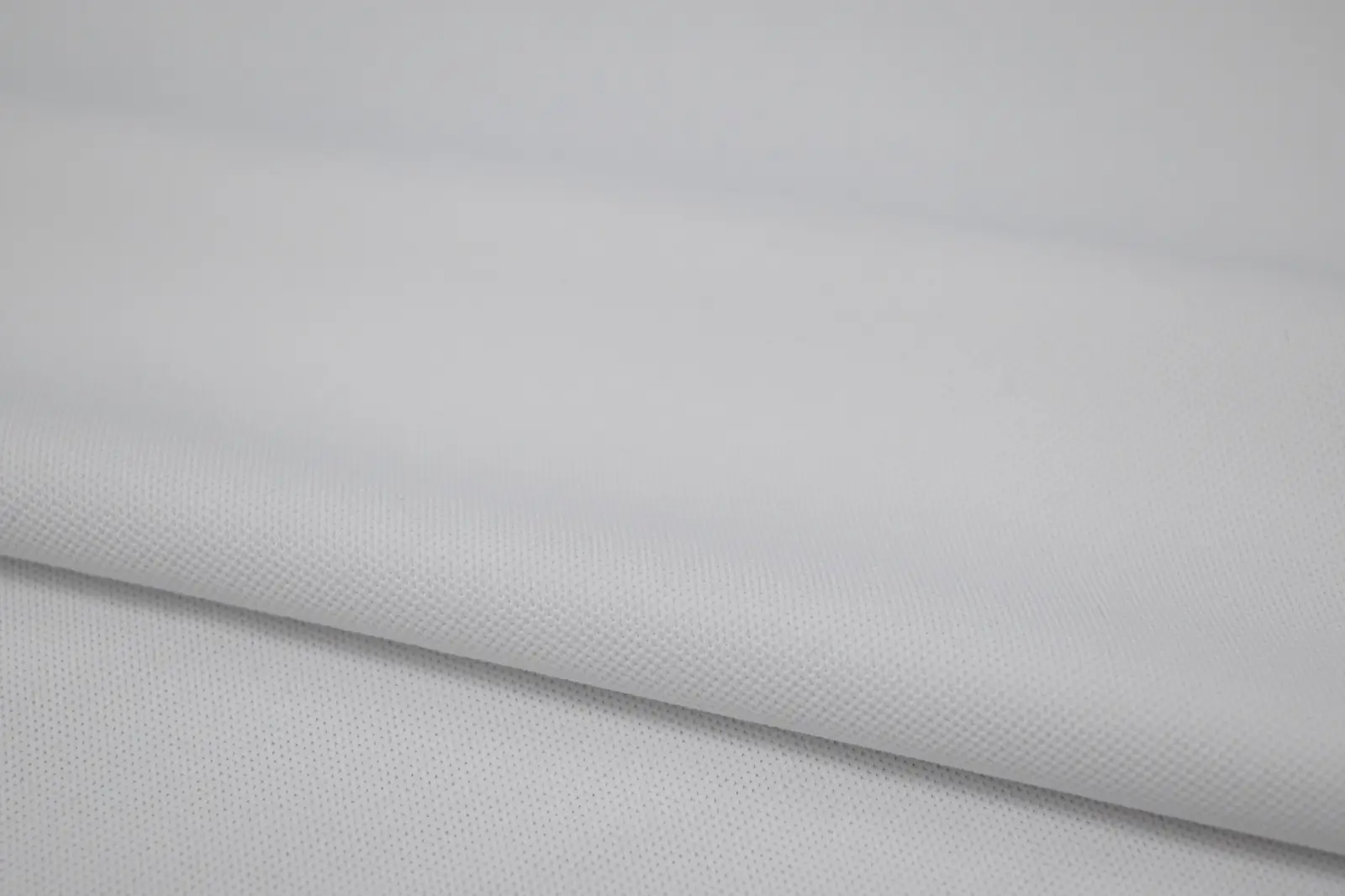
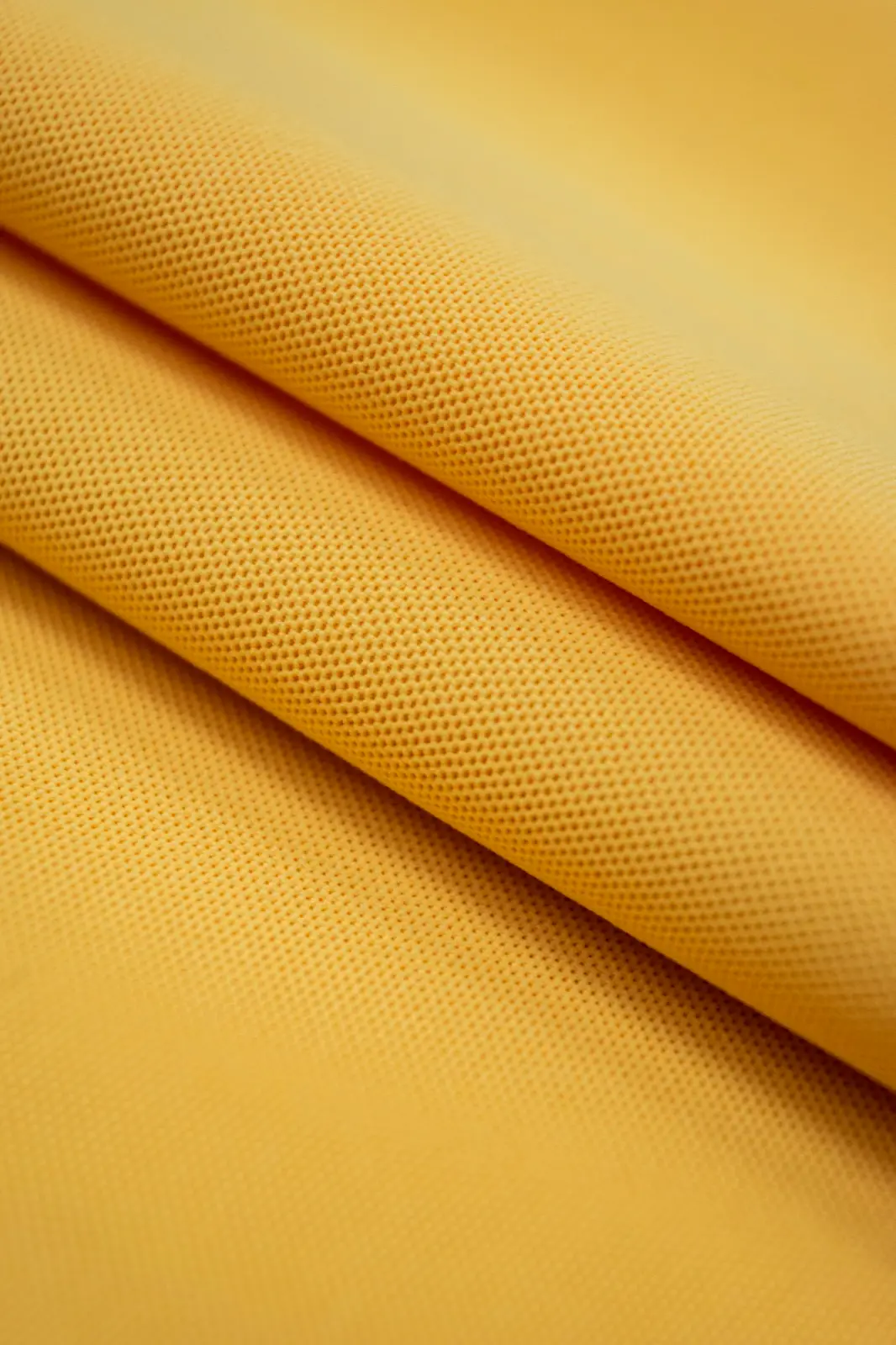
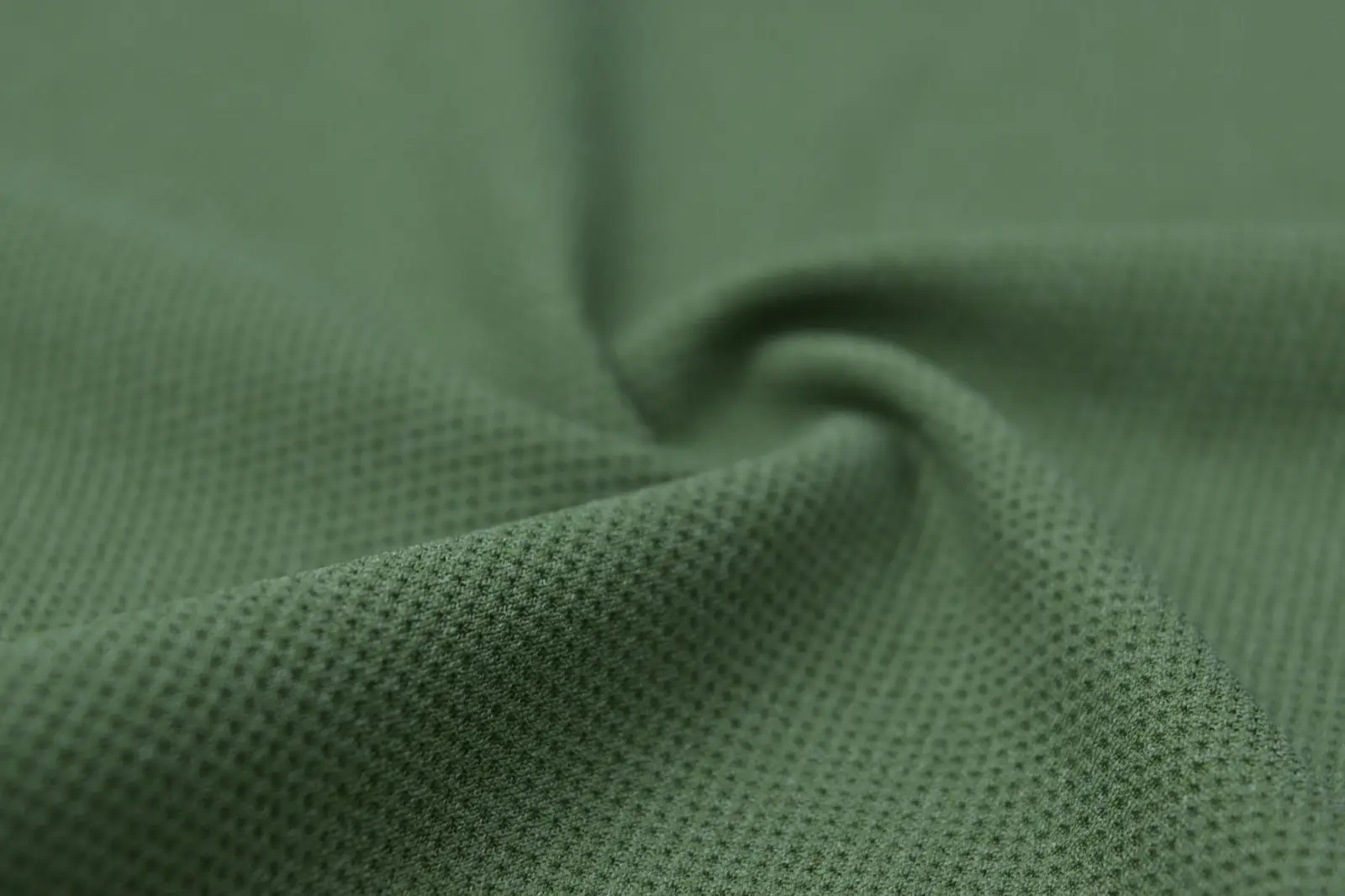
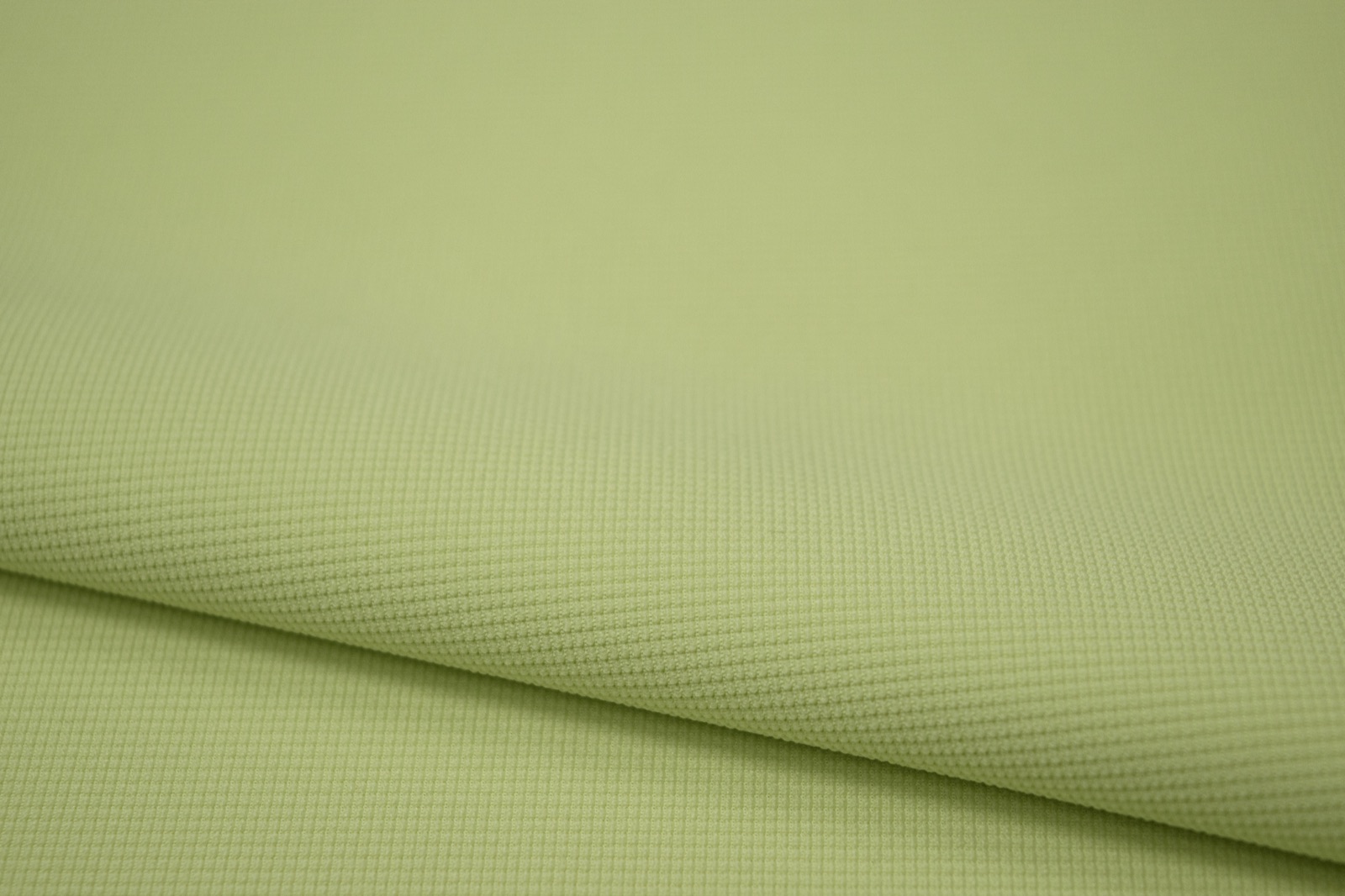
Which fabric for your golf shirt?
Mibein's opinion, drawn from the weights, compositions and function statements on the product pages; not test results or a guarantee. Cut a sample and swing in it before you commit.
| If you are making… | Start with | Weigh against it |
|---|---|---|
| A golf polo for hot rounds | TT25133 (135 g/m², double-face pique, wicking and UV protection listed), TT2568-7 (145 g/m², breathable pique, UV protection and snag resistance listed) | UV protection is a product-page statement; we publish no UPF result for either. TT2568-7 gives no stretch information |
| A golf polo where shape retention matters | XWT1512 (165 g/m², pique, spandex-free stretch with excellent recovery, anti-pilling listed) | Anti-pilling is a product-page statement; we publish no pilling grade for it. A washing color-fastness result is below |
| A structured golf top | XWJ2101 (200 g/m², warp-knit two-tone seersucker, 16% spandex, anti-static listed) | Heavier and generally warmer; its wicking results before and after washing are below |
| Golf skirts, skorts and pleated pieces | C25318E (180 g/m², fine-stripe jacquard, 14% spandex, abrasion-resistant listed), C25145 (240 g/m², warp-knit check, 10% spandex, wrinkle-resistant listed, page says it holds pleats) | Pleat holding and wrinkle resistance are product-page statements; we publish no crease-recovery or pleat-retention result |
Weight, as our working guide (general guidance, not an industry standard): polos and tops around 135–200 g/m² for warm weather, skirts and pleated pieces around 180–240 g/m² for body. Weights are not comparable across constructions, so choose by the sample garment, not the number.
What golf asks of a fabric
General guidance and Mibein's opinion, not test results.
Swing room. Shoulders and hips need stretch with recovery, so the fabric does not stay stretched out after the round. Spandex-free options (TT25133, XWT1512) and spandex options (XWJ2101, C25318E, C25145) both exist; judge recovery on the sample.
Heat and sun. Light pique helps in heat. Where UV protection matters, ask for a UPF result on your color and lot; we publish none for these six.
Sweat. Wicking and quick-dry are product-page statements unless a result is shown below (XWJ2101 has one).
Collar and wash. A polo's collar is the first place pilling and curl show; test a sample garment after washing. See also our polo shirts fabric page.
Skirts, skorts and pleats. Decide how the pleat will be held (pressing or heat-setting is the garment maker's step) and wear-test the seat and hip for bagging. Wrinkle resistance and pleat holding on C25145 are product-page statements.
UPF and stretch. If a garment will be worn stretched, ask whether the UPF result was measured relaxed or stretched.
Golf shorts. None of the six golf-tagged product pages names golf shorts. Ask our fabric experts; for a skort or shorts trial, C25318E and C25145 are the two skirt fabrics to sample.
To request samples, send: the garment (polo, top, skirt, skort), season, weight band, fit, color range, the function that matters most (wicking, UV, shape retention) and expected quantity.
Full specifications: the 6 fabrics
For fabric developers and technical teams. The last column lists the kinds of dated, lot-referenced test record we hold; values are published in the table below or on the linked polo page.
| Fabric | g/m² | Composition | Construction | Stretch as stated | Test records held |
|---|---|---|---|---|---|
| TT25133 | 135 | 100% Polyester | Double-face pique | Spandex-free stretch with good recovery | none |
| TT2568-7 | 145 | 100% Polyester | Pique | None stated | none |
| XWT1512 | 165 | 100% Polyester | Pique | High spandex-free stretch with excellent recovery | colour fastness |
| C25318E | 180 | 86% Polyester / 14% Spandex | Jacquard knit | Rich stretch and recovery | pilling, snagging (published on the polo page) |
| XWJ2101 | 200 | 84% Polyester / 16% Spandex | Warp knit pique | Polyester-spandex stretch | wicking |
| C25145 | 240 | 90% Polyester / 10% Spandex | Warp knit jacquard | Rich stretch and recovery | none |
Weights are as listed; tolerance is not recorded here. All six also appear on our polo shirts fabric page.
Test results we hold
Specifications come from the public product pages; the results below come from our internal records, and the reports are not reproduced here.
| Fabric | Test | Method | Result | Report |
|---|---|---|---|---|
| XWJ2101 | Moisture absorption and quick-drying, original → after 5 washes | GB/T 21655.2-2019; washing GB/T 8629-2017 4N, line dry | Wetting time 2.5 → 2.5 s (grade 5, top face), 2.6 → 2.6 s (grade 5, bottom); absorption speed 74.0 → 70.1 %/s (grade 4, top), 68.7 → 66.8 %/s (grade 4, bottom); maximum wetted radius 25.0 → 26.0 mm (grade 5); liquid spreading speed 5.5 → 5.6 mm/s (grade 5); radius and spreading speed read on the bottom face (requirement in the report: grade 3 or higher for each). Report states pass | Bureau Veritas, 04# black, lot 260802031, 19 Aug 2026 |
| XWT1512 | Color fastness to washing | GB/T 3921-2008, method A(1) | Color change 4-5 (requirement ≥4); staining 4-5 on acetate, cotton, acrylic and wool, 4 on polyamide and polyester (requirement ≥3-4); soap-solution staining 4-5 (≥3). Report states pass | Bureau Veritas, 904# black, lots 260807041 and 260807042, 28 Aug 2026 |
C25318E pilling and snagging results are published on the polo shirts fabric page. Bureau Veritas is the laboratory named in our records (accreditation not recorded here). Each result applies only to the sample, color and lot named. No other result is published for the other fabrics on this page, and we publish no UPF, pilling, shrinkage or crease-recovery result for XWT1512, TT25133, TT2568-7 or C25145.
Frequently asked questions
What is the best fabric for golf shirts?
In general, golf shirts are mostly polyester knits, often pique, with some stretch for the swing; this is common industry practice, not our test result. Within our range, start from the recommendation table and judge on a sample.
Do you have fabric for golf shorts?
None of the six golf-tagged product pages names golf shorts. Contact our fabric experts about the shorts you are planning; C25318E and C25145 are the skirt fabrics to sample first.
MOQ, lead time and samples
Product-page statements, not order commitments: MOQ 150–400 kg per color (the pages also say about 500–1,000 m per color; which figure applies to a given fabric is not stated); dyed stock ready to ship anytime; greige in stock 15–25 days; no greige in stock 35–45 days. For samples the pages say "When the fabric is in stock, we can meet virtually every sampling request." Ask us whether a report exists for your fabric and color.
Contact us
Tell our fabric experts the golf piece you are planning: polo, top, skirt or shorts, the weight band and the tests you need.
- The golf piece
- The weight band
- The tests you need