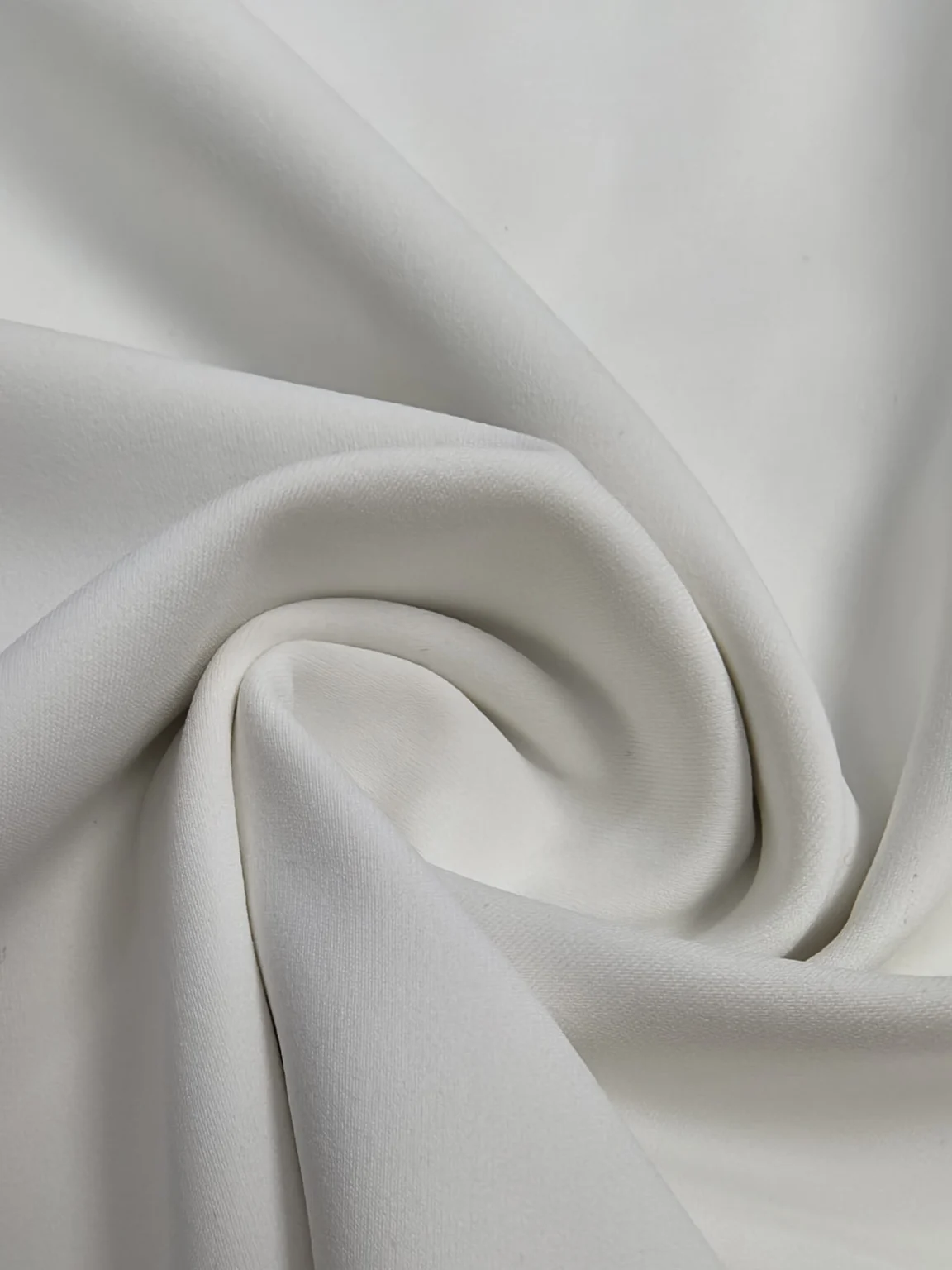
Cool Touch & UV Protection Series

UV Protection Fabric Manufacturer

Performance knits where sun protection is spun into the yarn rather than padded onto the surface. UPF 50+ jerseys and double-knits with cool-touch and heat-blocking options, developed for outdoor, golf and summer active collections.

  • Functional UV-blocking yarn
  • Thin, non-sheer constructions from 120 g/m²
  • Cool-touch & heat-blocking options
  • 4-point inspection on every dye lot
UV protection fabric for summer outdoor and golf apparel
50+UPF label value from 120 g/m²thin, non-sheer knits up to 99%UVB blocked

Why yarn-level

Sun Protection Spun Into the Yarn

A summer top must be light enough to wear at 35 °C yet dense enough to stop ultraviolet radiation. Thin knits let UV through their gaps; heavy ones are too hot. Much UV-protective fabric on the market solves this with a UV absorber applied in finishing.

Our Advanced UV Protection range takes a different route. The UV-blocking function sits inside the fiber: the yarn physically scatters incoming light and, in our product data, blocks both UVA and UVB, with UVB blocking of up to 99%. Because the protection does not depend on a surface coating, we can knit thin, lightweight structures that stay UPF 50+ and non-sheer, even in white and pale shades.

Our label for this collection reads "COOL TOUCH & UV PROTECTION – Cool comfort. Outdoor ready." Blocking UV is the safety layer; cool touch and heat blocking are the comfort layer that makes people actually keep long sleeves on in the sun.

Collection labelCOOL TOUCH & UV PROTECTIONCool comfort. Outdoor ready.
Safety layerBlocking UV
Comfort layerCool touch and heat blocking

UPF explained

What a UPF Rating Actually Tells You

UPF (Ultraviolet Protection Factor) is measured on the fabric, not on skin. A lab shines UV light through the fabric across the UVA and UVB range, measures how much passes through, and weights the result by how strongly each wavelength burns skin. The number is roughly the reciprocal of what gets through: UPF 50 means about 1/50, or 2%, of the effective UV reaches the skin.

Try a UPF valueUPF 50
Excellent
2.0%UV transmitted
98.0%UV blocked
UPF 50+Label value

Each dot = 1% of effective UV. Transmission ≈ 1 / UPF.

Rating bands under AS/NZS 4399:2017

MinimumUPF 15–25≈ 93–96% blocked
GoodUPF 30–45≈ 97–98% blocked
ExcellentUPF 50, 50+≈ 98% or more

The 2017 edition simplified the rating system to three categories and added body-coverage requirements for garment claims. Australia has since issued AS 4399:2020, so confirm which edition your test lab reports to.

How much UV gets through

  • UPF 156.7%
  • UPF 303.3%
  • UPF 502.0%
  • UPF 2000.5%
  • UPF 1,0000.1%
Label capUPF 50+

Why "UPF 700+" never appears on a garment label

Below about 2% transmission, the UPF number climbs very fast for small physical gains: UPF 200 to UPF 1,000 only cuts transmission from 0.5% to 0.1%. Labelling standards therefore cap the declared value at 50+. Read UPF 300+ or 700+ in our product data as headroom, not a label claim: a fabric far above 50 when new and relaxed has margin to stay above 50 when stretched, wet or washed.

What moves UPF up or down

  • Yarn: fibers containing UV-scattering or UV-absorbing components block far more than plain yarns. This is the lever our Advanced UV Protection range uses.
  • Density and weight: tighter, thicker knits leave fewer gaps. Yarn-level blocking lets a 120 g/m² knit do the job.
  • Color: dark and saturated dyes absorb UV, so the same fabric in navy usually tests higher than in white. Light shades are the worst case.
  • Stretch: stretching opens the loops of a knit. A fitted top or leggings can test noticeably lower on the body than on the bench.
  • Wetness: water changes how light scatters through the fabric, and results can go up or down depending on fiber and construction. Test wet if the garment will be worn in water or heavy sweat.

Two routes to UPF 50+

Yarn-Level vs. Finish-Applied UV Protection

Both routes can pass a UPF 50+ test on a new fabric. The difference shows up after a season of washing, and in what you can safely print on the hang tag.

Functional UV-blocking yarnTopical UV finish or added treatment
Where the function sitsInside the fiberOn or near the fiber surface
Durability after washingNot washed off by detergent and abrasion like a coatingCan decline with laundering, heat and abrasion
HandfeelNo extra chemical layer; hand is set by yarn and knitSome finishes add a slight coating or stiffness
CostHigher yarn cost; tied to specific yarns and qualitiesLower; can be added to almost any base fabric
Claims you can supportUPF 50+ with a post-wash test report behind itUPF 50+ when new, ideally with a care note on wash durability

We'll be transparent about our own range. Mibein also supplies a lighter anti-UV type that reaches UPF 50+ by adding nano-scale material. Its hang tag states plainly that performance may weaken with long-term use and washing. It is a good choice for price-driven programs. If your brand wants to market sun protection as a lasting garment feature, we steer you to the yarn-level qualities below and to a post-wash UPF test.

More on finishes: 5 common performance fabric finishes explained

The range

UPF 50+ Fabrics From Our Sun Protection Range

Five qualities from the Advanced UV Protection and cool-touch programs. UPF values above 50+ are product-data headroom, not label claims.
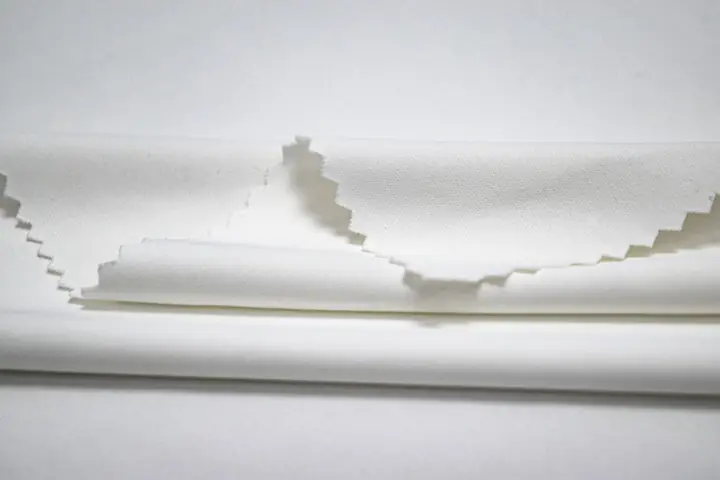
TS25142UPF 100+TS25142 lightweight 120 gsm UPF 100+ non-sheer double-knit fabric

Lightweight Heat-Blocking Double-Knit — TS25142

100% Polyester · 120 g/m² · 165 cm

The lightest quality here and a hot-selling item. Original-yarn sun protection rated UPF 100+ on its hangtag, with full-spectrum isolation and heat blocking of up to 40% to lower body temperature. At 120 g/m² it stays non-sheer, which is rare at this weight.

  • UPF 100+
  • Blocks up to 40% heat
  • Anti-sheer
  • Snag-resistant & anti-pilling
  • Wrinkle resistant

Best for: Hiking tees, long-sleeve sun tops, golf and tennis tops
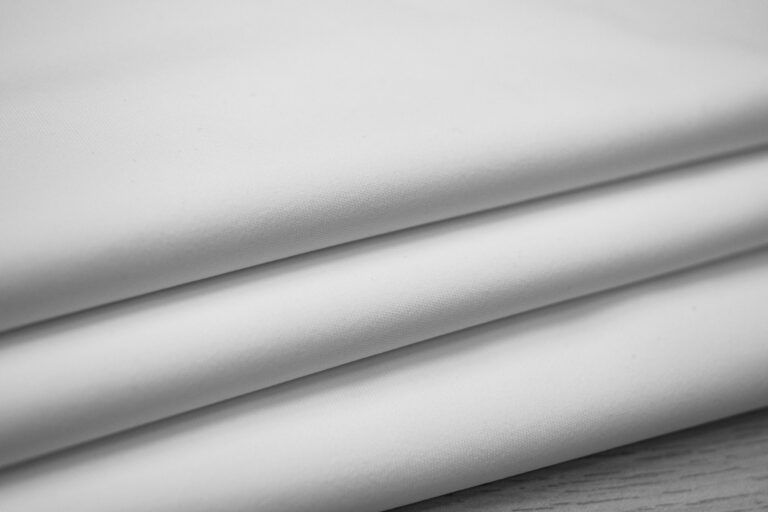
S35802UPF 300+S35802 stretch double-knit fabric with UPF 300+ and instant cool touch

Cool-Touch UPF Stretch Double-Knit — S35802

88% Polyester / 12% Spandex · 160 g/m² · 160 cm

The quality that best represents the "cool touch & UV protection" idea. Rated UPF 300+ in our product data, with instant cool touch and what the brochure calls full-spectrum heat isolation and cooling. Spandex gives recovery for fitted active tops, and the original-yarn construction keeps it non-sheer.

  • UPF 300+
  • Instant cool touch
  • Anti-see-through
  • Good elasticity & recovery
  • Breathable

Best for: Active outdoor tops, sun hoodies, fitted long-sleeves
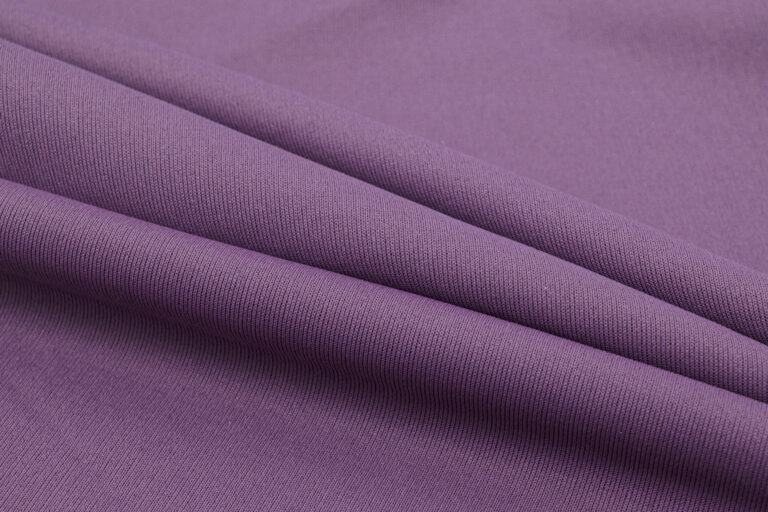
C25319AUPF 700+C25319A double-face jacquard outdoor tech fabric rated UPF 700+

Outdoor Tech Double-Face Jacquard — C25319A

100% Polyester · 165 g/m² · 170 cm

A double-face jacquard for high-end outdoor tech wear. Its UV protection is added in finishing and rated UPF 700+ on its hangtag. A dual-profile cross-section fiber gives fast wicking and quick-dry performance (level 4), and high-crimp yarn gives stretch and recovery without spandex. The jacquard adds a layered, three-dimensional surface.

  • UPF 700+
  • Spandex-free stretch
  • Quick-dry
  • Ultra-soft

Best for: Knit sports base layers, mock-neck tops
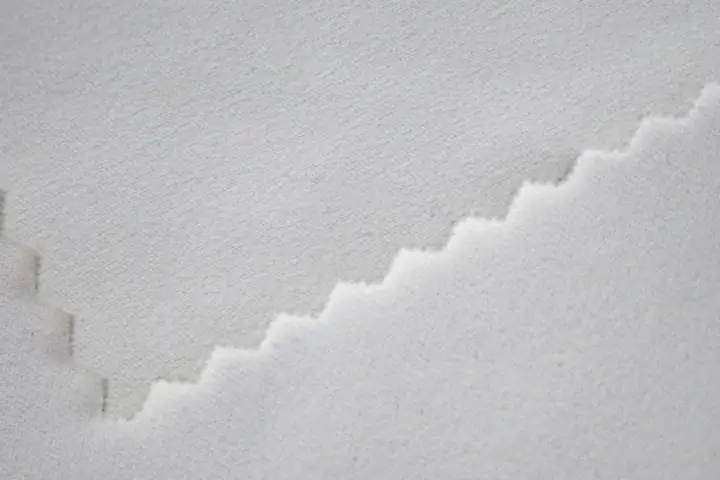
S35801UPF 1000+S35801 anti-see-through stretch double-knit sun protection fabric

Heat-Blocking Anti-Sheer Stretch Double-Knit — S35801

82% Polyester / 18% Spandex · 220 g/m² · 160 cm

Original-yarn anti-see-through and sun protection fabric, rated UPF 1000+ on its hangtag. Heat-blocking properties are designed to reduce perceived temperature, and the smooth face resists snagging and pilling. The highest-stretch option in this range.

  • UPF 1000+
  • Heat-blocking
  • Anti-see-through
  • Snag & pilling resistant

Best for: T-shirts, women's trousers, sun-protection jackets
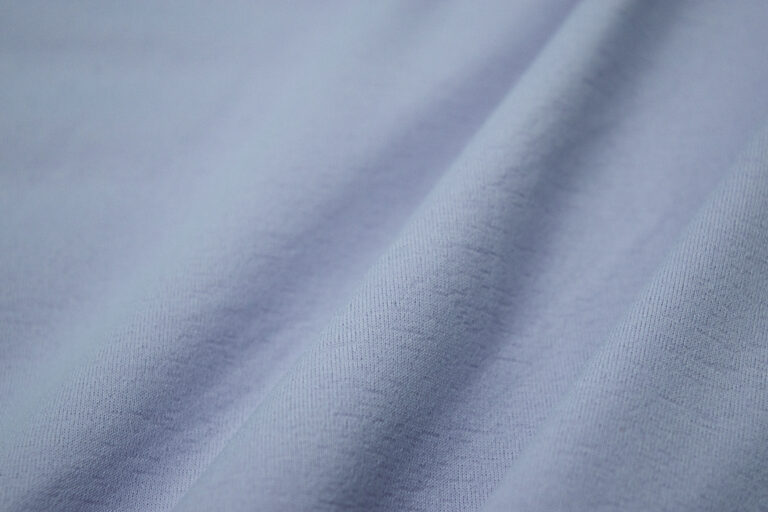
TP25239Cool touchTP25239 SORONA cool-touch matte soft-stretch knit fabric in light blue

SORONA® Cool-Touch Matte Soft-Stretch Fabric — TP25239

100% Polyester (SORONA®) · 160 g/m² · 160 cm

Our cool-touch micro-cotton: "cool against the skin, soft stretch in motion." It is the comfort half of the series rather than a UPF-rated quality: spandex-free SORONA® stretch with excellent recovery, wicking and quick-dry, and an instant cool touch with Q-max above the national standard. Pair it with the UV qualities above for inner layers and cotton-feel tees. SORONA® hangtags are provided with purchases.

  • Cool touch
  • Wicking & quick-dry
  • Matte, cotton-like
  • Spandex-free recovery

Best for: Outdoor casual tees, spring and summer streetwear

Need data?

Swatches & data sheets for every quality

Specifications from Mibein hangtags and data sheets.

The products shown on this website represent only part of our fabric portfolio. Contact us for more fabric options, technical data, color cards, and sample support.

Also in the range: TT2568, a 145 g/m² golf piqué with a honeycomb texture, listed as anti-UV and anti-sheer in our brochure. It is a strong fit for polo programs. Need opacity as well? See our opaque fabric range, which shares the same yarn technology.

The comfort layer

Cool Touch Fabric and Heat-Blocking: The Comfort Layer

"Cooling fabric" covers three different effects. Specify which one you need.

1. Instant cool touch

The cool feeling when fabric first meets skin. It is measured as Q-max: the peak rate of heat flow from a warm plate into the fabric, in W/cm². A higher Q-max feels cooler. China's GB/T 35263 sets a threshold for "contact cool feeling" claims at Q-max ≥ 0.15 W/cm². TP25239's hangtag states a Q-max above the national standard.

2. Heat blocking

Reducing the heat that reaches the body from sunlight. TS25142's hangtag states heat blocking of up to 40%, and S35802 and S35801 are described as heat-blocking to lower body temperature. It is a separate property from UPF.

3. Staying cool over time

The cool touch fades once fabric and skin reach the same temperature. Lasting comfort then depends on moisture transport and airflow, so pair cool touch with moisture-wicking and breathable fabric constructions.

For summer outdoor wear the three stack: UPF 50+ protects the skin, heat blocking takes the edge off direct sun, and cool touch plus wicking make a long sleeve bearable in July. S35802 combines UV, heat isolation and cool touch in one fabric; TS25142 pairs UPF with heat blocking.

For buyers

Testing and Labelling Checklist for Buyers

A UPF number is only as useful as the method behind it. Match the test to the market of sale.

MarketStandardWhat it requires
Australia / New ZealandAS/NZS 4399Test method and rating scheme; declared UPF capped at 50+; minimum UPF 15 for sun-protective labelling
United StatesAATCC 183 (test method), with ASTM D6603 for labellingUV transmittance measured through the fabric; labelling guidance starts at UPF 15
European Union / UKEN 13758-1 (method), EN 13758-2 (classification)UPF above 40 and average UVA transmittance below 5% to carry the sun-protective marking
ChinaGB/T 18830UPF above 40 and average UVA transmittance below 5% to be called UV-protective; labelled UPF 40+ or 50+
  1. Ask for the standard and edition on every report, not just the number.
  2. Test the lightest shade. If white passes, darker colors of the same quality usually do too.
  3. Test stretched and wet if the garment is fitted or worn for water sports.
  4. Test after laundering if you plan to market wash-durable protection. Post-wash results are the main proof of yarn-level performance.

Background reading: What is AATCC testing for performance fabrics?

What we check on light shades

White and pastel sun tops are where UV fabrics most often fail: little dye to absorb UV, and thin knits can look see-through. Our Advanced UV Protection yarns target this case; our product data states they keep opacity and UPF 50+ in white and light colors. We watch three points:

  • UPF on the palest colorway before a color card is released.

  • Opacity alongside UPF. A fabric that shows skin through the knit in white is also letting light through its gaps. See why opacity matters for light-color apparel.

  • Lot-to-lot consistency. Every dye lot is inspected to the US 100-yard 4-Point System and checked in the color-matching light booth and by spectrophotometer. Knitting, dyeing and finishing all happen in-house at our own mill.

Garment applications

Where Sun Protective Fabric Earns Its Place

Sun hoodies & long sleeves

Coverage only works if the fabric is light and cool enough to keep on. Start with TS25142 and S35802.

Hiking & trail tops

Long exposure plus backpack stretch and rub. Choose qualities with headroom above UPF 50.

Golf & tennis

Pale colors, fitted cuts and four hours in open sun. C25319A, TT2568 and S35801 fit polo and skirt programs.

Outdoor & travel

Summer outdoor wear where cool touch and low weight matter as much as UPF. See our lightweight fabric range.

Stock & sourcing

A Ready Fabric Library Behind Every Order

Beyond custom development, we keep 50+ greige fabric qualities in stock, so sampling and bulk orders start faster. Our team follows the market every season and recommends the colors and functional fabrics buyers are asking for.

50+ Greige qualities in stock

Ready base fabrics across UV protection, cool touch, quick-dry and stretch, so most programs start from stock rather than from scratch.

Built around your order

Quantities, dye lots and delivery are planned around your program, from first sample yardage to repeat bulk.

Following market trends

We track what sells each season in outdoor, golf and summer active wear, and update the range to match.

Popular colors & functional picks

Tell us your market and price point. Our team recommends the colorways and functional fabrics currently in demand.

Sourcing for a distribution or wholesale program?

FAQ

UV Protection Fabric FAQ

What is UPF?

UPF (Ultraviolet Protection Factor) measures how much UVA and UVB radiation passes through a fabric, weighted by how strongly each wavelength burns skin. UPF 50 means roughly 1/50 of the effective UV gets through. Labels in most markets show a maximum of 50+.

What is the difference between UPF 50+ and SPF?

SPF rates sunscreen on skin and mainly reflects protection against UVB, the burning rays. UPF rates fabric and covers both UVA and UVB. UPF protection doesn't need reapplying, but only covers the skin under the garment.

Does UV protection wash out of fabric?

It depends on where the protection sits. Topical UV finishes can decline with washing and abrasion. Protection built into the yarn is not washed off like a coating, but stretch, wear and fabric shrinkage can still change the result. Ask for a UPF test after laundering if you plan to market lasting protection.

Does fabric color affect UPF?

Yes. Dark and saturated colors absorb more UV, so the same fabric usually tests higher in navy or black than in white. Always test the lightest shade in a range, as it is the worst case. Yarn-level UV protection is how light-colored garments can still reach UPF 50+.

Is cool-touch fabric really cooler?

It feels cooler on contact because it pulls heat from the skin faster, which is measurable as Q-max. The effect is strongest in the first moments of contact. For lasting comfort, cool touch needs to be combined with moisture-wicking and breathability.

What is Q-max?

Q-max is the peak heat flux, in W/cm², measured when a warm plate touches the fabric. It quantifies the instant cool feeling. China's GB/T 35263 uses a Q-max of at least 0.15 W/cm² as the threshold for contact-cool claims.

Is UV-protective fabric breathable?

It can be. Fabrics that rely only on density for UPF tend to be heavy and less airy. When the yarn does the blocking, the knit can stay light enough to breathe. Our UV qualities start at 120 g/m², and S35802 and TS25142 are described as breathable in our product data.

What is the minimum UPF for sun-protective clothing claims?

Under AS/NZS 4399 and the US labelling guide ASTM D6603, a fabric needs at least UPF 15 to be labelled sun-protective. EN 13758-2 in Europe and GB/T 18830 in China require UPF above 40 plus average UVA transmittance below 5%. Most brands target UPF 50+ so one claim works across markets.

Start a program

Plan Your Summer Sun-Protection Line

Tell us the garment, the target market's labelling standard, the lightest color you plan to run and whether you need cool touch or heat blocking. We'll suggest qualities from the range above, send swatches and data sheets, and tell you which test reports are available for each. Garment factories and distributors can also work with us on ready qualities.

滚动至顶部