
Hoodie and sweatshirt fabric
Hoodie and Sweatshirt Fabric: Fleece, Terry and Brushed Knits
Our range is performance knits. This page lists 23 fleece, terry, brushed and related knits from our range (23 listed here; three further fleece fabrics, including a heavier weight, are not counted), 95 to 310 g/m², for hoodie and sweatshirt makers. Only three name hoodies on their product pages (C23586, Q36589 and J35451) and only Q36589 names sweatshirts; the rest are named for mid-layers, pullovers or base layers, so treat them as candidates to sample. Product-page data checked on 5 November 2026.
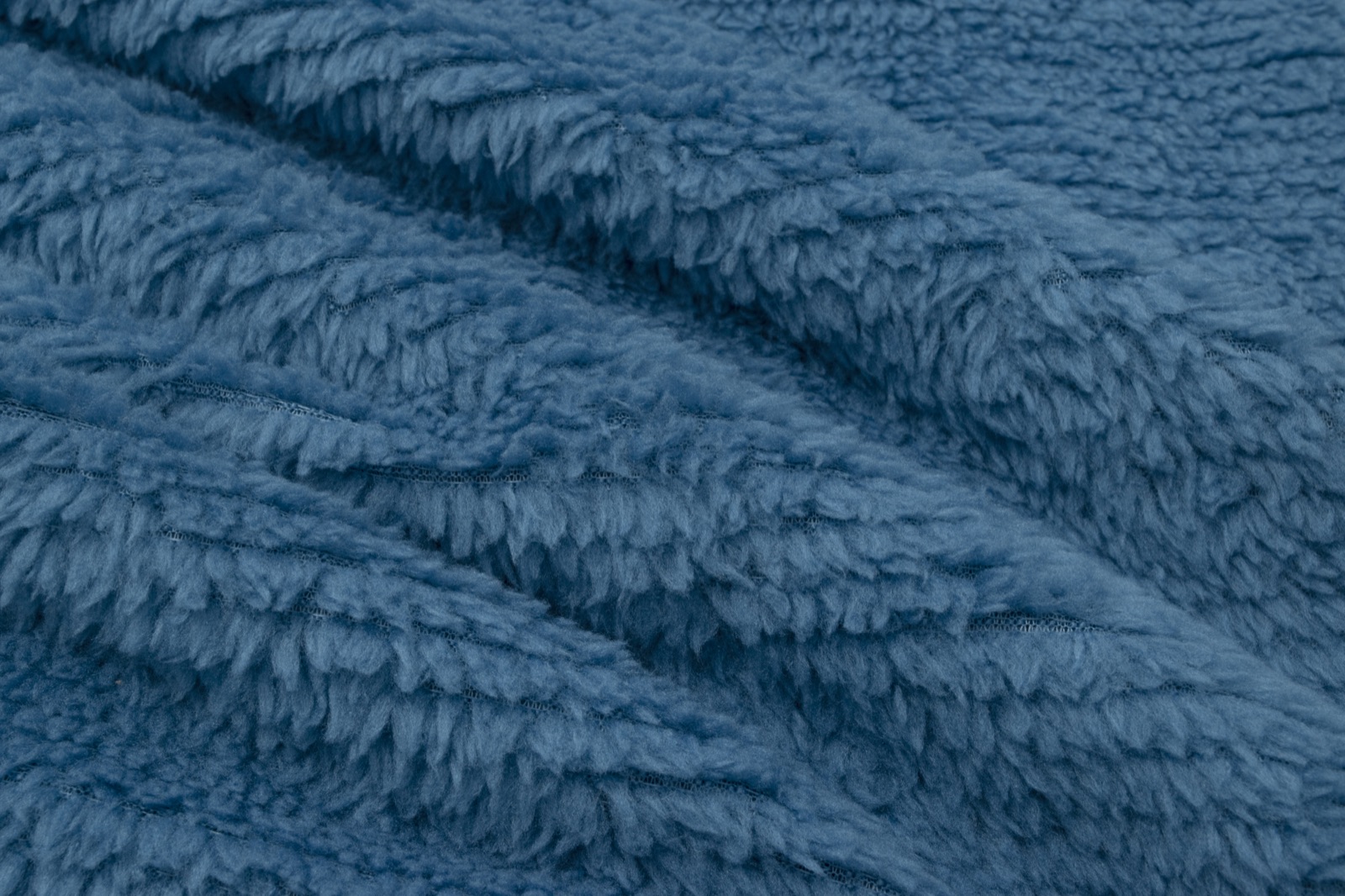
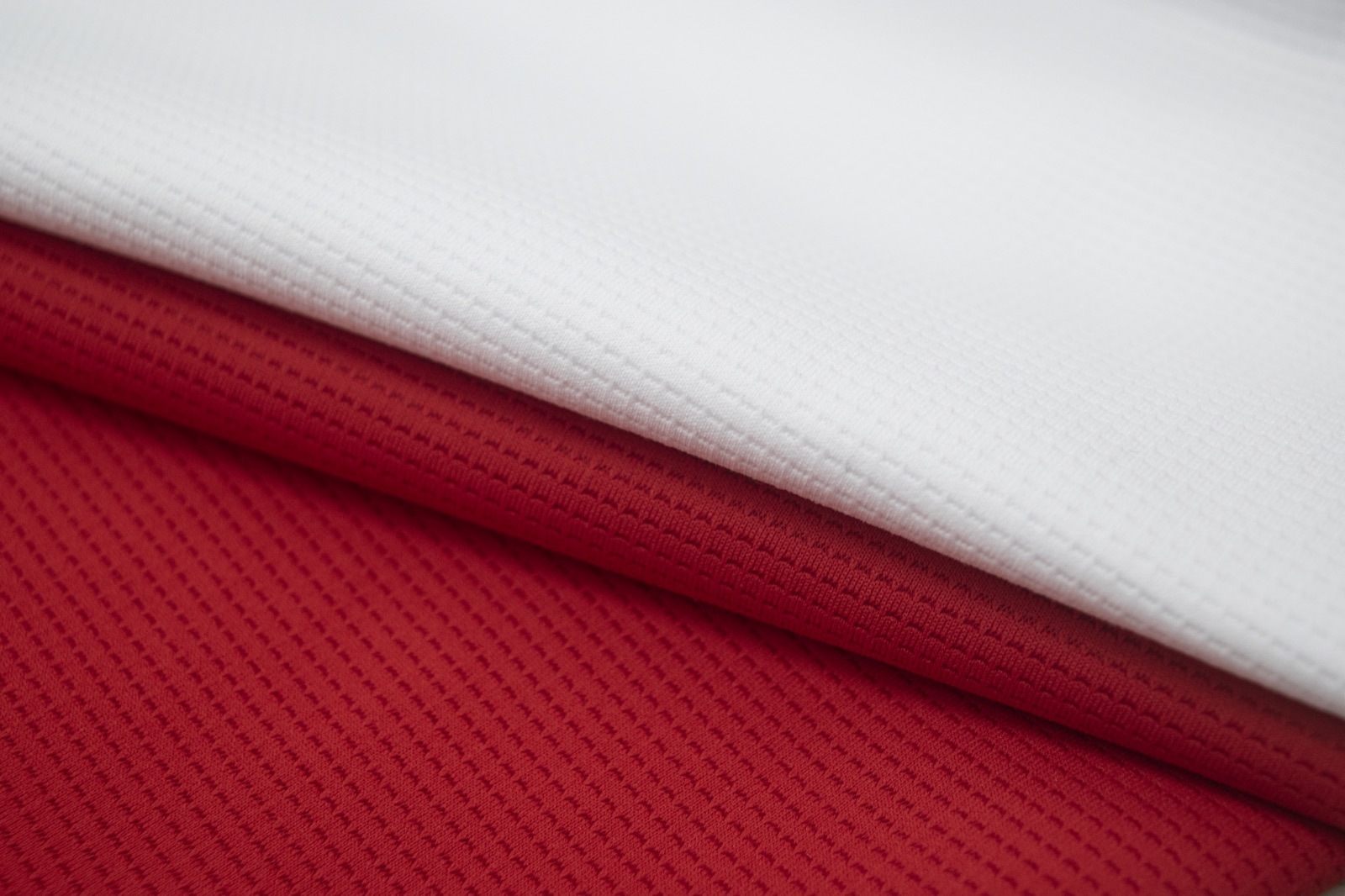
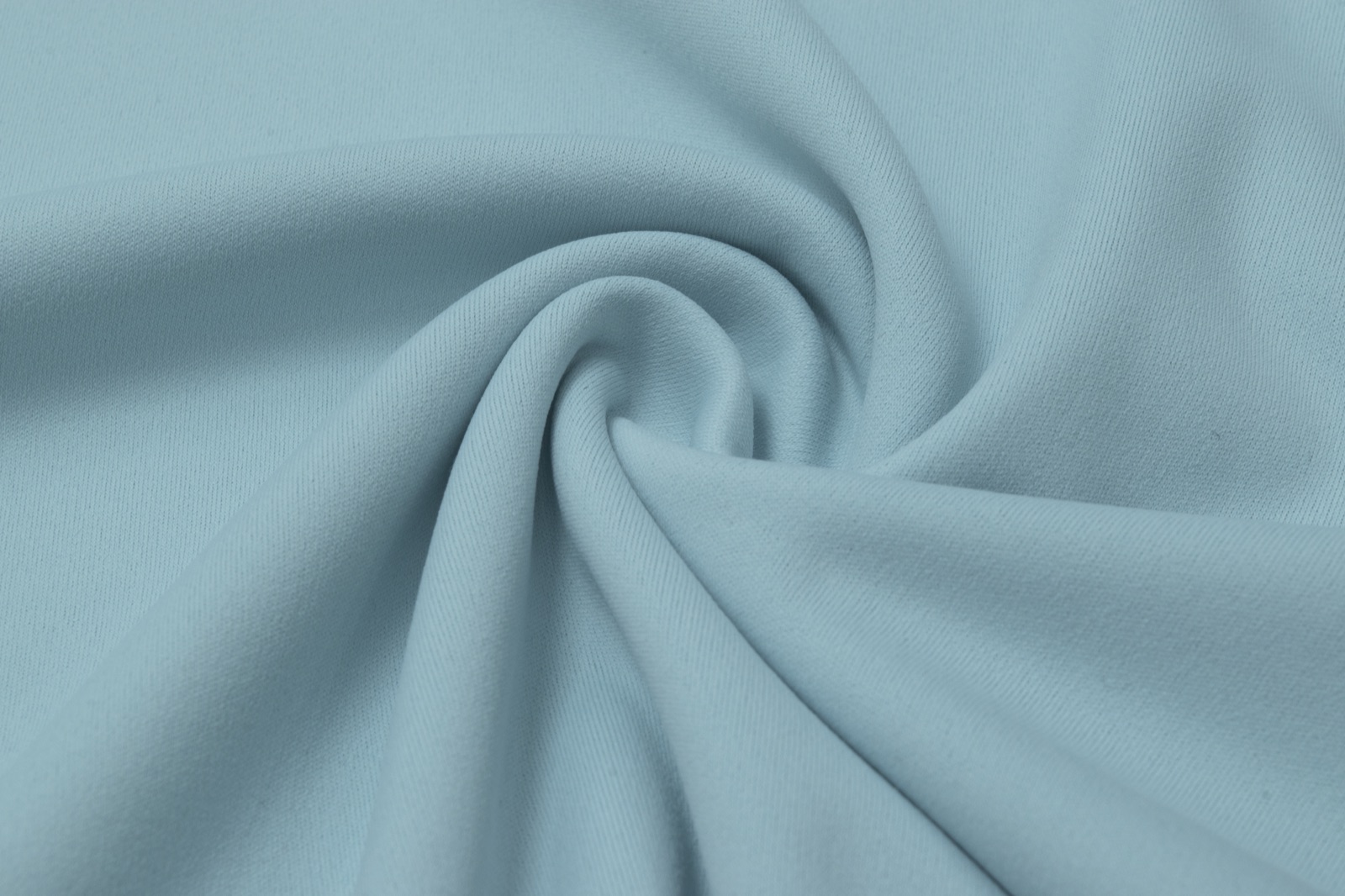
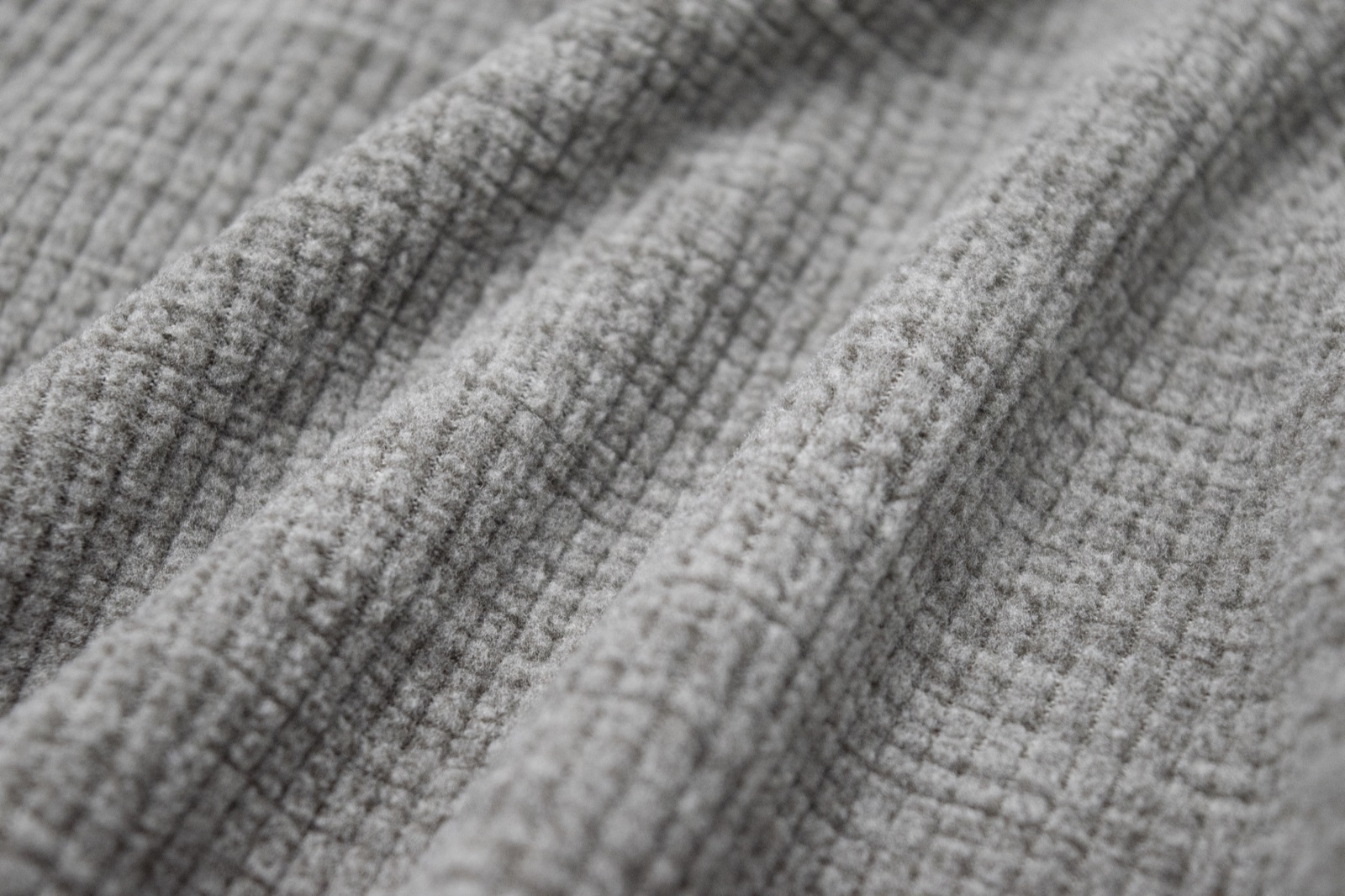
Which fabric for your hoodie?
Our recommendation, written for designers and buyers. These picks are Mibein's opinion, built from the weights, compositions and stretch statements on the product pages. They are not test results or a performance guarantee; confirm on a sample in your own color.
| If you are making… | Start with | Weigh against it |
|---|---|---|
| A light layering hoodie or sweatshirt | C23586 (180 g/m², names hoodies, built-in stretch stated); XWY1607-185 (185 g/m², 9% spandex) | Lighter fabric gives less warmth; C23586 is the only one in 140–199 g/m² whose page names hoodies |
| An everyday classic hoodie or crewneck with a cotton-like look | Q36589 (220 g/m² terry, cotton-like face, looped back; names hoodies and sweatshirts) | No stretch is stated, so plan the fit with ease and use rib trims at cuffs and hem |
| A fitted or athleisure hoodie | J35451 (245 g/m², 13% spandex, names hoodies); Q36590 (240 g/m², 5% spandex); Y35705 (230 g/m², 6% spandex) | More spandex means more stretch but a different hand; judge recovery on a sample |
| A fashion hoodie where texture sells | J35451 (three-dimensional check); Y35705 (corn kernel texture); XWT2601 (check jacquard, fleece face, 8% spandex) | Textured faces look different cut and sewn than on the roll; check a sample garment |
| A sports hoodie where moisture handling matters | Q35557 (220 g/m², 16% spandex, one-way wicking listed); Y35707 (240 g/m², nylon blend, one-way moisture transfer listed) | Neither page names hoodies, and we hold no numeric wicking value; a candidate to test, not a promise |
| A winter hoodie | XWY1608-310 (310 g/m², the heaviest of the 23 listed here); Y35748 (240 g/m², anti-static listed, named heat-retaining); Y35751 (250 g/m², anti-static, 5% spandex) | Among the 23 listed here, nothing sits between 260 and 299 g/m²; XWY1608-310 states no stretch; anti-static is a product-page statement with no test value |
| A very light zip hoodie or liner | Y35749 (105 g/m²); XWY35767 (110 g/m²) | Named for mid-layers, light jackets and linings, not hoodies |
Q36591, XWP1013-1 and Y35721 are named for base layers only; in our opinion they are not a first choice for an outer hoodie.
Weight, as our working guide (general guidance, not an industry standard): under 140 g/m² very light layers (4 fabrics); 140–199 light layering (4); 200–259 everyday (14); 260–299 none on this page; 300 and above heavy cold-season (1, among the 23 listed here). At the same weight, a looped back (terry) generally reads lighter and more breathable and a brushed or fleece back warmer and fuller (general background, not test results), so settle the surface before the weight.
Four questions before you choose
General guidance and Mibein's opinion, not test results.
- How is it worn?Daily wear and layering point to 140–259 g/m²; cold-season outerwear points to 300 and above (one of the 23 listed here; ask about the uncounted heavier fleeces).
- How close is the fit?A relaxed fit works with polyester-only fabrics; a close fit usually needs spandex or a stated built-in stretch (C23586).
- What hand and surface?Cotton-like and flat suggests terry (Q36589); soft and lofty suggests fleece; a brushed back suggests Q35557 or Q35526.
- What quantity?Product pages state MOQ 150–400 kg per color and flexible supply for smaller orders; tell us your quantity first.
Common mistakes
General guidance and Mibein's opinion, not test results.
Choosing by g/m² alone.Weight narrows the field; the sample decides.
Assuming "stretch" means good recovery.A stretch statement does not describe recovery after wear. Ask whether a stretch and recovery result exists if fit matters.
Skipping the check on your own color.Pilling and color fastness results apply only to the sample, color and lot tested.
Forgetting the trims.Cuffs and hem bands need good recovery; test the rib on a sample garment.
Treating a function as a test value.Anti-static, wicking and heat-retaining are product-page statements unless a result appears in the test table below.
Mixing dye lots in a set.Tops and bottoms from different lots can show a shade mismatch (general guidance); check both together. Our sweatpants and jogger fabric page covers the bottoms.
To request samples, send: the garment (hoodie, zip hoodie, crewneck), season, weight band, fit, color range, any matching bottom and expected quantity.
Full specifications: the 23 fabrics
For fabric developers and technical teams. Applications named on product pages: hoodies for C23586, Q36589 and J35451; sweatshirts for Q36589 only; base layers only for Q36591, XWP1013-1 and Y35721; mid-layers and pullovers for the other 17.
| Fabric | g/m² | Composition | Width | Stretch as stated |
|---|---|---|---|---|
| Lightweight Mesh Fleece Fabric (Q35551-1) | 95 | 100% Polyester | 140 cm | None stated |
| Anti-Static Ribbed Lightweight Fleece Fabric (Y35749) | 105 | 100% Polyester | 155 cm | None stated |
| Lightweight Jacquard Cloud Fleece Fabric (XWY35767) | 110 | 100% Polyester | 150 cm | None stated |
| Heather Stretch Brushed-Look Jersey Fabric (XWP1013-1) | 115 | 100% Polyester | 140 cm | No stretch statement; Stretch & Recovery listed as a function |
| Lightweight Curly Fleece Knit Fabric (Q35540) | 140 | 100% Polyester | 140 cm | None stated |
| Brushed Cationic Polyester Spandex Jersey Fabric (Q36591) | 170 | 90% Polyester / 10% Spandex | 148 cm | Spandex stretch |
| Lightweight Hollow-Yarn Polar Fleece Fabric (C23586) | 180 | 100% Polyester | 160 cm | Built-in stretch |
| Recycled Cationic Stretch Polar Fleece Fabric (XWY1607-185) | 185 | 91% Polyester (63% recycled) / 9% Spandex | 145 cm | Spandex stretch |
| Two-Tone Cationic Check Fleece Fabric (XWY1605) | 200 | 100% Polyester | 152 cm | None stated |
| Check Polar Fleece Fabric (Q35594) | 210 | 100% Polyester | 150 cm | None stated |
| Heat-Retaining Brushed Fleece with One-Way Wicking (Q35557) | 220 | 84% Polyester / 16% Spandex | 150 cm | Spandex stretch |
| Cotton-Feel Polyester Terry Knit Fabric (Q36589) | 220 | 100% Polyester | 180 cm | None stated |
| Corn Kernel Textured Stretch Fleece Fabric (Y35705) | 230 | 94% Polyester / 6% Spandex | 160 cm | Polyester-spandex stretch |
| Brushed Polyester Spandex Jacquard Knit Fabric (C25377) | 240 | 92.6% Polyester / 7.4% Spandex | 155 cm | Rich stretch and recovery |
| Cationic Polyester Stretch Polar Fleece Fabric (Q36590) | 240 | 95% Polyester / 5% Spandex | 155 cm | Spandex stretch |
| Nylon Brushed Fleece with One-Way Moisture Transfer (Y35707) | 240 | 60% Nylon / 35% Polyester / 5% Spandex | 152 cm | Spandex stretch |
| Super Soft Brushed Stretch Double Knit Fabric (Y35721) | 240 | 76% Polyester / 24% Spandex | 155 cm | High stretch with good recovery |
| Anti-Static Heat-Retaining Polar Fleece Fabric (Y35748) | 240 | 100% Polyester | 155 cm | None stated |
| Warp Knit Check Fleece Fabric (J35451) | 245 | 87% Polyester / 13% Spandex | 145 cm | Polyester-spandex stretch |
| Stretch Brushed Thermal Fleece Fabric (Q35526) | 250 | 80% Polyester / 20% Spandex | 135 cm | High spandex stretch |
| Corn Kernel Jacquard Stretch Fleece Fabric (XWT2601) | 250 | 92% Polyester / 8% Spandex | 160 cm | High stretch |
| Anti-Static Stretch Check Polar Fleece Fabric (Y35751) | 250 | 95% Polyester / 5% Spandex | 165 cm | Spandex stretch |
| Cationic Two-Tone Heavyweight Fleece Fabric (XWY1608-310) | 310 | 100% Polyester | 160 cm | None stated |
Product-page data checked on 5 November 2026. Weights are as listed; tolerance is not recorded here. XWP1013-1's name says "Brushed-Look"; its product page says no brushing. The "63% recycled" in XWY1607-185's composition is as printed on its page; no certificate is referenced here. Functions on the pages are statements, not test results: 6 list anti-static, 4 list moisture-wicking. Three further fleece fabrics on our site, including a heavier weight, are not counted here.
Test results we hold
Specifications come from the public product pages, which come from our product catalog. Product pages may not reflect every record we hold. The results below come from our internal records; the reports are not reproduced here.
| Fabric | Test | Method | Result | Report |
|---|---|---|---|---|
| Q35540 | Thermal insulation (clo, a unit of thermal insulation) | GB/T 35762-2017 | 0.447 clo | GTTC, midnight blue, 4 Jan 2025, lot not recorded |
| Q35540 | Pilling grade | GB/T 4802.1-2008, round-track method, 10 raising and 50 pilling cycles, 490 cN | 2-3 | GTTC, 01# black, 8 Nov 2024, lot not recorded |
| Q35540 | Color fastness to water | GB/T 5713-2013 | Color change 4; staining 4 to 4-5 across the tested fibers (requirement in our records: 3 or higher) | GTTC, 01# black, lot 25060697, 11 Sep 2025 |
| Q35540 | Color fastness to perspiration | GB/T 3922-2013 | Color change 4 (acid) and 4 (alkaline); staining 4 to 4-5 across the tested fibers (requirement in our records: 3 or higher) | GTTC, 01# black, lot 25060697, 10 Sep 2025 |
| Q35557 | Far-infrared emissivity (a measure of far-infrared emission by the fabric), unwashed | GB/T 30127-2013 | 0.92 (requirement in our records: 0.88 or higher) | GTTC, black, lot J0406025P1, 22 Sep 2025 |
GTTC is the laboratory named in our records; its accreditation is not recorded here. GB/T denotes Chinese national standards. Each result applies only to the sample, color and lot named; test conditions are not recorded beyond the method. A one-way transfer report for Q35557 is marked compliant, but its numeric value is not in our records, so it is not counted as a result. Pilling grades run from 1 to 5; a higher grade means less pilling.
No other results are published. None of the fabrics that name hoodies (C23586, Q36589, J35451) has a result here. Contact us with your fabric and color to ask what records exist.
Frequently asked questions
Will the fleece pill?
Pilling depends on fabric, color and finish. For Q35540, the report (GTTC, 01# black, 8 Nov 2024) gave grade 2-3 under GB/T 4802.1-2008; it applies only to that sample. We publish no pilling result for the other fleeces. See pilling grade explained.
What are the MOQ and lead time?
Product-page statements, not order commitments (checked 5 November 2026): MOQ 150–400 kg per color (the pages also say about 500–1,000 m per color; which figure applies to a given fabric is not stated). Dyed stock: ready to ship anytime. Greige in stock: 15–25 days. No greige in stock: 35–45 days.
Can I get samples and test reports?
Product-page statement: "When the fabric is in stock, we can meet virtually every sampling request." For smaller orders, the pages say flexible supply is offered; contact us with your quantity. The results we publish are in the table above; contact us with the fabric and color to ask whether a report exists.
Contact us
Contact us with the garment, the weight band and the tests you need. Product-page statements are not order commitments.
- The garment
- The weight band
- The tests you need