

Jacquard Knit Fabric Explained: The Performance Knit That Wicks, Protects & Feels Plush (140 GSM)
Everyone talks about “moisture-wicking” fabric. But what makes a jacquard performance knit different — and why do runners, yogis, and hikers keep coming back to it?
What Is Jacquard Knit Fabric?
Jacquard knit fabric is a type of knitted textile produced on a jacquard knitting machine, which controls each needle independently. Unlike basic single-jersey knits that produce one uniform structure, jacquard knitting can create complex patterns, textures, and even functional channel structures directly into the fabric — no printing, no embroidery, no post-production pattern work.
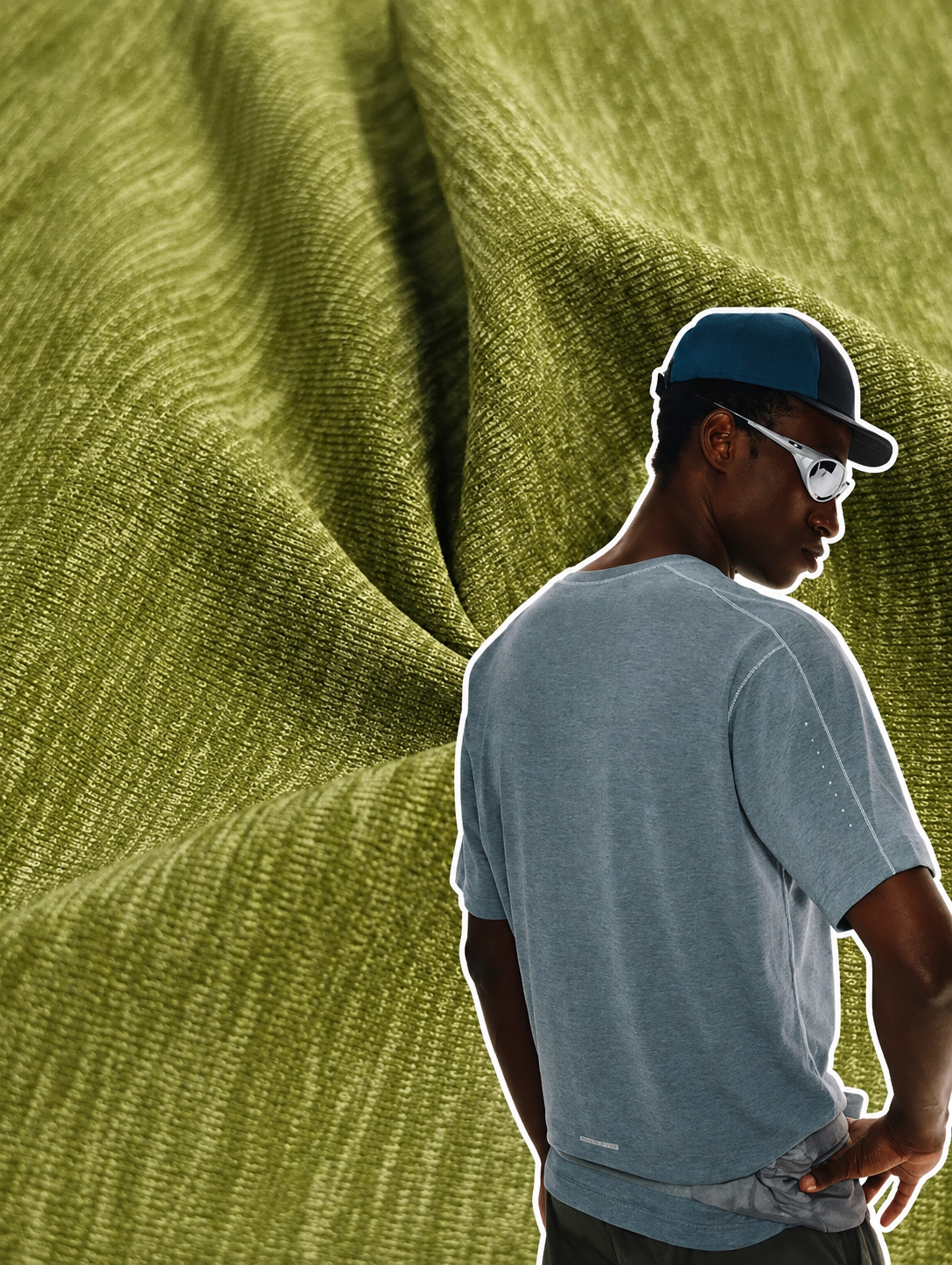
The jacquard machine — invented by Joseph Marie Jacquard in 1804 and refined over two centuries — allows fabric engineers to build engineered zones into the knit: areas that move moisture, zones with more airflow, or surfaces with a softer hand. In performance apparel, this capability is what turns a simple T-shirt into a genuinely functional garment.
How Jacquard Is Made
In a jacquard knit, every loop is independently controlled. The machine selects which needles knit, tuck, or miss at each course, building up raised patterns or three-dimensional structures. The jacquard loom’s punch-card heritage is the ancestor of modern computing — and the same principle now drives performance knitwear. Because the pattern is formed in the fabric structure itself, it will never peel, crack, or wash off — a key advantage over printed performance textiles.
This structural approach also enables the fabric to perform differently in different zones: a denser knit on the shoulders for UV coverage, a more open structure on the back for breathability, and a plush face layer that sits gently against the skin. For functional apparel development, this is where the real value of jacquard lies.
Feature #1: Moisture-Wicking — The Non-Negotiable
Because the moisture-guide function is built into the fiber itself rather than applied as a surface coating, it does not wash out. Moisture-wicking textile science explains how fiber-level capillary action outperforms surface treatments. That is the difference between a fabric that claims to wick and one that actually performs, season after season.
Feature #2: 7A Antibacterial Protection
Antibacterial finishing is the differentiator that keeps performance apparel socially comfortable. In a 7A antibacterial jacquard knit, the treatment inhibits the growth of odor-causing bacteria — the same bacteria that multiply rapidly in warm, sweaty environments. Antimicrobial textile research has shown how these treatments control microbial growth on skin-contact fabrics.
The practical result: after intense training, there is no noticeable body odor. You can take your jacket off at the gym without hesitation, and go straight from a yoga class to a coffee with confidence. For apparel brands, this feature directly supports the “wear it all day, every day” story that modern activewear consumers want.
Feature #3: Plush, Skin-Friendly Hand-Feel
Here is where jacquard surprises people: plush softness. At 140 GSM, the fabric is light — almost featherweight. But the jacquard structure gives it a natural loft and bounce, so it never feels like a thin, cheap “no-quality” fabric. The face layer is soft and supple against the skin, and even with continuous friction during a run, there is no chafing or discomfort.
This combination — lightweight yet plush — is exactly what separates premium performance knits from commodity polyesters. The fabric drapes, breathes, and feels like something you actually want to wear every day.
Technical Profile (140 GSM)
| Property | Value |
|---|---|
| Weight | 140 GSM |
| Moisture management | Moisture-wicking (fiber-level masterbatch) |
| Antibacterial | 7A antibacterial |
| Hand-feel | Plush, soft, skin-friendly |
| Structure | Jacquard-knit, pattern-in-fabric |
Where It Shines: 3 Key Scenarios
- Running / Cycling training tops — sweat-guide wicking keeps the back dry; plush face prevents chafing over long miles
- Yoga / Pilates tops — soft, breathable, and odor-free after class; move from studio to street with confidence
- Light outdoor hiking T-shirts — lightweight and quick-drying for day hikes, with all-day freshness

One fabric, three categories. That is the efficiency apparel developers are looking for — a single stock fabric that supports multiple products in the collection.
Why These Three Features Work Together
FAQ
What is jacquard knit fabric?
Jacquard knit fabric is knitted on a machine that controls each needle independently, allowing complex patterns and functional structures to be built directly into the fabric — no printing required.
How is jacquard different from printed fabric?
Jacquard patterns are formed in the fabric structure itself, so they never peel, crack, or wash off. Printed patterns sit on the surface and can degrade over time.
Does the moisture-wicking function wash out?
No. In a performance jacquard knit, the moisture-guide function is added via functional masterbatch in the fiber itself, so it maintains performance through repeated washing.
What is 7A antibacterial?
7A antibacterial refers to a high-level antibacterial treatment that inhibits odor-causing bacteria growth, keeping garments fresher during and after intense activity.
Is 140 GSM jacquard knit suitable for bulk production?
Yes. This construction is production-ready for training tops, yoga tops, and outdoor T-shirts at scale, with proven knitting and dyeing processes.