

Fabric weight (GSM) changes how a moisture-wicking fabric feels and performs — and the highest number on the spec sheet isn’t automatically the best choice.
Short answer: lighter fabrics (160–165 g/m²) dry fastest and suit race-weight tees; mid-weight (185 g/m²) suits polos and layering pieces; heavier blends (240 g/m²) prioritize structure and recovery over pure drying speed. Match the weight to the garment’s job, not to a general sense of “premium = heavier.”
Key Takeaways
- GSM (grams per square meter) measures fabric weight, not quality — heavier isn’t automatically better for a wicking fabric.
- Lighter fabrics (160–165 g/m²) maximize evaporation speed; heavier fabrics trade some speed for structure and durability.
- Real Mibein SKUs span 160–240 g/m², each built for a different garment category.
- Weight and fiber blend interact — a heavy 100% polyester fabric behaves differently from a heavy nylon-spandex blend.
Why Fabric Weight Changes Wicking Performance
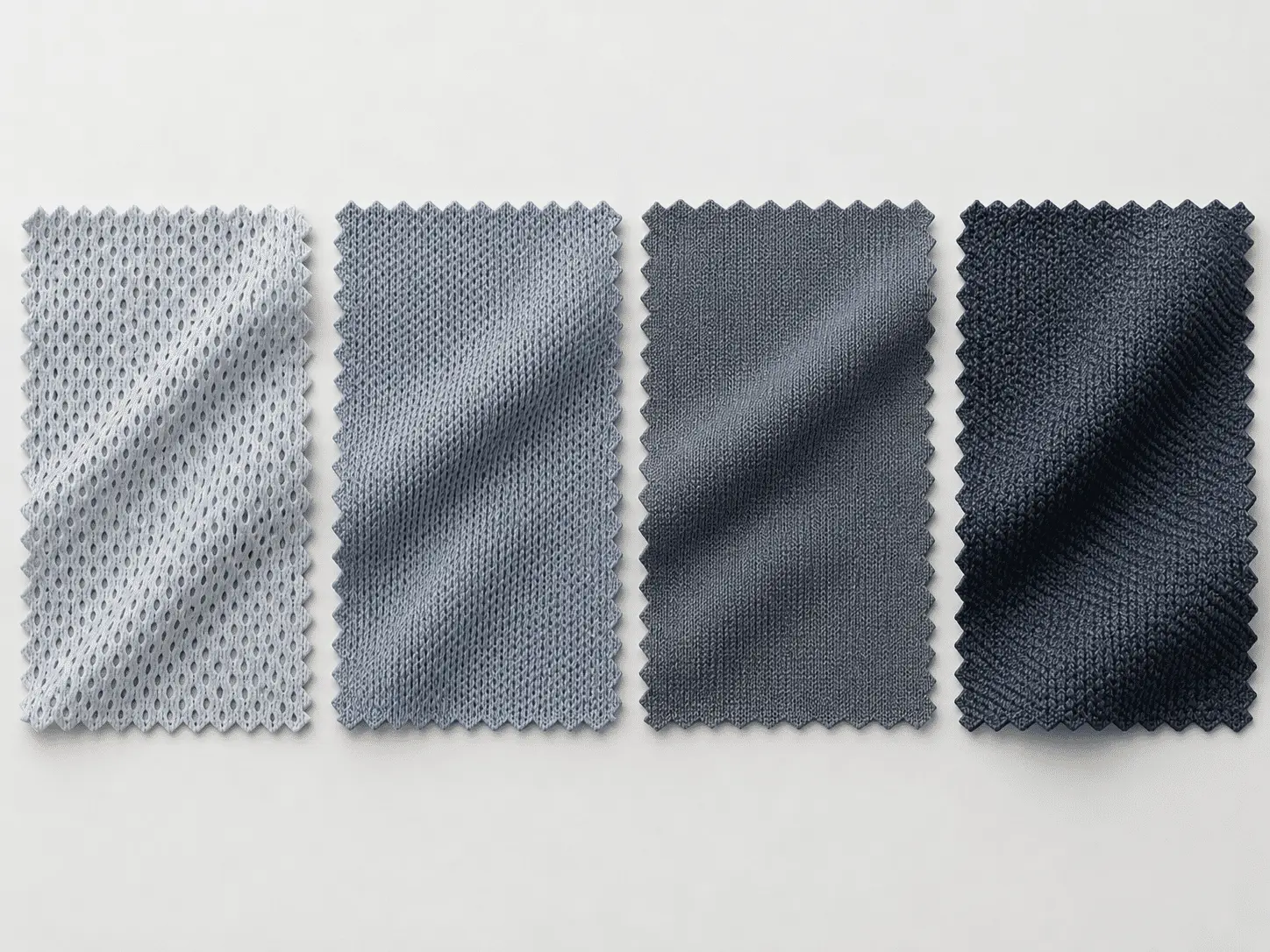
A lighter, more open fabric exposes more surface area to air relative to its bulk, which speeds up evaporation once moisture has spread across the surface. A heavier fabric has more mass to move that moisture through, which can slow drying slightly — but heavier weights also hold their shape better, resist show-through, and often feel more substantial for structured garments like polos or quarter-zips.
| SKU | Weight | Composition | Typical garment |
|---|---|---|---|
| TP25239 | 160 g/m² | 100% Polyester | Race-weight tees, base activewear tops |
| C25319A | 165 g/m² | 100% Polyester | Everyday activewear, mid-layer tops |
| WXT2502 | 185 g/m² | 100% Polyester | Polos, quarter-zips, structured layering |
| Y35707 | 240 g/m² | 60% Nylon / 35% Poly / 5% Spandex | Fitted base layers, compression-style pieces |
Matching Weight to Garment Type
- Race-weight tees and base activewear (160–165 g/m²) — prioritize the fastest possible drying and the lightest hand-feel. See how this plays out in golf apparel fabric, where lightweight wicking matters through a full round.
- Polos and quarter-zips (185 g/m²) — need enough structure to hold a collar or zip placket while still wicking. Covered in more depth on the polo fabric and quarter-zip fabric pages.
- Fitted base layers and compression pieces (240 g/m² nylon blend) — prioritize shape recovery and a smoother hand-feel over maximum drying speed.
Weight and Fiber Blend Work Together
Weight alone doesn’t determine performance — the fiber blend at that weight matters just as much. A 100% polyester fabric at 165 g/m² and a nylon-spandex blend at a similar weight will wick and stretch differently. The full comparison of how nylon and polyester behave independent of weight is in Nylon vs. Polyester: Which Wicks Moisture Better?
Once you’ve narrowed down a weight and blend, the next step is confirming the supplier’s wicking claims hold up under actual testing — see AATCC 195 Explained and How to Verify a Supplier’s Moisture-Wicking Claims. For the full sourcing picture, start at the Moisture-Wicking Fabric Buyer’s Guide.
Not sure which weight fits your collection?
Send Mibein’s team your target garment and we’ll recommend the GSM and blend that actually matches the brief.
Start Fabric Development