
Both fibers wick — but they don’t wick the same way, and picking the wrong one for the garment is the most common spec mistake we see.
Short answer: polyester dries faster and costs less; nylon holds slightly more moisture but recovers its shape better and feels smoother against skin. Neither wins outright — the right choice depends on whether the garment prioritizes drying speed or fit recovery.
Key Takeaways
- Polyester is more hydrophobic, so it pushes moisture to the surface and dries faster — typically 10–30% quicker than nylon.
- Nylon absorbs slightly more moisture into the fiber itself (roughly 2–5% of its weight), which slows drying but improves stretch recovery.
- A nylon-spandex blend (like Mibein’s 240 g/m² option) trades some drying speed for better fit retention in fitted garments.
- 100% polyester is the default for race-weight tees; nylon blends fit base layers and compression-style pieces better.
How the Two Fibers Actually Behave
Polyester is inherently hydrophobic — it resists absorbing water into the fiber itself, which forces moisture to travel along the fiber surface and spread out for fast evaporation. This is why polyester dominates lightweight, fast-drying activewear.
Nylon behaves differently. It can take on a small percentage of its own weight in moisture, which means it dries a bit slower than polyester — but that same property, combined with nylon’s natural elasticity, gives it better stretch recovery and a softer hand-feel against skin. That’s why nylon shows up more often in fitted base layers and compression garments, where recovery matters as much as drying speed.
| Property | Polyester | Nylon (blend) |
|---|---|---|
| Drying speed | Faster | Slower (nylon absorbs 2–5% of its weight) |
| Stretch recovery | Lower unless blended with spandex | Higher, holds shape after repeated movement |
| Hand-feel | Crisper | Softer, smoother |
| Cost | Lower | Higher |
| Typical use | Race-weight tees, everyday activewear | Fitted base layers, compression pieces |
What This Looks Like in Real Fabric Specs
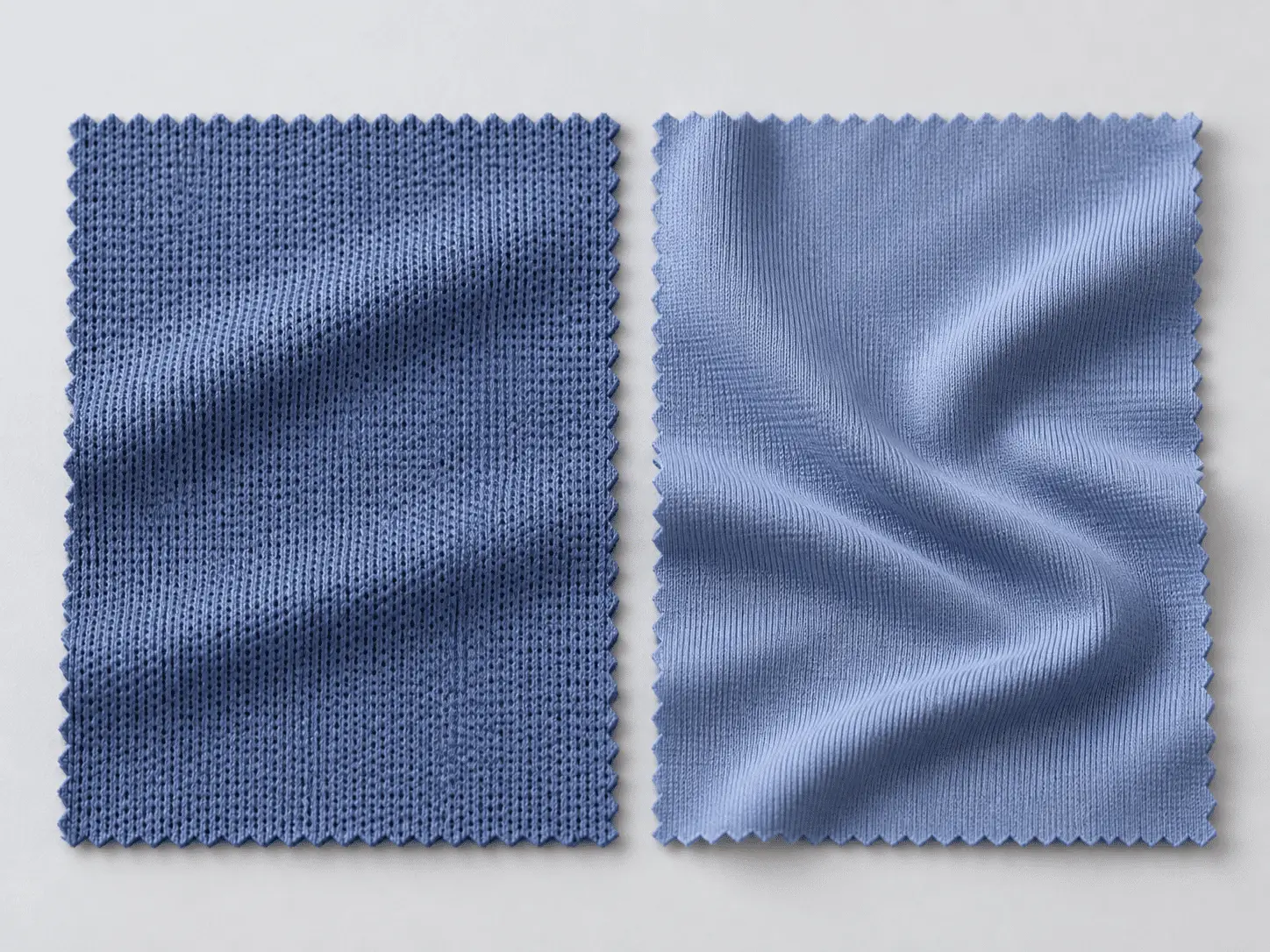
Mibein’s moisture-wicking line reflects this trade-off directly. The 160 g/m² and 165 g/m² options are 100% polyester, built for lightweight, fast-drying tops. The 240 g/m² option is a 60% nylon / 35% polyester / 5% spandex blend — heavier by design, because it’s meant for garments where shape retention matters as much as wicking speed. Neither is a “better” fabric in the abstract; they’re built for different jobs.
For the full weight-by-weight breakdown across the range, see the Moisture-Wicking Fabric Weight Guide.
Confirming Which One You’re Actually Getting
Fiber composition should always be stated as a percentage on the spec sheet — “nylon-feel polyester” and “actual nylon blend” are not the same fabric, and the difference matters for both performance and cost. If a quote doesn’t list exact percentages, that’s worth flagging before sampling. More on what else to check is in How to Verify a Moisture-Wicking Fabric Supplier’s Claims.
For the fiber-level mechanics behind why either fiber wicks in the first place, see What Is Moisture-Wicking Fabric? How Does It Work? For the full sourcing picture, start at the Moisture-Wicking Fabric Buyer’s Guide.
Not sure which fiber fits your garment?
Tell Mibein’s team what you’re developing and we’ll recommend polyester or a nylon blend based on the actual use case, not a default.
Start Fabric Development