
A five-point checklist for separating a real wicking fabric from a hangtag claim — before you commit to a bulk order.
Short answer: ask for AATCC 195 test data, exact fiber-composition percentages, and current certification documents — and be cautious of any supplier who can’t produce these within a day or two, since it usually means testing wasn’t done in-house.
Key Takeaways
- A “moisture-wicking” label with no test data attached is a marketing claim, not a spec.
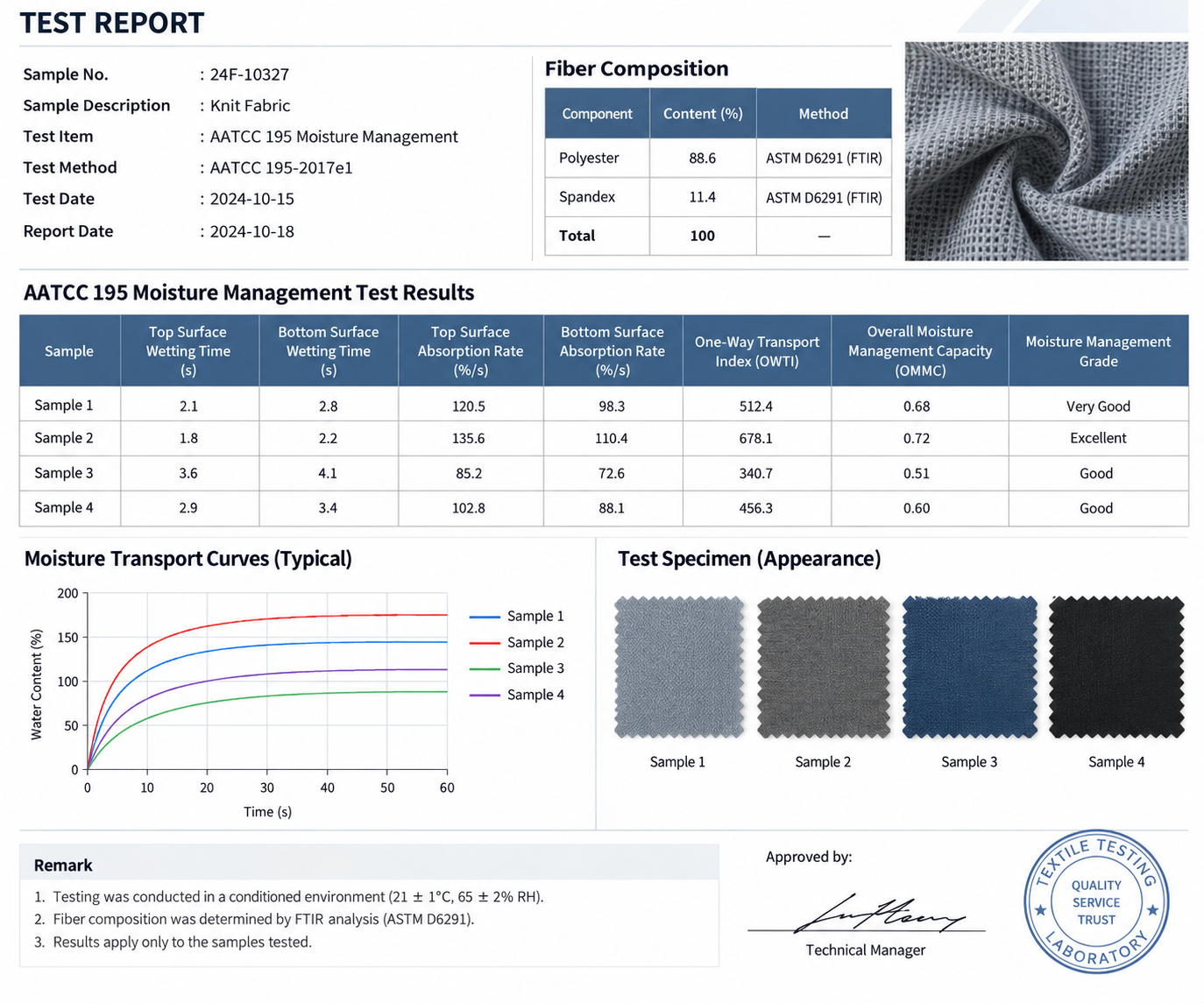
- Request the actual AATCC 195 wetting-time and spreading-speed numbers, not just a compliance statement.
- Fiber composition should be stated as exact percentages — vague terms like “nylon-feel” are a warning sign.
- Certifications like OEKO-TEX Standard 100 can be checked directly against the issuing body’s records.
The Five Things to Ask For
- Named test standard, not a vague claim. “Moisture-wicking” or “quick-dry” printed on a listing means little without a reference to the actual test used. Ask specifically whether the fabric has been tested to AATCC 195, Liquid Moisture Management Properties — see the full breakdown in AATCC 195 Explained.
- The actual numbers, not just a pass label. A legitimate test report includes wetting time, spreading speed, and one-way transport figures. If a supplier only offers “AATCC 195 passed” with no numbers, ask for the underlying report.
- Exact fiber composition percentages. “100% polyester” or “60% nylon / 35% polyester / 5% spandex” is a real spec. Marketing phrases like “nylon-feel” or “wicking-enhanced” without a percentage breakdown often mean a topical finish rather than fiber-level engineering.
- Current, checkable certifications. If a supplier cites OEKO-TEX Standard 100 or a similar certification, the credential should be verifiable through the certifying body’s own records — not just a logo on a PDF.
- Consistency across dye lots. A fabric that wicks well in a sample but varies between production batches is a supply-chain risk, not just a testing one. Ask how the mill controls for dye-lot consistency on repeat orders.
Red Flags Worth Slowing Down For
- “Moisture-wicking” with no standard named at all
- Fiber composition described only in marketing terms, never as percentages
- A certification claim that takes more than a few days to document
- Reluctance to share dye-lot consistency data for repeat orders
Once You’ve Verified the Fabric
With test data and certifications confirmed, the remaining decision is matching fiber blend and weight to the actual garment — covered in Nylon vs. Polyester: Which Wicks Moisture Better? and the Moisture-Wicking Fabric Weight Guide. For the complete sourcing picture, start at the Moisture-Wicking Fabric Buyer’s Guide.
Want to see Mibein’s actual test data first?
We’ll send AATCC 195 figures and current certifications for the moisture-wicking SKUs that fit your garment — before you place a sample order.
Request Documentation