

AATCC 195 is the test that separates a real moisture-wicking claim from a marketing one. Here’s what it actually measures and what the resulting numbers should tell you.
If a supplier’s spec sheet says “moisture-wicking” with no test data attached, it’s a description, not a specification. AATCC Test Method 195, Liquid Moisture Management Properties of Textile Fabrics, is the industry-recognized way to turn that claim into a comparable number.
Key Takeaways
- AATCC 195 measures wetting time, absorption rate, and spreading speed on both fabric surfaces — not a simple pass/fail.
- The test uses calibrated electrical sensors to track how a test solution moves through the fabric in real time.
- Ask suppliers for the actual wetting-time and one-way transport figures, not just “AATCC 195 tested.”
- This test has limits — it isn’t reliable on very thick, highly absorbent fabrics like terry cloth.
What AATCC 195 Actually Measures
The test places a fabric sample between upper and lower electrical sensor grids, drops a measured amount of test solution onto the surface, and tracks electrical conductivity as the liquid spreads. From that, the test produces several distinct scores:
- Wetting time — how long before the top and bottom surfaces start absorbing liquid.
- Absorption rate — how quickly the fabric takes in the liquid once wetting begins.
- Spreading speed — how fast the liquid moves outward across the fabric surface, which determines how quickly it can evaporate.
- One-way transport capability — whether moisture moves preferentially from the skin-facing side to the outer side, rather than sitting in the fabric.
- Overall moisture management capacity (OMMC) — a combined score used to classify the fabric’s overall wicking performance.
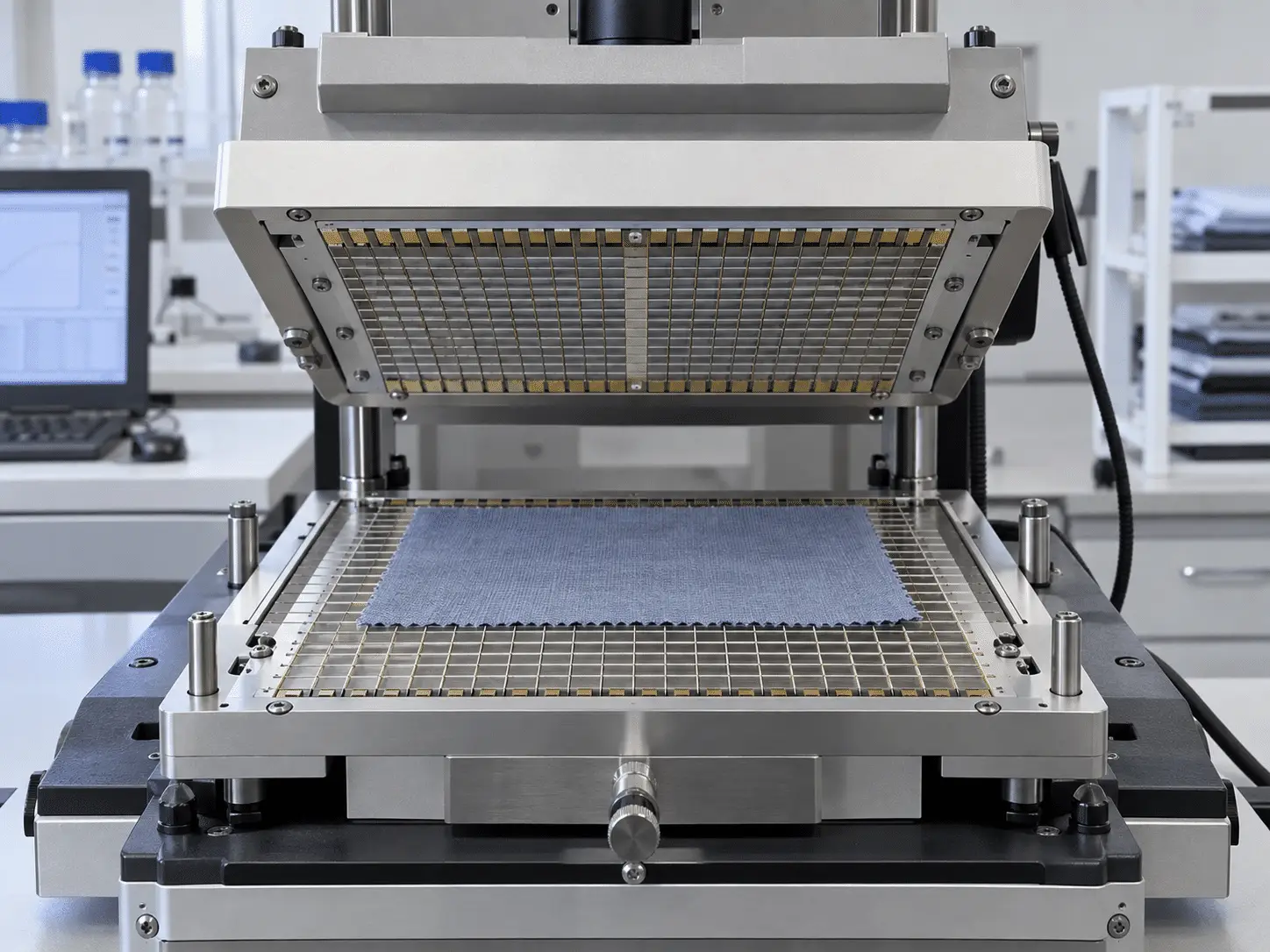
A real moisture management tester in action — the same type of equipment used to generate AATCC 195 scores.
How to Read the Scores When Comparing Suppliers
The numbers only matter in relative terms — a lower wetting time and higher spreading speed both indicate faster-drying performance, but “good” depends on the garment’s use case.
| Metric | What a strong result looks like | Why it matters |
|---|---|---|
| Wetting time | Shorter (fewer seconds) | Faster start to moisture transfer away from skin |
| Spreading speed | Faster | Larger evaporation surface, faster drying |
| One-way transport | Higher positive value | Moisture moves outward, not back toward skin |
Where the Test Doesn’t Apply
AATCC 195 is calibrated for knitted, woven, and nonwoven fabrics of typical activewear weight. It’s less reliable on very thick, highly absorbent structures like terry cloth, where the fabric’s absorbent capacity overwhelms the sensor readings. For those constructions, a different test method is more appropriate — worth confirming with your mill if you’re sourcing outside standard performance-knit weights.
For how fabric weight itself interacts with wicking speed once you’ve got real test scores in hand, see the Moisture-Wicking Fabric Weight Guide. And if you’re comparing certifications alongside test scores, the checklist in How to Verify a Supplier’s Moisture-Wicking Claims covers what else to request.
Want to see real AATCC 195 data?
Mibein tests moisture-wicking fabric in-house. Tell us your garment type and we’ll send the actual wetting-time and spreading-speed figures for the SKUs that fit.
Request Test Data