

“Thermal fabric” gets used loosely on spec sheets to mean anything warm, but warmth in a knit is an engineering outcome, not a fiber property you can order by name. Two fabrics with identical fiber content can differ enormously in how much heat they retain, depending entirely on how the knit traps air. Understanding that mechanism is what lets a product developer spec the right construction instead of just asking a supplier for “something thermal.”
Key Takeaways
- Thermal performance in knit fabric comes primarily from trapped air — brushed surfaces, napped fibers, and double-layer constructions all work by holding a layer of insulating air against the skin.
- The recognized lab method for measuring insulation is ASTM F1868, Thermal and Evaporative Resistance of Clothing Materials Using a Sweating Hot Plate, which produces a clo value — not a marketing adjective.
- Thermal and breathable are often in tension: maximizing warmth usually means reducing airflow, so the right fabric depends on the activity level of the end use.
- Construction choices already covered in single jersey vs. double knit fabric and waffle fabric both play directly into thermal performance.
- Hollow-core fiber technology — including Mibein’s own AIRLUME® platform — traps air inside the fiber itself, delivering warmth without the weight of a denser knit.
What Makes a Knit Fabric “Thermal”?
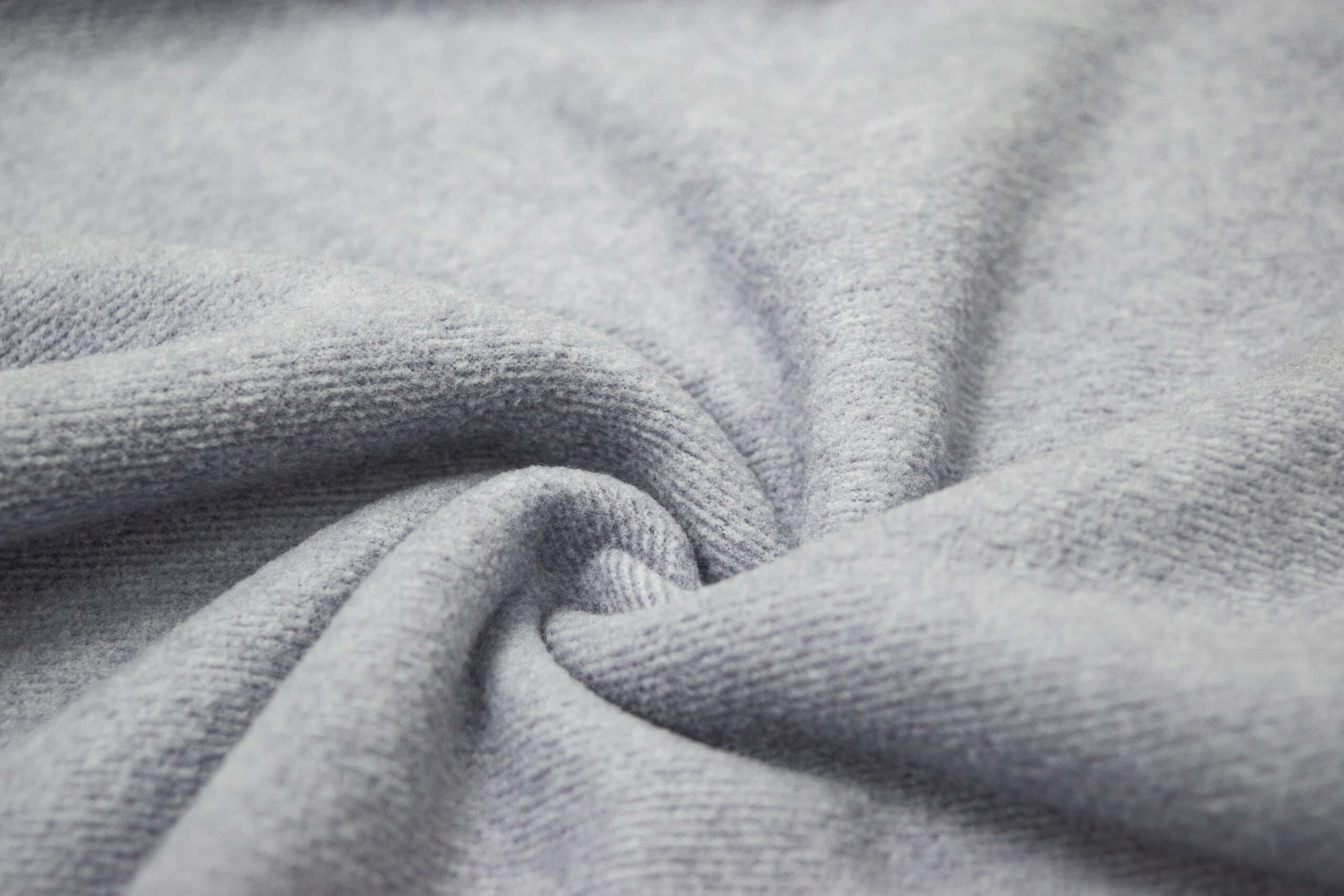
A thermal knit is engineered to slow heat loss from the body, and it does this almost entirely by trapping a layer of still air close to the skin — air itself is a poor conductor of heat, so the more still air a fabric structure can hold, the better it insulates. This is why loft and surface texture matter more than fiber choice alone: a brushed or napped surface raises fine fibers off the base knit to create thousands of tiny air pockets, while a double-layer knit construction traps air between its two interlocked faces. The base knitting and finishing stages where this structure gets built are covered in how performance fabric is made: from yarn to finished textile.
Fiber-Level Thermal Technology: Hollow-Core Fibers
Construction isn’t the only lever. Some of the most effective thermal fibers work by trapping air inside the fiber itself rather than relying entirely on knit structure. Hollow-core fibers — engineered with an air channel running through the fiber’s cross-section — conduct meaningfully less heat than solid-core fibers of the same mass; published research on air-filled hollow yarns has measured heat-flux reductions of several multiples over solid-core textiles at equivalent weight (Wang et al., “Ultralight Air-Filled Hollow Yarn Fabrics for Efficient Thermal Insulation,” ScienceDirect). The practical benefit for apparel brands is warmth without the weight penalty of a denser, heavier knit.
This is also the mechanism behind Mibein’s own AIRLUME® platform — an ultra-light, hollow-core fiber technology developed in-house specifically to deliver warmth and breathability without adding bulk to the finished garment. Rather than sourcing a generic hollow-core yarn, Mibein engineers the fiber structure as part of its own product development process, which is why AIRLUME®-based constructions can be tuned to a specific clo target instead of a one-size-fits-all thermal rating.
Thermal vs. Breathable: Managing the Trade-off
Warmth and airflow generally pull in opposite directions — a structure dense enough to trap significant insulating air also tends to restrict the airflow that a fabric like our breathable fabric line is built to maximize. Neither property is universally better; the right balance depends on activity level and layering position. A high-output activity layer worn close to the skin usually prioritizes moisture management — see what is moisture-wicking fabric and how does it work — over maximum warmth, while an outer or mid layer for low-intensity cold-weather wear can prioritize insulation without the same airflow demands. Fiber choice plays a role here too; see polyester vs. cotton for activewear for how the two most common base fibers behave once warmth and moisture management both matter.
How Thermal Performance Is Actually Measured
A “thermal” claim without lab data is a marketing description, not a specification. The recognized U.S. benchmark is ASTM F1868, Standard Test Method for Thermal and Evaporative Resistance of Clothing Materials Using a Sweating Hot Plate, which places a fabric sample on a heated plate calibrated to mimic skin and measures how much heat passes through under steady-state conditions (ASTM International, F1868). The result is expressed as a clo value — a standardized insulation unit, originally calibrated so that 1 clo approximates the insulation of typical indoor clothing needed to keep a resting person comfortable at 21°C.
Brands sourcing for European or international markets more often see the equivalent international standard, ISO 11092, Textiles — Physiological Effects — Measurement of Thermal and Water-Vapour Resistance Under Steady-State Conditions, which uses the same sweating guarded-hotplate method to calculate thermal resistance (Rct) and water-vapour resistance (Ret) side by side (ISO 11092:2014). Asking a supplier for a clo or Rct value tied to one of these two standards — rather than a general “warm” or “extra warm” label — is what turns a thermal claim into something you can actually compare across fabrics and across suppliers.
Common Thermal Knit Constructions
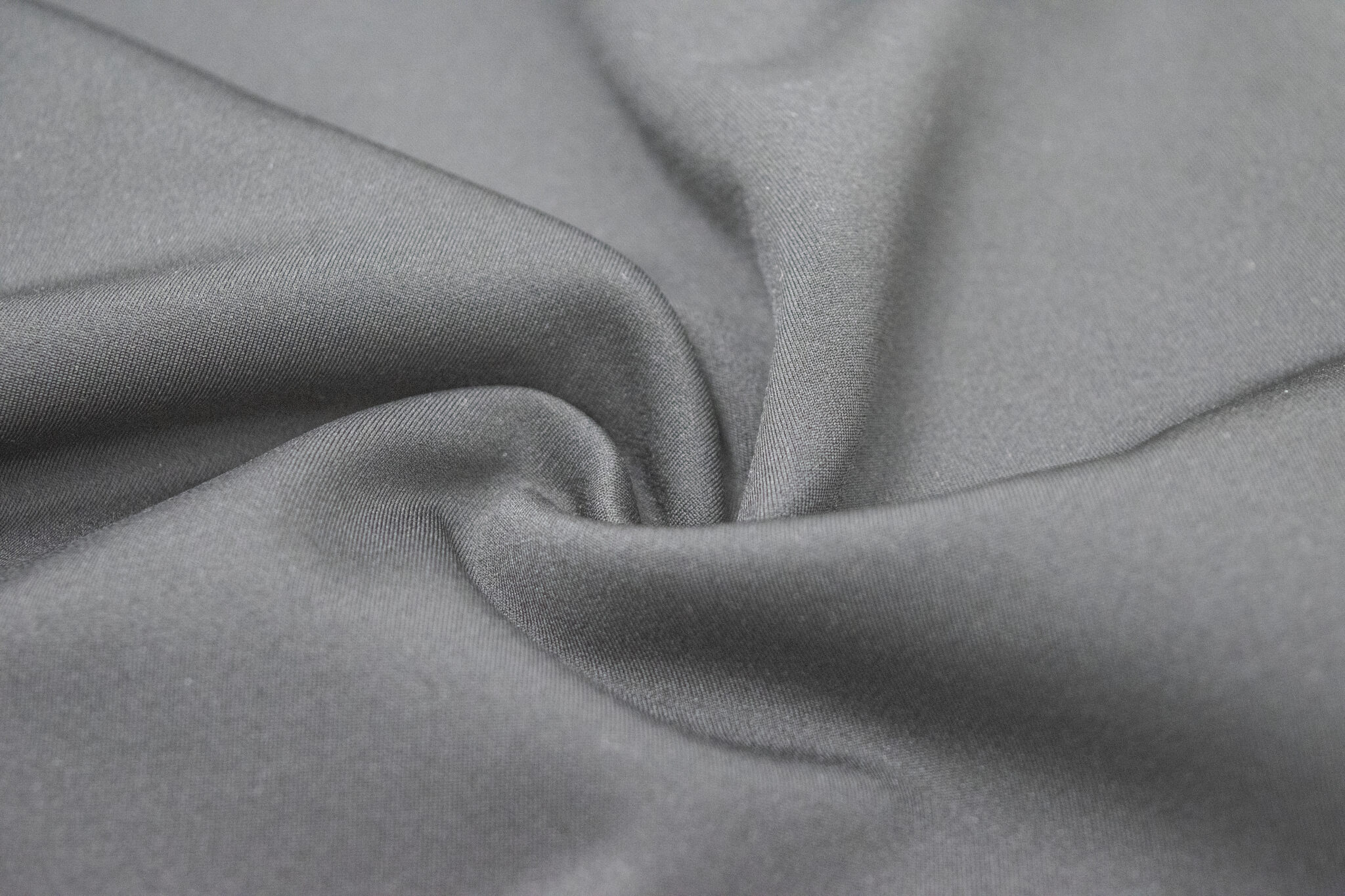
Most thermal knits fall into a small number of construction categories, each trapping air by a different mechanism:
| Construction | How It Traps Air | Typical Use |
|---|---|---|
| Brushed / napped single jersey | Mechanical brushing raises a soft fiber layer off the base knit | Lightweight mid-layers, warmth without added bulk |
| Double knit with a fleece back | Face yarn for hand-feel + looped or brushed back yarn for insulation | Structured mid-layers, cold-weather tops |
| Waffle knit | Raised, three-dimensional pockets built into the knit geometry itself | Base layers combining warmth with stretch and wicking |
| Hollow-core fiber knit (e.g. AIRLUME®) | Air trapped inside the fiber’s own cross-section, independent of surface texture | Lightweight insulation where bulk and weight are limited |
The base construction trade-offs between the two most common starting points are covered in single jersey vs. double knit fabric: key differences explained, and the waffle knit’s combined properties are detailed in waffle fabric explained.
Layering Thermal With Other Performance Properties
Thermal fabric rarely ships as a single-property product. A brushed or double-knit thermal base is frequently combined with a water-repellent or anti-static finish for outerwear applications — see the 5 most common performance fabric finishes for which treatments hold up under repeated cold-weather wear. Fiber choice matters here too: natural fibers like wool have long been used for their inherent thermal properties, while engineered synthetics can match or exceed that performance at a lower weight — the trade-offs are covered in natural vs. synthetic performance fabrics: pros and cons.

Choosing the Right Thermal Fabric for Your Product Line
Start from the layering position and activity level the garment is designed for, not from a target GSM. A base layer worn during high-output activity usually needs moderate insulation paired with strong moisture management; a low-activity outer or mid layer can prioritize insulation more heavily since airflow and sweat management matter less. Weight is still part of the equation — see the beginner’s guide to fabric GSM for how weight interacts with warmth — but construction and surface finish typically matter more than GSM alone for thermal performance specifically.
Frequently Asked Questions
Is a heavier fabric always warmer?
Not necessarily. A lighter brushed or waffle-knit fabric can outperform a heavier flat knit in insulation, because warmth depends more on trapped air than on raw fiber mass. GSM and thermal resistance are related but not interchangeable metrics.
Can a fabric be both thermal and breathable?
To a degree, through engineered constructions like brushed waffle knits that trap air in localized pockets while leaving other areas more open — but there’s always a trade-off. The right balance depends on the garment’s activity level and layering position.
How do I compare thermal claims from different suppliers?
Ask for a clo value from ASTM F1868 testing, or an Rct value from ISO 11092 for international markets, rather than a general “warm,” “extra warm,” or “winter-weight” label. Without a standardized number, thermal claims aren’t comparable across suppliers.
What’s the difference between a hollow-core fiber and a brushed surface for warmth?
A brushed surface adds insulation externally, by raising fibers off an existing knit; a hollow-core fiber traps air inside the fiber itself, so the insulation is built into the yarn before it’s even knitted. The two approaches can be combined, and hollow-core constructions like AIRLUME® generally achieve warmth at a lower overall weight than surface finishing alone.
Should I test thermal performance before ordering bulk?
Yes. Request a pilot sample and ask for its clo or Rct value from a recognized lab before committing to MOQ — the same way you’d verify a moisture-wicking or stretch-recovery claim. See what is AATCC testing for performance fabrics for how third-party verification works across functional fabric categories generally.
Mibein · Global Brand of Xianwei Textile
Looking for a Reliable Fabric Partner for Your Next Collection?
Mibein is a vertically integrated fabric manufacturer with 20+ years of experience, serving apparel brands worldwide from our own facilities in Guangzhou. Tell us what you’re working on and we’ll help you find the right fabric.
Ready color cards · Meter samples · Flexible MOQ for new product programs
Sources: ASTM F1868, Thermal and Evaporative Resistance of Clothing Materials · ISO 11092:2014 · ScienceDirect, Hollow Yarn Thermal Insulation Research