
Thermal Knits · Fleece · Anti-Static Fleece
Thermal Fabric: Warmth by Trapped Air, Not by Weight
Brushed, fleece and hollow-fiber knits for hoodies, mid-layers, track sets and base layers. We build warmth from still air held in the yarn and the pile, so a 150–250 g/m² fabric can do the job buyers used to expect from something heavier. Where winter static is a problem, we knit conductive yarn into the fleece.
- Raising, brushing & shearing done in-house
- Pilling tested on ICI box & random tumble testers
- 4-point inspection on every dye lot
- Custom development & bulk supply
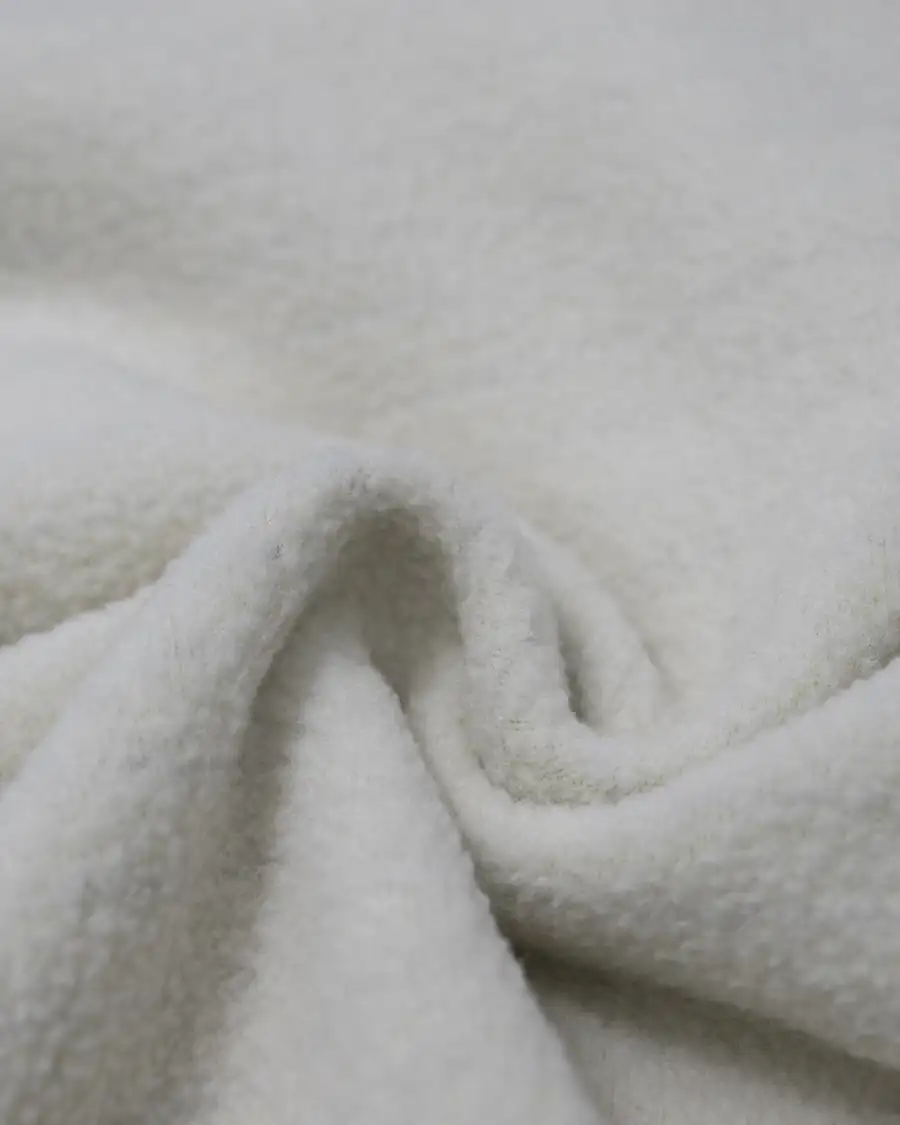
How warmth works
What Actually Keeps a Thermal Fabric Warm
Fiber itself is a poor insulator. What slows heat loss is still air, held in place so body heat can't easily move through it. A thermal fabric is any knit built to trap that air close to the body: a raised pile on polar fleece, brushed loops on the back of a jersey, the pockets of a grid fleece, or the hollow channel inside an engineered fiber.
That's why heavier isn't automatically warmer.
A dense, flat 300 g/m² knit can feel colder than a lofty 180 g/m² fleece, because it holds less air. We choose yarn, knit structure and raising together to get the most warmth per gram, then stack other functions on top: stretch, one-way moisture transport, anti-static.
New to the category? Our guide What Is Thermal Fabric? covers the basics of insulating knits.
Construction guide
Fleece & Thermal Construction Guide
Five constructions cover most knit thermal programs. Each traps air differently, which changes warmth, breathability and how the fabric ages. Use this guide to shortlist before you ask for swatches.
Construction 01
Polar fleece
How it traps air: Face raised, sheared and tumbled into a dense, curly pile
High
Medium; wind passes through the pile
Medium to high; depends on yarn and anti-pill finishing
- Typical weight (our range)
- 180–240 g/m² (C23586, Y35748)
- Best garment
- Fleece jackets, half-zips, mid-layers
Construction 02
Brushed back
How it traps air: Loops on the inner face are brushed into a soft nap; the outer face stays smooth
Medium
Medium
Low to medium; the smooth face takes the abrasion
- Typical weight (our range)
- 220–240 g/m² (Y35707, XWT2601, C25377, Q35557)
- Best garment
- Hoodies, track jackets, joggers, quarter-zips
Construction 03
Grid fleece
How it traps air: Raised squares hold air; the channels between them vent heat and moisture
Medium to high
High for a fleece
Medium; less pile in contact with the outer layer
- Typical weight (our range)
- 250 g/m² (Y35751)
- Best garment
- Active mid-layers, hooded half-zips
Construction 04
Double-face snowflake fleece
How it traps air: Pile on both faces gives two insulating layers in one fabric
High for its weight
Lower to medium
Medium to high; both faces are exposed to rubbing
- Typical weight (our range)
- 150 g/m² (Y35769ES)
- Best garment
- Sherpa-look and fleece pullovers, lounge layers
Construction 05
Hollow-fiber knit
How it traps air: Air is held inside the fiber itself, with no raised pile
Light to medium
High
Low; no pile to pill or shed
- Typical weight (our range)
- 140–150 g/m² (Q35572; AirlumeWarm™ recommended 180–250 g/m²)
- Best garment
- Base layers, all-season layering, light mid-layers
Warmth, breathability and pilling ratings are relative guidance from construction type, not measured results.
Converting a program from a heavier fabric? Our fabric weight guide explains how to compare GSM across constructions.
AeroWarm
Lightweight Warmth, Explained
Our AeroWarm label sums up the goal in two words: "lightweight warmth". There are two ways we get there.
Put the air inside the fiber
AirLume® uses Y+O hollow-core polyester. Each filament carries its own air channel, which adds an insulating layer without adding mass and keeps the fabric breathable. Our hollow-yarn hang tag describes these fabrics as about half the weight of a fabric of the same density. The hollow structure also speeds wicking and drying, so the wearer doesn't chill after activity. For thermal programs, our AIRLUME documentation recommends the AirlumeWarm™ line at 180–250 g/m² for insulated hoodies and mid-layers.
Put the air in the surface
Brushing and raising open the yarn into fine fibers that hold air against the skin. Adding stretch yarn keeps that layer close to the body, where the trapped air stays warm.
Choose by layer, not by weight alone
Hover or tap a layer
Base layer: hollow-fiber or lightly brushed knits that wick and dry fast. See our base layer fabric solutions.
Mid-layer: grid fleece, brushed-back jacquard or lightweight polar fleece. Trap the most air while letting moisture escape.
Lifestyle outer piece: double-face fleece or brushed dobby with a clean, smooth face for quarter-zip pullovers and hooded jackets.
For lighter-than-usual programs outside the cold season, see our lightweight fabric range.
The range
Thermal & Fleece Fabrics From Our Range
Eight qualities grouped by what they're best at. Specs come from our product data and hang tags.
Lightweight warmth
Brushed and dual-surface knits that keep weight down and add stretch, for pieces worn on the move.
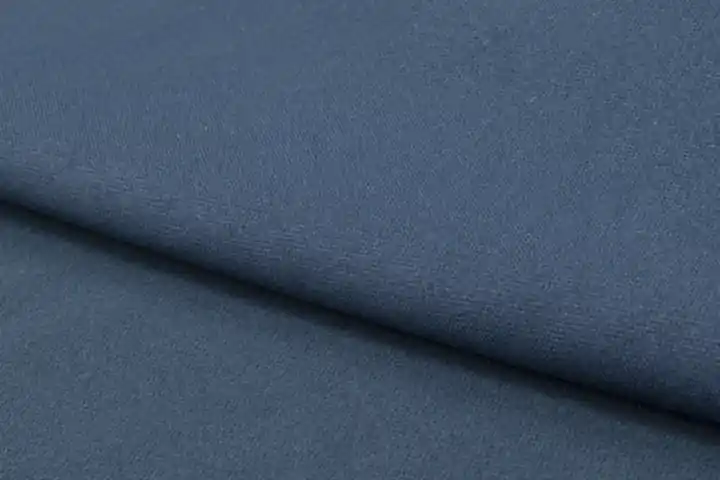
Lightweight Warm Brushed Stretch Knit — Y35707
60% Nylon + 35% Polyester + 5% Spandex · 240 g/m² · 152 cm
The clearest example of stacked function in this category. Hollow-fiber insulation provides the warmth, a brushed reverse adds softness, and one-way wicking moves sweat away from the skin so the air layer stays dry. An anti-static function cuts down cling and dust.
- Hollow-fiber warmth
- One-way wicking
- Anti-static
- Abrasion & pilling resistance
- Stretch
Best for: Hoodies, jackets, tracksuits
Brushed Dobby Dual-Surface Knit — XWT2601
92% Polyester + 8% Spandex · 240 g/m² · 160 cm
A dual-surface construction: a brushed side faces the body for warmth, and a smooth dobby-textured side faces out for a clean, modern look. Rated for pilling resistance and comfort stretch.
- Dual-surface warmth
- Dobby texture
- Comfort stretch
- Pilling resistance
Best for: Sweatshirts, sports jackets, track pants
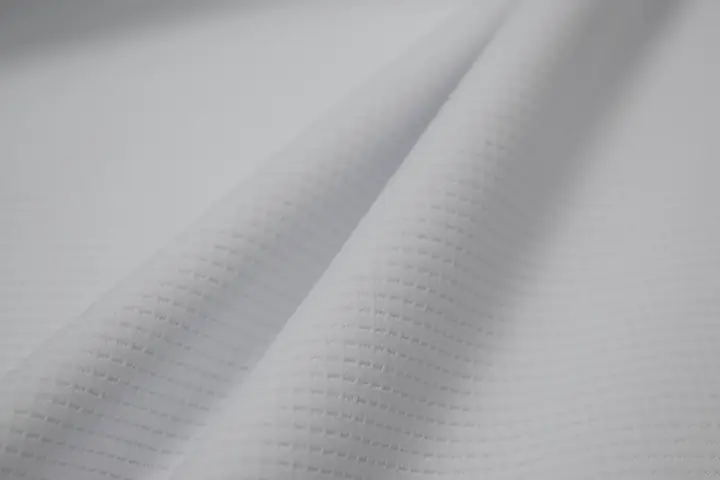
3D Jacquard Brushed-Back Knit — C25377
92.6% Polyester + 7.4% Spandex · 240 g/m² · 155 cm
A three-dimensional jacquard face with a brushed back. Pattern and warmth come from one fabric, so there's no need to bond or line. Our brochure data describes it as lightweight, soft and stretchy, with heat retention and shape recovery.
- Heat retention
- Brushed back
- Textured dobby
- Shape recovery
Best for: Half-zip hoodies, casual, sport and outdoor tops
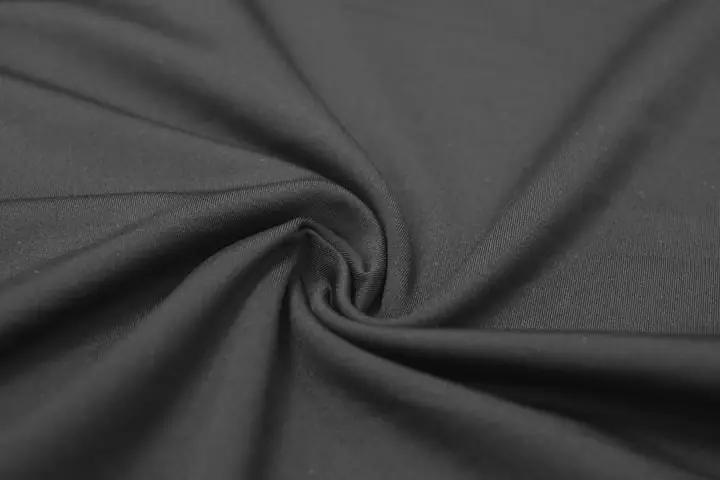
Single-Side Brushed Stretch Fleece — Q35557
84% Polyester + 16% Spandex · 220 g/m² · 150 cm
A single-side brushed stretch fleece with one-way wicking, for close-fitting cold-weather layers. Its hang tag describes a heat-generating powder added to the yarn masterbatch, which works with the brushed surface to reduce heat loss. It also carries an anti-static function.
- Single-side brushed
- One-way wicking
- High stretch
- Anti-static
Best for: Close-fitting, next-to-skin outdoor layers
Fleece
Raised-pile constructions for maximum trapped air.
Lightweight Polar Fleece — C23586
100% Polyester · 180 g/m² · 160 cm
Polar fleece at 180 g/m², at the light end of the category and the lower edge of the AirlumeWarm™ weight band. Classic fleece loft in a garment that packs down and layers under a shell.
- Lightweight fleece
- Raised pile
- Mid-layer weight
Best for: Lightweight fleece mid-layers worn under a shell
Anti-static fleece
Fleeces with an anti-static function. In Y35751 and Y35748 it comes from conductive yarn knitted into the structure, not a spray-on finish.

Double-Face Snowflake Fleece — Y35769ES
100% Polyester · 150 g/m² · 160 cm
Pile on both faces gives two insulating layers at just 150 g/m², the lightest fleece in this selection. Our brochure data rates it for excellent thermal performance and fluffy softness, and its hang tag lists a heat retention rate of 66.6% and a clo value of 1.58. It also has an anti-static function, which matters on a fabric where both faces rub against other layers.
- Excellent thermal performance
- Durable anti-static
- Fluffy softness
- Unique knit structure
Best for: Sherpa-look and fleece half-zip pullovers, outdoor layers
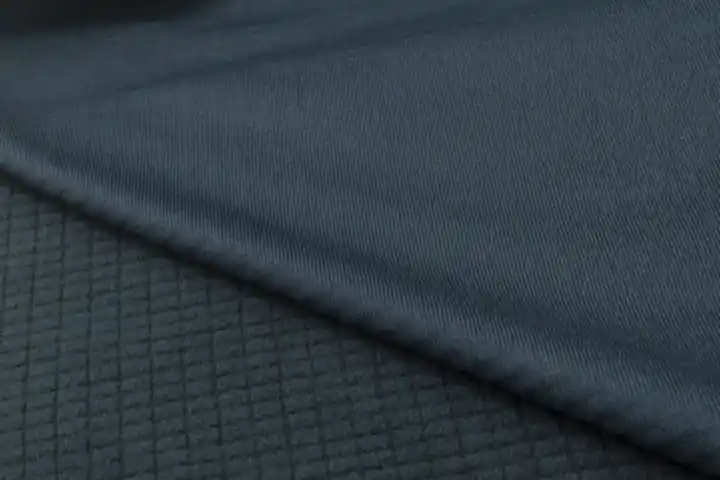
Conductive-Yarn Stretch Grid Fleece — Y35751
95% Polyester + 5% Spandex · 250 g/m² · 165 cm
A 3D grid design with fleece finishing. The raised squares hold warm air and the channels let heat and moisture out during activity. Spandex keeps the fleece close to the body, and conductive yarn in the knit drains static.
- Grid fleece warmth
- Durable anti-static
- Stretch
- 3D texture
Best for: Hooded half-zip tops, active mid-layers
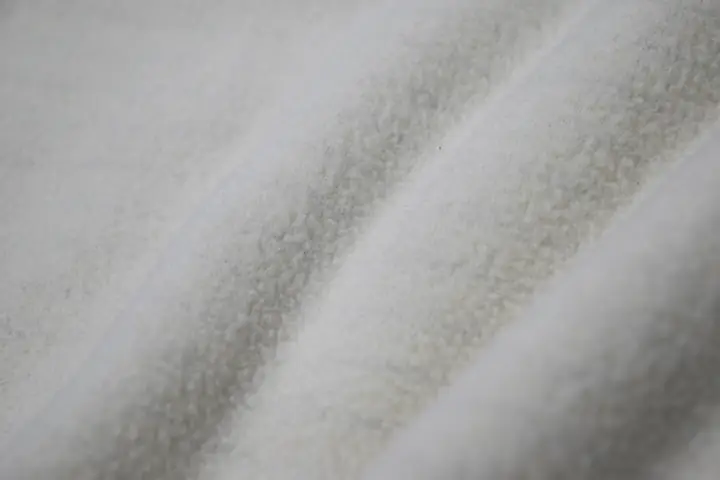
Conductive-Yarn Light-to-Heat Polar Fleece — Y35748
100% Polyester · 240 g/m² · 155 cm
A polar fleece built with conductive yarn and a light-to-heat function, which our brochure data says turns absorbed light into warmth. It also carries an antibacterial function, so three functions sit in one fleece.
- Light-to-heat
- Durable anti-static
- Antibacterial
- Polar fleece
Best for: Fleece hoodies, mid-layers
These eight are a starting point. Our fleece library also includes check, mesh, curly-pile, cationic two-tone and recycled-content fleeces. Ask for the full thermal color card.
The products shown on this website represent only part of our fabric portfolio. Contact us for more fabric options, technical data, color cards, and sample support.
Anti-static fleece
Anti-Static Thermal Fabric: Solving Winter's Static Problem
Static is a cold-weather problem, and fleece makes it worse. Indoor heating dries the air, so charge has nowhere to drain. Synthetic fleece then rubs against shells, base layers and hair all day, and each contact moves electrons from one surface to another. The result: crackle when a fleece comes off, cling, lint on dark colors and small shocks.
How conductive yarn helps
In our conductive-yarn fleeces (Y35751 and Y35748), a conductive yarn runs through the knit structure. Y35769ES and Y35707 also carry an anti-static function. Instead of building up in one spot, charge spreads along the conductive path and dissipates into the air and nearby surfaces. Because the yarn is part of the fabric rather than a topical antistatic finish, the function is designed to last through wear and washing.
These are comfort anti-static fabrics for apparel. They are not certified protective clothing for explosive or ESD-controlled workplaces unless a specific quality has been tested and certified for that use. For a deeper explanation, read anti-static conductive fabric explained.
What the wearer notices
- Less cling between the fleece and the layers under it
- Less dust and lint pickup, especially on dark shades
- Fewer static shocks when taking the garment off or touching metal
- Helps reduce static-related itch and discomfort on the skin
Our wording, and why. We describe these fabrics as durable anti-static, not permanent. Our own hang tag says the effect may weaken over long wear and use, and we'd rather your product claims hold up.
Quality control
Pilling, Shedding & Warmth After Washing: What We Check
A fleece rarely fails on day one. It fails after ten washes, when the pile has matted, pills have formed under the arms and the width has crept in. These are the four problems we watch for most in bulk thermal fabric, and how we check for each.
Hover or tap a card to flip it
Abrasion is checked on the Martindale tester, which matters most for the smooth face of brushed-back knits. Knitting, dyeing, raising, brushing, shearing and setting are all done at our own mill, with no process subcontracted. So we can adjust raising passes or setting temperature on the next lot directly. See the lines in our workshop gallery.
Seasonal planning
Planning an Autumn/Winter Thermal Program
Search interest and retail demand for thermal fabric peak from October to January, but fabric decisions are made much earlier. Brushed and fleece qualities take longer than flat knits because raising and shearing add finishing steps, and lab dips need checking after brushing, since raising can change how a shade reads. Work back from your in-store date:
- 1
Brief & construction choice
Pick a construction from the guide above and share target weight, layer and functions.
- 2
Swatches & lab dips
Stock swatches from our thermal range, plus lab dips on the brushed fabric.
- 3
Sample yardage & fit samples
Meter samples for prototypes; pilling and shrinkage tests run in parallel.
- 4
Bulk order & first dye lot approval
First lot checked against the approved standard for color, pile, weight and width.
- 5
Shipment to garment factory
Allow cutting and sewing time before the season.
Swipe the steps
OEM factories working to a brand's AW calendar can read more on how we support garment manufacturers, and distributors stocking fleece for the season can see our wholesale partner program.
Stock & sourcing
A Ready Fabric Library Behind Every Order
Beyond custom development, we keep 50+ greige fabric qualities in stock, so sampling and bulk orders start faster. Our team follows the market every season and recommends the colors and functional fabrics buyers are asking for.
Ready base fabrics across UV protection, cool touch, quick-dry and stretch, so most programs start from stock rather than from scratch.
Built around your order
Quantities, dye lots and delivery are planned around your program, from first sample yardage to repeat bulk.
Following market trends
We track what sells each season in outdoor, golf and summer active wear, and update the range to match.
Popular colors & functional picks
Tell us your market and price point. Our team recommends the colorways and functional fabrics currently in demand.
Sourcing for a distribution or wholesale program?
01What is thermal fabric?
Thermal fabric is a textile designed to slow the loss of body heat, mainly by trapping still air close to the skin. In knits, that air is held by a raised or brushed pile, by textured structures such as grids, or inside hollow fibers.
02What is the difference between thermal fabric and fleece?
Fleece is one type of thermal fabric: a knit whose surface is raised into a pile. "Thermal fabric" is the wider group and also includes brushed-back jerseys, grid and waffle structures, and hollow-fiber knits that insulate without a visible pile.
03Is fleece breathable?
Polyester fleece is fairly breathable because air and vapor pass through the open pile, which is why it works well as an active mid-layer. Grid fleece breathes more than a solid fleece of similar weight, while dense double-face fleece breathes less.
04Which lightweight fabric is also warm?
Look for fabrics that trap air rather than add mass: hollow-fiber knits, lightweight polar fleece, double-face fleece and brushed-back stretch knits. In our range, Y35769ES gives double-face fleece warmth at 150 g/m², and Y35707 combines hollow-fiber insulation with a brushed back at 240 g/m².
05Why does fleece get static?
Polyester fleece is a good electrical insulator, so charge produced by friction against other layers can't drain away, especially in dry, heated winter air. Conductive yarn knitted into the fleece gives that charge a path to dissipate.
06Is anti-static fabric permanent?
Not in an absolute sense. Topical antistatic finishes wash out fairly quickly. Conductive-yarn fabrics last much longer because the function is part of the knit, but the effect can still weaken over long wear. We describe ours as durable rather than permanent.
07Does fleece pill?
It can, because raised fibers tangle under abrasion. Pilling depends on the yarn, how hard the fabric is raised and how well it's sheared and finished. We test thermal qualities on ICI pilling box and random tumble testers before bulk.
08What is the best thermal fabric for base layers?
A base layer has to stay warm while moving sweat off the skin, so choose a light, close-fitting knit with fast wicking: a hollow-fiber knit or a lightly brushed stretch jersey, ideally with one-way moisture transport. Save heavy pile for the mid-layer.
Start a program
Start Your Thermal Fabric Selection
Tell us the garment, the layer it plays and the season you're delivering for. We'll suggest constructions from the guide above, send swatches from our thermal and anti-static range, and flag lead times for your AW calendar. Product developers can also see how we work with development teams, and if your program needs more stretch or faster drying, browse our stretch and moisture-wicking fabrics.
Your brief in three lines
- The garmentHoodie, half-zip, track jacket, jogger or base layer
- The layer it playsBase, mid-layer or lifestyle outer piece
- The seasonYour autumn/winter delivery window