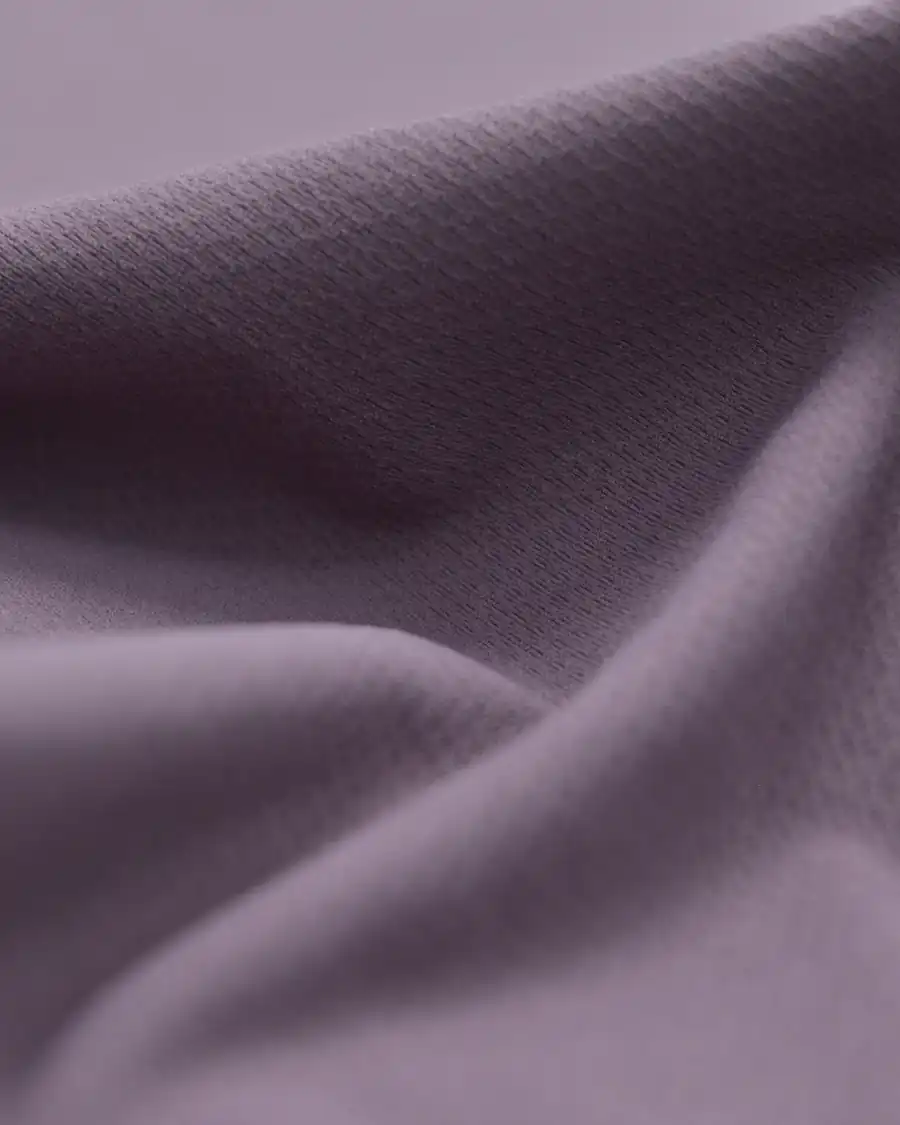
Lightweight Knit Fabric · 85–150 g/m²

Lightweight Fabric That Doesn't Go Thin

Performance knits from 85 to 150 g/m² for running tops, travel layers and summer polos. We take weight out through the yarn and the gauge, so the fabric keeps its coverage, shape and stretch at a fraction of the usual weight.

  • Hollow-core AirLume® yarn
  • 50-gauge micro-waffle
  • Spandex-free FLEXERA™ stretch
  • 4-point inspection on every dye lot
Lightweight performance knit fabric draped to show its soft, fine jacquard surface
from 85 g/m²lightest quality, still stretches 50-gaugemicro-waffle knitting 6 fabricsfrom 85 to 150 g/m²

Weight bands

What "Lightweight" Means in a Knit

Fabric weight is quoted in grams per square metre (g/m², often written GSM). There is no single industry cut-off, and woven and knit fabrics are judged differently. For performance knits we use three working bands:

Ultra-light< 110 g/m²
Light110–150 g/m²
Mid-weight150–200+ g/m²
Ultra-light, under about 110 g/m²Single-layer tops for running and hot-weather training, where every gram shows up in sweat-soaked weight and airflow.
Light, about 110–150 g/m²The working range for travel tees, summer polos and everyday layering. Enough body to hang cleanly and hide the body underneath.
Mid-weight, about 150–200 g/m² and aboveStructured tops, long-sleeves and cool-weather layers.
2 × 100g/m², two results

The number on the spec sheet only tells half the story. Two 100 g/m² fabrics can feel completely different: one airy and opaque, the other limp and see-through. The difference lies in how the weight was removed. For a fuller breakdown of the bands, see our fabric weight guide: lightweight, midweight and heavyweight.

The spectrum

The Lightweight Spectrum: Six Fabrics From 85 to 150 g/m²

Sorted by weight, lightest first. Each one reaches its weight by a different route, which is why the garment it suits changes as you move along the scale.

85g/m²
XWT1532Ultra-light band

FLEXERA™ Spandex-Free Lightweight Stretch Jacquard

Construction
Fine jacquard texture, inherent-stretch polyester fibers
Stretch
High stretch, spandex-free
Best garment
Light outdoor tank tops, layering tops
  1. 85g/m²
    FLEXERA™ Spandex-Free Lightweight Stretch Jacquard · XWT1532Construction: Fine jacquard texture, inherent-stretch polyester fibersStretch: High stretch, spandex-freeBest garment: Light outdoor tank tops, layering tops
  2. 100g/m²
    FLEXERA™ Lightweight Micro-Waffle Stretch · XWT1523Construction: 50-gauge micro-waffle, ultrafine yarnStretch: Gentle stretch, spandex-freeBest garment: Running tops, active base layers
  3. 100g/m²
    High-Density Woven-Look Knit · C25178Construction: Tight, high-density knit with a woven lookStretch: Knit stretch, no elastaneBest garment: Light hiking jackets
  4. 105g/m²
    Ultra Lightweight Cationic Jacquard · XWT35977Construction: Two-tone cationic polyester jacquardStretch: Good elasticity, 100% polyester (no elastane)Best garment: Running and training tees, cycling, yoga
  5. 135g/m²
    Cationic Two-Tone Fabric · XWT1520Construction: Two-tone grid face, finely textured solid faceStretch: Knit give only (no stretch claim)Best garment: Sports tees, training tops, outdoor casual tops
  6. 150g/m²
    AirLume® Lightweight Space Cotton · Q35572Construction: Y+O hollow-core yarnStretch: Not specifiedBest garment: Commute and travel layers, light jackets

Weights and widths are from our specification sheets and product hang tags.

Our method

Three Ways We Take Weight Out

The usual way to make a knit lighter is to open the stitch: fewer loops, longer floats, lower density. It works on the scale and fails on the body, because coverage, snag resistance and shape go with the missing yarn. We use three routes that keep the stitch density where it needs to be.

A lighter yarn, not a looser stitch

AirLume® uses a Y+O hollow-core polyester fiber with air chambers running through it. Our hang-tag data quotes a hollow ratio of about 30% and a fabric roughly half the weight of a same-density fabric in solid fiber. Our AirLume development notes put the saving at 30–50% depending on construction.

The fabric keeps its stitch count, so it keeps its cover. The trapped air also gives some loft and warmth, which is why Q35572 works as an all-season layer. More on the fiber at AirLume hollow-core technology.

  • Q35572 150 g/m²
  • Hollow-core Y+O fiber

Finer gauge, smaller structure

Gauge is the number of needles per inch on the knitting machine. On a fine gauge, a finer yarn makes a smaller loop, and more small loops fill the same area. XWT1523 is knitted on a 50-gauge machine with ultrafine yarn. The result is a 100 g/m² micro-waffle that still reads as a closed surface.

C25178 takes the same idea further: a tight, high-density knit that looks woven but weighs 100 g/m². Background reading: waffle knit fabric explained.

  • XWT1523 100 g/m²
  • C25178 100 g/m²
  • 50-gauge

Stretch from the fiber, not from elastane

Elastane knits pull in after relaxation and heat setting, and are often finished at a higher g/m² to control that shrinkage. FLEXERA™ fabrics get their stretch from inherent-stretch polyester fibers instead. That is how XWT1532 reaches 85 g/m² and still stretches and recovers.

In the supplier's material reference data, FLEXERA™ fiber keeps ≥90% strength after chlorine exposure (50 ppm / 50 h) versus <50% for spandex. These are reference material properties, not test results for the finished fabric. See elastane vs. mechanical stretch and our stretch fabric range.

  • XWT1532 85 g/m²
  • 0% elastane

The range

Lightweight Knit Fabrics in Our Range

The six fabrics from the spectrum above, with the reason each one belongs on a lightweight program. Ask for spec sheets, colour cards and swatches with your enquiry.
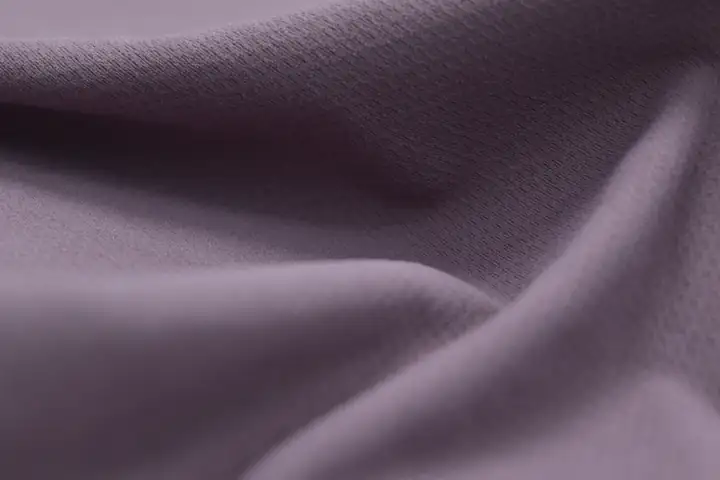
XWT1532XWT1532 85 g/m² spandex-free lightweight stretch jacquard in heather purple

FLEXERA™ Spandex-Free Lightweight Stretch Jacquard · XWT1532

Inherent-stretch polyester fibers (100% polyester) · 85 g/m² · 165 cm

The lightest fabric we feature. At 85 g/m², it still stretches and recovers without spandex. The fine jacquard surface breaks up the plain-jersey look that very light fabrics usually have and gives the face some texture.

  • High stretch
  • Lasting recovery
  • Refined jacquard texture
  • Durability

Best for: Light outdoor tank tops, lightweight layering tops, everyday casual tops
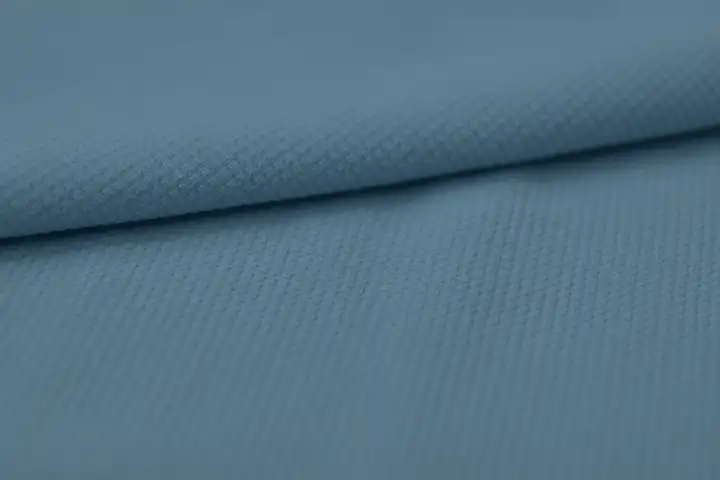
XWT1523XWT1523 100 g/m² lightweight micro-waffle stretch fabric in light blue

FLEXERA™ Lightweight Micro-Waffle Stretch Fabric · XWT1523

100% Polyester · 100 g/m² · 148 cm

Light, but with structure. The 50-gauge micro-waffle gives a soft hand with a structured feel and lifts slightly off the skin. Spandex-free stretch gives the gentle give a running top needs.

  • Light with structure
  • Fine micro-waffle
  • Spandex-free flex
  • Natural recovery

Best for: Running apparel, active base layers, premium loungewear, lightweight layering
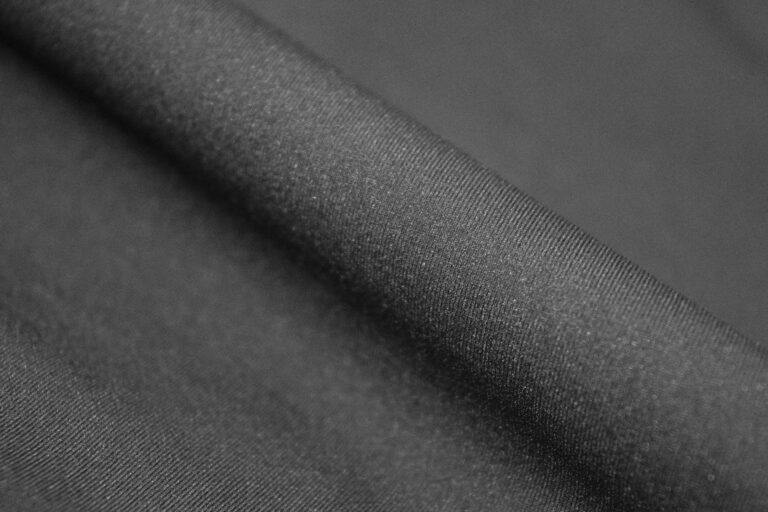
C25178C25178 100 g/m² high-density woven-look knit fabric for light outdoor jackets

High-Density Woven-Look Knit · C25178

100% Polyester · 100 g/m² · 160 cm

For brands that want a woven look without woven stiffness. The tight, high-density knit holds its shape like a woven fabric, but keeps knit stretch and breathability at only 100 g/m².

  • High density with structure
  • Shape retention
  • Moisture-wicking
  • Breathable

Best for: Light hiking jackets, active-outdoor and luxury-sport pieces
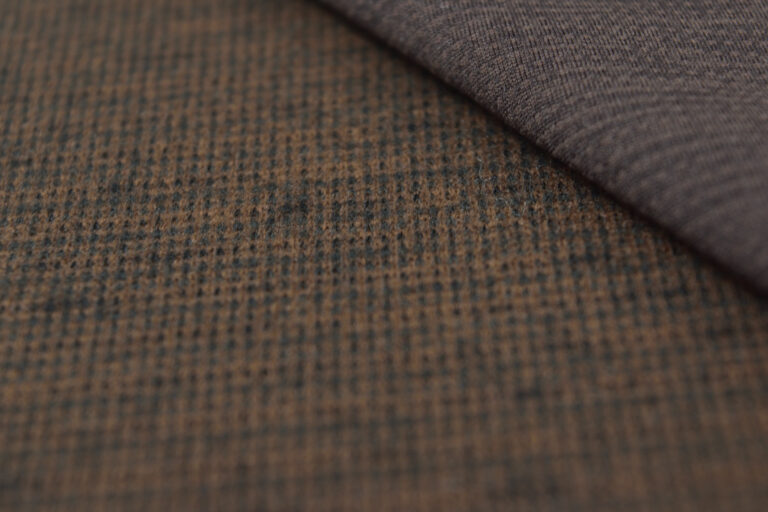
XWT35977XWT35977 105 g/m² ultra lightweight two-tone cationic polyester jacquard

Ultra Lightweight Cationic Jacquard · XWT35977

100% Polyester · 105 g/m² · 170 cm

Our Ultra Lightweight series fabric. The two-tone cationic jacquard adds visual depth, so the fabric doesn't look flat or cheap at 105 g/m². The sheet lists abrasion resistance and antibacterial performance, which address two of the main durability concerns with light tees. Available from ready stock for fast replenishment.

  • Ultra light
  • Moisture-wicking & quick-dry
  • Good elasticity
  • Abrasion resistant
  • Antibacterial

Best for: Running, training, cycling, yoga & pilates, outdoor, commuting T-shirts
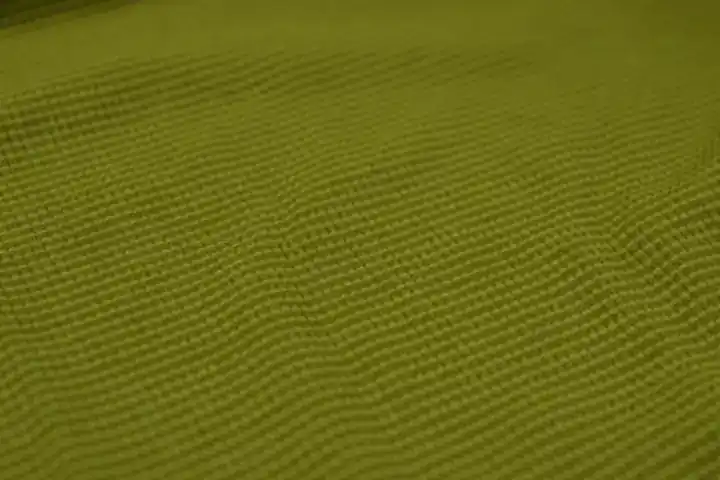
XWT1520XWT1520 135 g/m² cationic two-tone fabric with grid face and solid face

Cationic Two-Tone Fabric · XWT1520

100% Polyester · 135 g/m² · 165 cm

At the top of the light band. The extra weight goes into a two-faced construction: a two-tone grid on one side and a finely textured solid face on the other. That gives designers two looks in one fabric and more coverage than the sub-110 g/m² options. The sheet lists UV protection.

  • Cationic two-tone effect
  • Moisture wicking & quick drying
  • UV protection
  • Lightweight

Best for: Sports T-shirts, training tops, outdoor casual tops
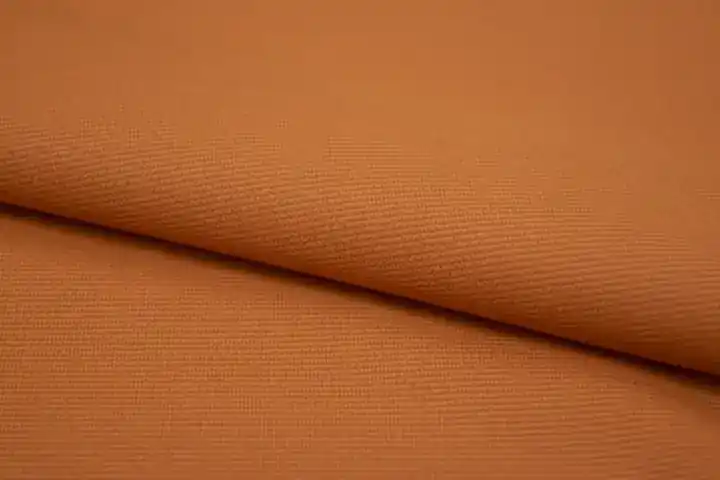
Q35572AirLume Q35572 150 g/m² lightweight space cotton hollow-core knit

AirLume® Lightweight Space Cotton · Q35572

100% Polyester · 150 g/m² · 165 cm

Hollow-core yarn applied to a layering fabric. "Space cotton" fabrics are normally heavy. Q35572 gets its loft from air inside the Y+O fiber rather than from extra yarn, so it reads as cushioned and cotton-soft at 150 g/m². Technology benefits are stated as subject to fabric testing.

  • Hollow-core yarn
  • Lightweight loft
  • Thermal adaptability
  • Rapid moisture transport
  • Cotton-like softness

Best for: Commute, travel and light activity; everyday layering

The products shown on this website represent only part of our fabric portfolio. Contact us for more fabric options, technical data, color cards, and sample support.

Risks & checks

What Goes Wrong Below 150 g/m², and What We Check

Lightweight development rarely fails at the swatch stage. Problems usually show up on the first fitted sample or after the first wash test. These are the four that come up most often in our sampling, and the checks our mill runs before a lightweight quality goes to bulk. The mill does knitting, dyeing and finishing in-house.

Risk 01

See-through on light shades

A fabric that looks opaque in navy can show skin in white, ice-blue or sand. We assess cover on the lightest colourway in the order, not the darkest. If a garment must be opaque at under 130 g/m² in white, we usually point brands to our opaque fabric qualities, which get their coverage from the yarn.

Risk 02

Snagging and pilling

Fine yarns and textured faces (jacquard floats, waffle cells) catch on velcro, backpack straps and rough surfaces more easily. Each lightweight quality goes through our snag tester, Martindale abrasion tester, and ICI box and SDL Atlas random-tumble pilling testers, with grading in a viewing cabinet.

Risk 03

Seam slippage and needle damage

Low-mass fabrics give stitches less to grip, and a blunt or oversized needle can cut fine yarn at the seam. We check tear and burst strength on our tensile tester and Mullen bursting tester. We also share sewing notes (needle size, stitch density) with the garment factory.

Risk 04

Shrinkage and edge curl

Light single-faced knits curl at the cut edge and move more in the wash. Heat setting on the stenter (around 160 °C for fabric setting) fixes width, weight and dimensional stability. Wash shrinkage is then checked with the standard reference washing machine in our lab, and ironing shrinkage is tested separately.

Stretch fabrics also go on the stretch & recovery rack. On a FLEXERA™ quality, that is the test that shows whether the spandex-free stretch holds up in a finished garment.

Garment guide

Matching the g/m² Band to the Garment

Each bar shows the band we recommend for the garment on an 80–160 g/m² scale. Dots mark where the starting-point fabrics sit inside it.

Watch: Opacity in light colours; snagging from hydration-pack straps

  • XWT1523
  • XWT35977
  • XWT1532
Active base layers95–150 g/m²

Watch: Recovery at the elbows and cuffs; next-to-skin hand

  • XWT1523
  • Q35572

Watch: Holding a collar and placket without fusing too heavily

  • C25178
  • Q35572
Summer polos130–150 g/m²

Watch: Below this, collars and plackets tend to lose shape; trial the knitted collar match early

  • XWT1520
Light layering jackets100–150 g/m²

Watch: Pocket bags and zips adding weight that outweighs the fabric saving

  • Q35572
  • C25178

If the brief is mainly about airflow rather than weight, compare our breathable fabric range as well. Lighter fabrics are not automatically more breathable.

Bulk orders

Ordering Lightweight Fabric in Bulk

On a light fabric, small weight drift has a bigger effect. A 5 g/m² swing is about 3% on a 170 g/m² jersey, but about 6% on an 85 g/m² jacquard. That is enough to change opacity, hand and the cost per garment. We therefore treat g/m² and width as release criteria on lightweight orders. Both are set at heat setting, then checked again at final inspection. Every dye lot is inspected to the US 100-yard 4-point system, from the first lot through bulk.

Try it

Weight-drift calculator

5.9%A ±5 g swing on an 85 g/m² fabric changes its weight by 5.9%.
This fabric5.9%
170 g/m² jersey2.9%

Change = swing ÷ fabric weight. The bar scale tops out at 10%.

Stock & sourcing

A Ready Fabric Library Behind Every Order

Beyond custom development, we keep 50+ greige fabric qualities in stock, so sampling and bulk orders start faster. Our team follows the market every season and recommends the colors and functional fabrics buyers are asking for.

50+ Greige qualities in stock

Ready base fabrics across UV protection, cool touch, quick-dry and stretch, so most programs start from stock rather than from scratch.

Built around your order

Quantities, dye lots and delivery are planned around your program, from first sample yardage to repeat bulk.

Following market trends

We track what sells each season in outdoor, golf and summer active wear, and update the range to match.

Popular colors & functional picks

Tell us your market and price point. Our team recommends the colorways and functional fabrics currently in demand.

Sourcing for a distribution or wholesale program?

Buyer questions

Lightweight Fabric: Buyer Questions

What g/m² counts as lightweight fabric?

There is no formal standard. For performance knits, fabrics under about 150 g/m² are generally treated as lightweight, and those under about 110 g/m² as ultra-lightweight. Our lightweight range runs from 85 g/m² (XWT1532) to 150 g/m² (Q35572).

Is lightweight fabric see-through?

It can be, especially in white and pale colours. See-through depends on how the weight was removed. A fabric made lighter with a finer yarn and gauge, or a hollow-core yarn, keeps more coverage than one made lighter by opening the stitch. Always approve opacity on your lightest colourway.

Does lightweight mean less durable?

Not necessarily, but fine yarns and textured faces are more prone to snagging and pilling, so durability has to be designed in and tested. We check lightweight qualities on Martindale abrasion, pilling and snag testers before bulk. XWT35977, for example, is specified for abrasion resistance at 105 g/m².

What is the difference between lightweight and breathable fabric?

Lightweight describes mass per square metre. Breathable describes how easily air and water vapour pass through the fabric. A light fabric with a very dense structure, such as a woven-look knit, can be less airy than a heavier mesh. If airflow is the priority, specify air permeability as well as weight.

Can lightweight fabrics stretch without spandex?

Yes. Our FLEXERA fabrics get their stretch and recovery from inherent-stretch polyester fibers instead of elastane. XWT1532 stretches at 85 g/m² and XWT1523 at 100 g/m², both 100% polyester.

What is the best lightweight fabric for summer activewear?

For running and training tops, a 95–110 g/m² knit that combines moisture-wicking with some stretch is a good starting point, such as the XWT1523 micro-waffle or the XWT35977 cationic jacquard. For polos and casual tops, move up to 130–150 g/m² for better collar shape and coverage.

How does hollow-core yarn make a fabric lighter?

A hollow-core fiber has air channels running through it, so each yarn weighs less than a solid yarn of the same thickness. The fabric can therefore keep the same stitch density, and the same coverage, at a lower g/m². The trapped air also adds some loft and insulation.

What weight tolerance should I put in a lightweight fabric spec?

Specify a percentage tolerance rather than a fixed gram figure, because the same gram swing matters more on a light fabric. On our lightweight qualities, g/m² is checked on every dye lot.

Start with a number

Send Us Your Target Weight

Tell us the garment, the g/m² you are aiming for and the lightest colour in the range. We will propose fabrics from this spectrum or a development route, either a lighter yarn, a finer gauge or spandex-free stretch, and send swatches with spec sheets.

Your brief in three lines
  1. The garmentRunning top, travel shirt, polo, light jacket
  2. Your target g/m²Anywhere from 85 to 150 g/m²
  3. The lightest colour in the rangeSo cover is judged on the hardest shade
Lighter yarnFiner gaugeSpandex-free stretch
滚动至顶部